WP_Post Object
(
[ID] => 34799
[post_author] => 24
[post_date] => 2026-05-31 15:38:00
[post_date_gmt] => 2026-05-31 15:38:00
[post_content] => <!-- wp:paragraph {"className":""} -->
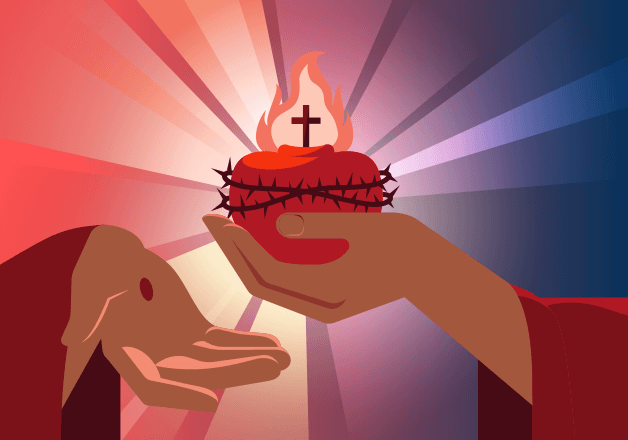
<p class="">The devotion to the Sacred Heart of Jesus was inspired by Jesus' apparitions to St. Margaret Mary Alacoque (1647-1690). Christ <a href="https://www.churchpop.com/visions-of-the-sacred-heart-of-jesus-4-mystical-messages-to-st-margaret-mary-alacoque/">appeared</a> to the French nun of the Order of the Visitation of Our Lady four times, revealing His Sacred Heart to her through mystical visions. </p>
<!-- /wp:paragraph -->
<!-- wp:paragraph {"className":""} -->
<p class=""><a href="https://hallow.com/blog/padre-pio-prayers-feast-day/">St. Padre Pio</a> prayed the Sacred Heart <a href="https://hallow.com/blog/how-to-pray-novenas/">novena</a> prayer every day. </p>
<!-- /wp:paragraph -->
<!-- wp:quote {"className":""} -->
<blockquote class="wp-block-quote"><!-- wp:paragraph {"className":""} -->
<p class="">Do not let the past disturb you - just leave everything in the Sacred Heart and begin again with joy.</p>
<!-- /wp:paragraph --><cite>Mother Teresa</cite></blockquote>
<!-- /wp:quote -->
<!-- wp:paragraph {"className":""} -->
<p class="">The Sacred Heart Novena is most traditionally prayed during the nine days leading up to the Solemnity of the Sacred Heart of Jesus, which is always 19 days after Pentecost on a Friday. In 2026, the Solemnity of the Sacred Heart of Jesus falls on June 12. </p>
<!-- /wp:paragraph -->
<!-- wp:paragraph {"className":""} -->
<p class="">In 2026, the Sacred Heart Novena would begin on June 3 and end on June 11. On June 1, Hallow will launch the Heart of Jesus challenge, featuring Matt Fradd, host of Pints with Aquinas, and Carmelite Sister Maria Goretti.<br><br>While this novena leads up to the Solemnity of the Sacred Heart of Jesus, it also prepares our hearts for the Memorial of the <a href="https://hallow.com/blog/immaculate-heart-of-mary/">Immaculate Heart of Mary</a> the day after, on June 13.</p>
<!-- /wp:paragraph -->
<!-- wp:quote {"className":"is-style-default"} -->
<blockquote class="wp-block-quote is-style-default"><!-- wp:paragraph {"className":""} -->
<p class="">Do you not know that not only is Jesus resting and dwelling continually in the Heart of Mary but that He is Himself the Heart of Mary.</p>
<!-- /wp:paragraph --><cite>St. John Eudes</cite></blockquote>
<!-- /wp:quote -->
<!-- wp:paragraph {"className":""} -->
<p class="">Pray the Sacred Heart Novena with Jonathan Roumie, the actor who portrays Jesus in The Chosen, on Hallow. </p>
<!-- /wp:paragraph -->
<!-- wp:buttons {"layout":{"type":"flex","justifyContent":"center"}} -->
<div class="wp-block-buttons"><!-- wp:button -->
<div class="wp-block-button"><a class="wp-block-button__link wp-element-button" href="https://hallow.app.link/1yUtzmtI5zb">Sacred Heart Novena with Jonathan Roumie</a></div>
<!-- /wp:button --></div>
<!-- /wp:buttons -->
<!-- wp:heading {"className":""} -->
<h2 class="wp-block-heading" id="h-how-to-pray-the-sacred-heart-novena">How to Pray the Sacred Heart Novena</h2>
<!-- /wp:heading -->
<!-- wp:yoast/how-to-block {"hasDuration":true,"minutes":"7","steps":[{"id":"how-to-step-1685026174149","name":[{"type":"strong","props":{"children":["Begin by making the Sign of the Cross. "]}}],"text":[{"type":"em","props":{"children":["In the name of Father, and of the Son, and of the "]}},{"type":"a","props":{"href":"https://hallow.com/2022/09/14/prayer-to-the-holy-spirit-and-other-holy-spirit-prayers/","children":[{"type":"em","props":{"children":["Holy Spirit"]}}]}},{"type":"em","props":{"children":[", Amen."]}}],"jsonName":"\u003cstrong\u003eBegin by making the Sign of the Cross. \u003c/strong\u003e","jsonText":"\u003cem\u003eIn the name of Father, and of the Son, and of the \u003c/em\u003e\u003ca href=\u0022https://hallow.com/2022/09/14/prayer-to-the-holy-spirit-and-other-holy-spirit-prayers/\u0022\u003e\u003cem\u003eHoly Spirit\u003c/em\u003e\u003c/a\u003e\u003cem\u003e, Amen.\u003c/em\u003e"},{"id":"how-to-step-1685026199762","name":[{"type":"strong","props":{"children":["Pray the first Sacred Heart petition. "]}}],"text":["O my Jesus, you have said: “Truly I say to you, ask and you will receive, seek and you will find, knock and it will be opened to you.”"],"jsonName":"\u003cstrong\u003ePray the first Sacred Heart petition. \u003c/strong\u003e","jsonText":"O my Jesus, you have said: “Truly I say to you, ask and you will receive, seek and you will find, knock and it will be opened to you.”"},{"id":"how-to-step-1685026210548","name":[{"type":"strong","props":{"children":["Pray the Our Father. "]}}],"text":[{"type":"a","props":{"href":"https://hallow.com/blog/how-to-pray-our-father/","children":[{"type":"em","props":{"children":["Our Father"]}}]}},{"type":"em","props":{"children":[", Who art in heaven, hallowed be Thy name; Thy kingdom come; Thy will be done on earth as it is in heaven. Give us this day our daily bread; and forgive us our trespasses as we forgive those who trespass against us; and lead us not into temptation, but deliver us from evil."]}}],"jsonName":"\u003cstrong\u003ePray the Our Father. \u003c/strong\u003e","jsonText":"\u003ca href=\u0022https://hallow.com/blog/how-to-pray-our-father/\u0022\u003e\u003cem\u003eOur Father\u003c/em\u003e\u003c/a\u003e\u003cem\u003e, Who art in heaven, hallowed be Thy name; Thy kingdom come; Thy will be done on earth as it is in heaven. Give us this day our daily bread; and forgive us our trespasses as we forgive those who trespass against us; and lead us not into temptation, but deliver us from evil.\u003c/em\u003e"},{"id":"how-to-step-1685026222508","name":[{"type":"strong","props":{"children":["Pray the Hail Mary. "]}}],"text":[{"type":"em","props":{"children":[{"type":"a","props":{"href":"https://hallow.com/blog/how-to-pray-the-hail-mary/","children":["Hail Mary"]}},", full of grace, the Lord is with thee; blessed are thou amongst women, and blessed is the fruit of thy womb, Jesus. Holy Mary, Mother of God, pray for us sinners, now and at the hour of our death."]}}],"jsonName":"\u003cstrong\u003ePray the Hail Mary. \u003c/strong\u003e","jsonText":"\u003cem\u003e\u003ca href=\u0022https://hallow.com/blog/how-to-pray-the-hail-mary/\u0022\u003eHail Mary\u003c/a\u003e, full of grace, the Lord is with thee; blessed are thou amongst women, and blessed is the fruit of thy womb, Jesus. Holy Mary, Mother of God, pray for us sinners, now and at the hour of our death.\u003c/em\u003e"},{"id":"how-to-step-1685026232081","name":[{"type":"strong","props":{"children":["Pray the Glory Be. "]}}],"text":[{"type":"em","props":{"children":["Glory be to the Father, and to the Son, and to the Holy Spirit. As it was in the beginning, is now, and ever shall be, world without end. Amen."]}}],"jsonName":"\u003cstrong\u003ePray the Glory Be. \u003c/strong\u003e","jsonText":"\u003cem\u003eGlory be to the Father, and to the Son, and to the Holy Spirit. As it was in the beginning, is now, and ever shall be, world without end. Amen.\u003c/em\u003e"},{"id":"how-to-step-1685026277578","name":[{"type":"strong","props":{"children":["Pray the second Sacred Heart petition. "]}}],"text":[{"type":"em","props":{"children":["Sacred Heart of Jesus, I place all my trust in you. ",{"type":"br","props":{"children":[]}},{"type":"br","props":{"children":[]}},"O my Jesus, you have said: “Truly I say to you, if you ask anything of the Father in my name, he will give it to you.” ",{"type":"br","props":{"children":[]}},{"type":"br","props":{"children":[]}},"Behold, in your name, I ask the Father for the grace of my request. "]}}],"jsonName":"\u003cstrong\u003ePray the second Sacred Heart petition. \u003c/strong\u003e","jsonText":"\u003cem\u003eSacred Heart of Jesus, I place all my trust in you. \u003cbr/\u003e\u003cbr/\u003eO my Jesus, you have said: “Truly I say to you, if you ask anything of the Father in my name, he will give it to you.” \u003cbr/\u003e\u003cbr/\u003eBehold, in your name, I ask the Father for the grace of my request. \u003c/em\u003e"},{"id":"how-to-step-1685026320315","name":[{"type":"strong","props":{"children":["Pray the Our Father, Hail Mary, and Glory Be. "]}}],"text":["See prayers above in Steps 3-5. "],"jsonName":"\u003cstrong\u003ePray the Our Father, Hail Mary, and Glory Be. \u003c/strong\u003e","jsonText":"See prayers above in Steps 3-5. "},{"id":"how-to-step-1685026330865","name":[{"type":"strong","props":{"children":["Pray the third Sacred Heart petition. "]}}],"text":["Sacred Heart of Jesus, I place all my trust in you.",{"type":"br","props":{"children":[]}},{"type":"br","props":{"children":[]}},"O my Jesus, you have said: “Truly I say to you, heaven and earth will pass away but my words will not pass away.”"],"jsonName":"\u003cstrong\u003ePray the third Sacred Heart petition. \u003c/strong\u003e","jsonText":"Sacred Heart of Jesus, I place all my trust in you.\u003cbr/\u003e\u003cbr/\u003eO my Jesus, you have said: “Truly I say to you, heaven and earth will pass away but my words will not pass away.”"},{"id":"how-to-step-1685026346092","name":[{"type":"strong","props":{"children":["Pray the Our Father, Hail Mary, and Glory Be. "]}}],"text":["See prayers above in Steps 3-5. "],"jsonName":"\u003cstrong\u003ePray the Our Father, Hail Mary, and Glory Be. \u003c/strong\u003e","jsonText":"See prayers above in Steps 3-5. "},{"id":"how-to-step-1685026357429","name":[{"type":"strong","props":{"children":["Pray with the novena prayer to the Sacred Heart of Jesus. "]}}],"text":[{"type":"em","props":{"children":["O Sacred Heart of Jesus, for whom it is impossible not to have compassion on the afflicted, have pity on us miserable sinners and grant us the grace which we ask of you, through the Sorrowful and Immaculate Heart of Mary, your tender Mother and ours. "]}}],"jsonName":"\u003cstrong\u003ePray with the novena prayer to the Sacred Heart of Jesus. \u003c/strong\u003e","jsonText":"\u003cem\u003eO Sacred Heart of Jesus, for whom it is impossible not to have compassion on the afflicted, have pity on us miserable sinners and grant us the grace which we ask of you, through the Sorrowful and Immaculate Heart of Mary, your tender Mother and ours. \u003c/em\u003e"},{"id":"how-to-step-1685026366410","name":[{"type":"strong","props":{"children":["Pray the “Hail, Holy Queen” (Salve Regina). "]}}],"text":[{"type":"em","props":{"children":["Hail, Holy Queen, Mother of Mercy, ",{"type":"br","props":{"children":[]}},"our life, our sweetness and our hope.",{"type":"br","props":{"children":[]}},"To you do we cry,",{"type":"br","props":{"children":[]}},"poor banished children of Eve. ",{"type":"br","props":{"children":[]}},"To you do we send up our sighs, ",{"type":"br","props":{"children":[]}},"mourning and weeping in this valley of tears ",{"type":"br","props":{"children":[]}},"Turn then, most gracious advocate,",{"type":"br","props":{"children":[]}},"your eyes of mercy toward us,",{"type":"br","props":{"children":[]}},"and after this, our exile, ",{"type":"br","props":{"children":[]}},"show unto us the blessed fruit of thy womb, Jesus.",{"type":"br","props":{"children":[]}},"O clement, O loving, O sweet Virgin Mary."]}}],"jsonName":"\u003cstrong\u003ePray the “Hail, Holy Queen” (Salve Regina). \u003c/strong\u003e","jsonText":"\u003cem\u003eHail, Holy Queen, Mother of Mercy, \u003cbr/\u003eour life, our sweetness and our hope.\u003cbr/\u003eTo you do we cry,\u003cbr/\u003epoor banished children of Eve. \u003cbr/\u003eTo you do we send up our sighs, \u003cbr/\u003emourning and weeping in this valley of tears \u003cbr/\u003eTurn then, most gracious advocate,\u003cbr/\u003eyour eyes of mercy toward us,\u003cbr/\u003eand after this, our exile, \u003cbr/\u003eshow unto us the blessed fruit of thy womb, Jesus.\u003cbr/\u003eO clement, O loving, O sweet Virgin Mary.\u003c/em\u003e"},{"id":"how-to-step-1685026384129","name":[{"type":"strong","props":{"children":["Conclude with the Sign of the Cross."]}}],"text":[{"type":"em","props":{"children":["In the name of Father, and of the Son, and of the Holy Spirit, Amen."]}}],"jsonName":"\u003cstrong\u003eConclude with the Sign of the Cross.\u003c/strong\u003e","jsonText":"\u003cem\u003eIn the name of Father, and of the Son, and of the Holy Spirit, Amen.\u003c/em\u003e"},{"id":"how-to-step-1685026395088","name":[{"type":"strong","props":{"children":["Repeat the above daily for 8 days. "]}}],"text":[],"jsonName":"\u003cstrong\u003eRepeat the above daily for 8 days. \u003c/strong\u003e","jsonText":""}],"defaultDurationText":"Time needed:"} -->
<div class="schema-how-to wp-block-yoast-how-to-block"><p class="schema-how-to-total-time"><span class="schema-how-to-duration-time-text">Time needed: </span>7 minutes. </p><p class="schema-how-to-description"></p> <ol class="schema-how-to-steps"><li class="schema-how-to-step" id="how-to-step-1685026174149"><strong class="schema-how-to-step-name"><strong>Begin by making the Sign of the Cross. </strong></strong> <p class="schema-how-to-step-text"><em>In the name of Father, and of the Son, and of the </em><a href="https://hallow.com/2022/09/14/prayer-to-the-holy-spirit-and-other-holy-spirit-prayers/"><em>Holy Spirit</em></a><em>, Amen.</em></p> </li><li class="schema-how-to-step" id="how-to-step-1685026199762"><strong class="schema-how-to-step-name"><strong>Pray the first Sacred Heart petition. </strong></strong> <p class="schema-how-to-step-text">O my Jesus, you have said: “Truly I say to you, ask and you will receive, seek and you will find, knock and it will be opened to you.”</p> </li><li class="schema-how-to-step" id="how-to-step-1685026210548"><strong class="schema-how-to-step-name"><strong>Pray the Our Father. </strong></strong> <p class="schema-how-to-step-text"><a href="https://hallow.com/blog/how-to-pray-our-father/"><em>Our Father</em></a><em>, Who art in heaven, hallowed be Thy name; Thy kingdom come; Thy will be done on earth as it is in heaven. Give us this day our daily bread; and forgive us our trespasses as we forgive those who trespass against us; and lead us not into temptation, but deliver us from evil.</em></p> </li><li class="schema-how-to-step" id="how-to-step-1685026222508"><strong class="schema-how-to-step-name"><strong>Pray the Hail Mary. </strong></strong> <p class="schema-how-to-step-text"><em><a href="https://hallow.com/blog/how-to-pray-the-hail-mary/">Hail Mary</a>, full of grace, the Lord is with thee; blessed are thou amongst women, and blessed is the fruit of thy womb, Jesus. Holy Mary, Mother of God, pray for us sinners, now and at the hour of our death.</em></p> </li><li class="schema-how-to-step" id="how-to-step-1685026232081"><strong class="schema-how-to-step-name"><strong>Pray the Glory Be. </strong></strong> <p class="schema-how-to-step-text"><em>Glory be to the Father, and to the Son, and to the Holy Spirit. As it was in the beginning, is now, and ever shall be, world without end. Amen.</em></p> </li><li class="schema-how-to-step" id="how-to-step-1685026277578"><strong class="schema-how-to-step-name"><strong>Pray the second Sacred Heart petition. </strong></strong> <p class="schema-how-to-step-text"><em>Sacred Heart of Jesus, I place all my trust in you. <br/><br/>O my Jesus, you have said: “Truly I say to you, if you ask anything of the Father in my name, he will give it to you.” <br/><br/>Behold, in your name, I ask the Father for the grace of my request. </em></p> </li><li class="schema-how-to-step" id="how-to-step-1685026320315"><strong class="schema-how-to-step-name"><strong>Pray the Our Father, Hail Mary, and Glory Be. </strong></strong> <p class="schema-how-to-step-text">See prayers above in Steps 3-5. </p> </li><li class="schema-how-to-step" id="how-to-step-1685026330865"><strong class="schema-how-to-step-name"><strong>Pray the third Sacred Heart petition. </strong></strong> <p class="schema-how-to-step-text">Sacred Heart of Jesus, I place all my trust in you.<br/><br/>O my Jesus, you have said: “Truly I say to you, heaven and earth will pass away but my words will not pass away.”</p> </li><li class="schema-how-to-step" id="how-to-step-1685026346092"><strong class="schema-how-to-step-name"><strong>Pray the Our Father, Hail Mary, and Glory Be. </strong></strong> <p class="schema-how-to-step-text">See prayers above in Steps 3-5. </p> </li><li class="schema-how-to-step" id="how-to-step-1685026357429"><strong class="schema-how-to-step-name"><strong>Pray with the novena prayer to the Sacred Heart of Jesus. </strong></strong> <p class="schema-how-to-step-text"><em>O Sacred Heart of Jesus, for whom it is impossible not to have compassion on the afflicted, have pity on us miserable sinners and grant us the grace which we ask of you, through the Sorrowful and Immaculate Heart of Mary, your tender Mother and ours. </em></p> </li><li class="schema-how-to-step" id="how-to-step-1685026366410"><strong class="schema-how-to-step-name"><strong>Pray the “Hail, Holy Queen” (Salve Regina). </strong></strong> <p class="schema-how-to-step-text"><em>Hail, Holy Queen, Mother of Mercy, <br/>our life, our sweetness and our hope.<br/>To you do we cry,<br/>poor banished children of Eve. <br/>To you do we send up our sighs, <br/>mourning and weeping in this valley of tears <br/>Turn then, most gracious advocate,<br/>your eyes of mercy toward us,<br/>and after this, our exile, <br/>show unto us the blessed fruit of thy womb, Jesus.<br/>O clement, O loving, O sweet Virgin Mary.</em></p> </li><li class="schema-how-to-step" id="how-to-step-1685026384129"><strong class="schema-how-to-step-name"><strong>Conclude with the Sign of the Cross.</strong></strong> <p class="schema-how-to-step-text"><em>In the name of Father, and of the Son, and of the Holy Spirit, Amen.</em></p> </li><li class="schema-how-to-step" id="how-to-step-1685026395088"><strong class="schema-how-to-step-name"><strong>Repeat the above daily for 8 days. </strong></strong> <p class="schema-how-to-step-text"></p> </li></ol></div>
<!-- /wp:yoast/how-to-block -->
<!-- wp:buttons {"layout":{"type":"flex","justifyContent":"center"}} -->
<div class="wp-block-buttons"><!-- wp:button -->
<div class="wp-block-button"><a class="wp-block-button__link wp-element-button" href="https://hallow.app.link/1yUtzmtI5zb">Pray with Hallow</a></div>
<!-- /wp:button --></div>
<!-- /wp:buttons -->
<!-- wp:heading {"level":3,"className":""} -->
<h3 class="wp-block-heading" id="h-other-novenas-and-prayer-resources-nbsp"><strong>Other Novenas and Prayer Resources </strong></h3>
<!-- /wp:heading -->
<!-- wp:list {"className":""} -->
<ul class="wp-block-list"><!-- wp:list-item -->
<li><a href="https://hallow.com/blog/how-to-pray-the-surrender-novena/">Surrender Novena</a></li>
<!-- /wp:list-item -->
<!-- wp:list-item -->
<li><a href="https://hallow.com/blog/prayers-to-the-holy-spirit/#holy-spirit-novena">Holy Spirit Novena</a></li>
<!-- /wp:list-item -->
<!-- wp:list-item -->
<li><a href="https://hallow.com/blog/how-to-pray-st-therese-novena/">St. Thérèse Novena</a></li>
<!-- /wp:list-item -->
<!-- wp:list-item -->
<li><a href="https://hallow.com/blog/how-to-pray-54-day-novena/">54-Day Rosary Novena</a></li>
<!-- /wp:list-item -->
<!-- wp:list-item -->
<li><a href="https://hallow.com/blog/how-to-pray-st-joseph-worker-novena/">St. Joseph the Worker Novena</a></li>
<!-- /wp:list-item -->
<!-- wp:list-item -->
<li><a href="https://hallow.com/blog/immaculate-heart-of-mary/">Immaculate Heart of Mary Litany</a></li>
<!-- /wp:list-item --></ul>
<!-- /wp:list -->
<!-- wp:heading {"level":3,"className":""} -->
<h3 class="wp-block-heading" id="phone-backgrounds">Sacred Heart Phone Backgrounds</h3>
<!-- /wp:heading -->
<!-- wp:paragraph {"className":""} -->
<p class="">Hallow is excited to offer beautiful illustrations of the Sacred Heart that are available to download for free.</p>
<!-- /wp:paragraph -->
<!-- wp:group {"className":"","layout":{"type":"constrained"}} -->
<div class="wp-block-group"><!-- wp:columns -->
<div class="wp-block-columns"><!-- wp:column {"width":"100%"} -->
<div class="wp-block-column" style="flex-basis:100%"><!-- wp:gallery {"linkTo":"none","className":""} -->
<figure class="wp-block-gallery has-nested-images columns-default is-cropped"><!-- wp:image {"id":86486,"sizeSlug":"large","linkDestination":"none","className":""} -->
<figure class="wp-block-image size-large"><img src="https://hallow.com/wp-content/uploads/2023/05/Sacred-Heart-Downloads-Background-1a-min-1-473x1024.png" alt="" class="wp-image-86486"/></figure>
<!-- /wp:image -->
<!-- wp:image {"id":86477,"sizeSlug":"large","linkDestination":"none","className":""} -->
<figure class="wp-block-image size-large"><img src="https://hallow.com/wp-content/uploads/2025/06/Sacred-Heart-Downloads-Background-2e-min-473x1024.png" alt="" class="wp-image-86477"/></figure>
<!-- /wp:image -->
<!-- wp:image {"id":86468,"sizeSlug":"large","linkDestination":"none","className":""} -->
<figure class="wp-block-image size-large"><img src="https://hallow.com/wp-content/uploads/2025/06/Sacred-Heart-Downloads-Background-2a-min-473x1024.png" alt="" class="wp-image-86468"/></figure>
<!-- /wp:image -->
<!-- wp:image {"id":86452,"sizeSlug":"large","linkDestination":"none","className":""} -->
<figure class="wp-block-image size-large"><img src="https://hallow.com/wp-content/uploads/2025/06/Sacred-Heart-Downloads-Background-1b-min-473x1024.png" alt="" class="wp-image-86452"/></figure>
<!-- /wp:image -->
<!-- wp:image {"id":86450,"sizeSlug":"large","linkDestination":"none","className":""} -->
<figure class="wp-block-image size-large"><img src="https://hallow.com/wp-content/uploads/2023/05/Sacred-Heart-Downloads-Background-2c-min-1-473x1024.png" alt="" class="wp-image-86450"/></figure>
<!-- /wp:image -->
<!-- wp:image {"id":86377,"sizeSlug":"large","linkDestination":"none","className":""} -->
<figure class="wp-block-image size-large"><img src="https://hallow.com/wp-content/uploads/2025/06/Sacred-Heart-Downloads-Background-2d-473x1024.png" alt="" class="wp-image-86377"/></figure>
<!-- /wp:image --></figure>
<!-- /wp:gallery --></div>
<!-- /wp:column --></div>
<!-- /wp:columns --></div>
<!-- /wp:group -->
<!-- wp:paragraph {"className":""} -->
<p class="">Browse phone backgrounds of the Sacred Heart <a href="https://www.dropbox.com/scl/fo/wjcfilurplx7pslupmyy0/AHSzljGAEuv41RNsucwWqUY?rlkey=q8lgtd8wtcmu4q86cfxjl4d8c&st=m7wq0bjc&dl=0">here</a>.</p>
<!-- /wp:paragraph -->
[post_title] => How to Pray the Sacred Heart Novena
[post_excerpt] => Give everything to Jesus in this 9-day prayer to His Sacred Heart.
[post_status] => publish
[comment_status] => closed
[ping_status] => closed
[post_password] =>
[post_name] => how-to-pray-the-sacred-heart-novena
[to_ping] =>
[pinged] =>
[post_modified] => 2026-06-01 14:37:38
[post_modified_gmt] => 2026-06-01 14:37:38
[post_content_filtered] =>
[post_parent] => 0
[guid] => https://hallow.com/?p=34799
[menu_order] => 0
[post_type] => post
[post_mime_type] =>
[comment_count] => 0
[filter] => raw
)
WP_Post Object
(
[ID] => 114612
[post_author] => 32
[post_date] => 2026-05-25 18:24:45
[post_date_gmt] => 2026-05-25 18:24:45
[post_content] => <!-- wp:paragraph {"className":""} -->
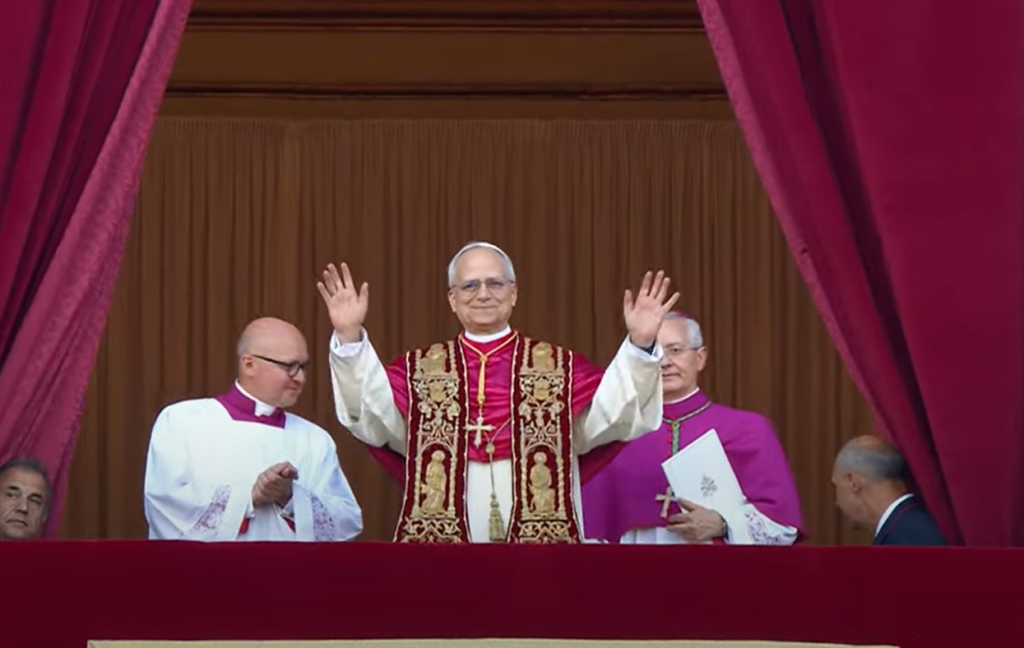
<p class="">Pope Leo XIV today released his first encyclical, <em>Magnifica Humanitas</em>, on safeguarding the human person in the time of artificial intelligence.</p>
<!-- /wp:paragraph -->
<!-- wp:paragraph {"className":""} -->
<p class="">It is available to read in its entirety in English <a href="https://www.vatican.va/content/leo-xiv/en/encyclicals/documents/20260515-magnifica-humanitas.html">here</a>. It is also currently available in Arabic, German, Spanish, French, Italian, Polish and Portuguese.</p>
<!-- /wp:paragraph -->
<!-- wp:paragraph {"className":""} -->
<p class="">The 40,000-word document is broken down into five different chapters and uses the Biblical story of the Tower of Babel to offer wisdom on AI in our society.</p>
<!-- /wp:paragraph -->
<!-- wp:paragraph {"className":""} -->
<p class="">In introducing and sharing the encyclical on social media, Pope Leo XIV posted on X saying that we must avoid building a modern Tower of Babel, echoing language from the first paragraph of <em>Magnifica Humanitas</em>.</p>
<!-- /wp:paragraph -->
<!-- wp:paragraph {"className":""} -->
<p class="">“Humanity, created by God in all its grandeur, is today facing a pivotal choice: either to construct a new Tower of Babel or to build the city in which God and humanity dwell together,” <a href="https://x.com/Pontifex/status/2058873214873325977">he said</a>. “In Jesus Christ, this humanity in its grandeur becomes the Way, the Truth and the Life, opening the path for each of us to grow toward fullness.”</p>
<!-- /wp:paragraph -->
<!-- wp:buttons {"layout":{"type":"flex","justifyContent":"center"}} -->
<div class="wp-block-buttons"><!-- wp:button -->
<div class="wp-block-button"><a class="wp-block-button__link wp-element-button" href="https://hallow.app.link/KQNtnaS1q3b">Pray Every Day with Hallow</a></div>
<!-- /wp:button --></div>
<!-- /wp:buttons -->
<!-- wp:paragraph {"className":""} -->
<p class="">Pope Leo goes on to explore a concept he calls “Babel syndrome,” which he describes as “the idolatry of profit that sacrifices the weak, a uniformity that neutralizes differences, and the pretense that a single language — even a digital one — can translate everything, including the mystery of the person, into data and performance.”</p>
<!-- /wp:paragraph -->
<!-- wp:paragraph {"className":""} -->
<p class="">In <em>Magnifica Humanitas</em>, Pope Leo also makes reference to Pope Leo XIII’s 1891 encyclical, <a href="https://www.vatican.va/content/leo-xiii/en/encyclicals/documents/hf_l-xiii_enc_15051891_rerum-novarum.html"><em>Rerum Novarum</em></a>, which gave the impetus for the Social Doctrine of the Church and its “legacy of wisdom, where we find principles for thought, criteria for discernment and judgment, and concrete guidelines for action.” </p>
<!-- /wp:paragraph -->
<!-- wp:paragraph {"className":""} -->
<p class="">Though he released the document on May 25, Pope Leo formally signed <em>Magnifica Humanitas</em> on May 15, the 135th anniversary of Rerum Novarum. The Vatican <a href="https://www.youtube.com/watch?v=7WJuHd8EtPQ&t=1s">released video</a> of Pope Leo officially signing the document.</p>
<!-- /wp:paragraph -->
<!-- wp:paragraph {"className":""} -->
<p class="">Pope Leo XIV draws the parallel between Rerum Novarum’s response to the industrial revolution and <em>Magnifica Humanitas</em>’ response towards the AI revolution, which Pope Leo XIV believes could be an even larger transformation.</p>
<!-- /wp:paragraph -->
<!-- wp:paragraph {"className":""} -->
<p class="">"Today, we find ourselves facing a transformation of similar magnitude, with perhaps even greater consequences. Artificial intelligence already touches many areas of our lives and affects decisions that shape human coexistence,” said Pope Leo in the Monday presentation of <em>Magnifica Humanitas</em> from New Synod Hall. </p>
<!-- /wp:paragraph -->
<!-- wp:paragraph {"className":""} -->
<p class="">“It is also dramatically changing how war is waged. Like the earlier Leo, I feel entrusted to look upon another huge transformation with eyes of faith, with lucidity of reason, with openness to mystery and with cries of the poor and the earth resounding in my heart.”</p>
<!-- /wp:paragraph -->
<!-- wp:paragraph {"className":""} -->
<p class="">Additionally, recalling the first words he shared when he was elected in 2025, Pope Leo reiterated the importance of praying for peace.</p>
<!-- /wp:paragraph -->
<!-- wp:paragraph {"className":""} -->
<p class="">“‘Peace be with you! It is the peace of the risen Christ. A peace that is unarmed and disarming, humble and persevering.’ With these words, I greeted the Church and the world on the day of my election to the See of Peter. I wish to repeat them now, and to invite everyone to pray for this gift. Let us never tire of praying for peace and of committing ourselves to achieving it in our relationships and in society.”</p>
<!-- /wp:paragraph -->
<!-- wp:paragraph {"className":""} -->
<p class="">On Hallow, you can pray with Pope Leo XIV, for peace and other important intentions, by joining him in his monthly prayer intentions. </p>
<!-- /wp:paragraph -->
<!-- wp:paragraph {"className":""} -->
<p class="">The video sessions, released each month, come from the Pope’s Worldwide Prayer Network and in past months have lifted up intentions like children with incurable diseases, peace and disarmament, priests in crisis and those without food.</p>
<!-- /wp:paragraph -->
<!-- wp:buttons {"layout":{"type":"flex","justifyContent":"center"}} -->
<div class="wp-block-buttons"><!-- wp:button -->
<div class="wp-block-button"><a class="wp-block-button__link wp-element-button" href="https://hallow.app.link/KQNtnaS1q3b">Pray Every Day with Hallow</a></div>
<!-- /wp:button --></div>
<!-- /wp:buttons -->
<!-- wp:paragraph {"className":""} -->
<p class="">Full text of Pope Leo's presentation and promulgation of <em>Magnifica Humanitas</em> is available <a href="https://www.vatican.va/content/leo-xiv/en/speeches/2026/may/documents/20260525-presentazione-enciclica.html">here</a>.</p>
<!-- /wp:paragraph -->
[post_title] => Pope Leo XIV Releases Magnifica Humanitas on Safeguarding the Human Person in the Time of Artificial Intelligence
[post_excerpt] =>
[post_status] => publish
[comment_status] => closed
[ping_status] => closed
[post_password] =>
[post_name] => pope-leo-xiv-magnifica-humanitas
[to_ping] =>
[pinged] =>
[post_modified] => 2026-05-25 18:24:51
[post_modified_gmt] => 2026-05-25 18:24:51
[post_content_filtered] =>
[post_parent] => 0
[guid] => https://hallow.com/?p=114612
[menu_order] => 0
[post_type] => post
[post_mime_type] =>
[comment_count] => 0
[filter] => raw
)
WP_Post Object
(
[ID] => 114310
[post_author] => 24
[post_date] => 2026-05-21 20:20:04
[post_date_gmt] => 2026-05-21 20:20:04
[post_content] => <!-- wp:paragraph {"className":""} -->
<p class="">Hallow is making it easier to pray with children with the creation of Kids Profiles–a dedicated space within Hallow designed specifically for children 13 and under.</p>
<!-- /wp:paragraph -->
<!-- wp:paragraph {"className":""} -->
<p class="">Whether your child is just beginning to learn prayers or already loves spending time with God, Kids Profiles give them their own space in Hallow to continue to grow in their prayer life.</p>
<!-- /wp:paragraph -->
<!-- wp:heading {"className":""} -->
<h2 class="wp-block-heading" id="h-what-is-a-kids-profile"><strong>What Is a Kids Profile?</strong></h2>
<!-- /wp:heading -->
<!-- wp:paragraph {"className":""} -->
<p class="">A Kids Profile is a child-friendly version of Hallow that lives right inside your existing account. No separate login. No extra app. Just a simple way for your child to have their own Hallow experience.</p>
<!-- /wp:paragraph -->
<!-- wp:paragraph {"className":""} -->
<p class="">Each Kids Profile includes:</p>
<!-- /wp:paragraph -->
<!-- wp:list {"className":""} -->
<ul class="wp-block-list"><!-- wp:list-item -->
<li><strong>A curated library of kid-friendly prayers and sessions</strong> written with children in mind</li>
<!-- /wp:list-item -->
<!-- wp:list-item -->
<li><strong>A simplified experience</strong> that’s easy for kids to navigate on their own</li>
<!-- /wp:list-item -->
<!-- wp:list-item -->
<li><strong>A safer space for children</strong> that excludes features and topics not appropriate for younger users</li>
<!-- /wp:list-item --></ul>
<!-- /wp:list -->
<!-- wp:paragraph {"className":""} -->
<p class="">Kids Profiles do not include certain features available to adult users, such as:</p>
<!-- /wp:paragraph -->
<!-- wp:list {"className":""} -->
<ul class="wp-block-list"><!-- wp:list-item -->
<li>Joining parishes</li>
<!-- /wp:list-item -->
<!-- wp:list-item -->
<li>Friending other users</li>
<!-- /wp:list-item -->
<!-- wp:list-item -->
<li>Sharing prayer requests</li>
<!-- /wp:list-item -->
<!-- wp:list-item -->
<li>Sharing prayers</li>
<!-- /wp:list-item -->
<!-- wp:list-item -->
<li>Making in-app purchases</li>
<!-- /wp:list-item -->
<!-- wp:list-item -->
<li>And other social or account features intended for adults</li>
<!-- /wp:list-item --></ul>
<!-- /wp:list -->
<!-- wp:paragraph {"className":""} -->
<p class="">The result is a simpler, more focused prayer experience created specifically for children and families.</p>
<!-- /wp:paragraph -->
<!-- wp:heading {"className":""} -->
<h2 class="wp-block-heading" id="h-how-to-set-up-a-kids-profile"><strong>How to Set Up a Kids Profile</strong></h2>
<!-- /wp:heading -->
<!-- wp:paragraph {"className":""} -->
<p class="">Setting up a Kids Profile only takes about a minute.</p>
<!-- /wp:paragraph -->
<!-- wp:paragraph {"className":""} -->
<p class="">To get started:</p>
<!-- /wp:paragraph -->
<!-- wp:list {"ordered":true,"className":""} -->
<ol class="wp-block-list"><!-- wp:list-item -->
<li>Open Hallow and tap the <strong>Me</strong> tab</li>
<!-- /wp:list-item -->
<!-- wp:list-item -->
<li>Tap your <strong>profile name</strong> at the top of the screen</li>
<!-- /wp:list-item -->
<!-- wp:list-item -->
<li>Select <strong>Add Kids Profile</strong></li>
<!-- /wp:list-item -->
<!-- wp:list-item -->
<li>Enter your child’s name</li>
<!-- /wp:list-item -->
<!-- wp:list-item -->
<li>Create a <strong>parent PIN</strong> to manage profile switching</li>
<!-- /wp:list-item --></ol>
<!-- /wp:list -->
<!-- wp:paragraph {"className":""} -->
<p class="">That’s it. Once you’ve created the profile, your child can start exploring their own space in Hallow right away.</p>
<!-- /wp:paragraph -->
<!-- wp:heading {"className":""} -->
<h2 class="wp-block-heading" id="h-why-a-parent-pin"><strong>Why a Parent PIN?</strong></h2>
<!-- /wp:heading -->
<!-- wp:paragraph {"className":""} -->
<p class="">The parent PIN makes switching between profiles quick and simple while helping keep your account secure.</p>
<!-- /wp:paragraph -->
<!-- wp:paragraph {"className":""} -->
<p class="">When your child wants to use Hallow, you can switch into their Kids Profile in seconds. And when you’re ready to return to your own profile, just enter your PIN to switch back.</p>
<!-- /wp:paragraph -->
<!-- wp:paragraph {"className":""} -->
<p class="">No separate passwords. No complicated setup. Just one Hallow account for you and your kids.</p>
<!-- /wp:paragraph -->
<!-- wp:heading {"className":""} -->
<h2 class="wp-block-heading" id="h-building-a-habit-of-prayer-together"><strong>Building a Habit of Prayer Together</strong></h2>
<!-- /wp:heading -->
<!-- wp:paragraph {"className":""} -->
<p class="">One of the most meaningful ways we can help children grow in faith is by helping them build a simple daily habit of prayer.</p>
<!-- /wp:paragraph -->
<!-- wp:paragraph {"className":""} -->
<p class="">Kids Profiles are designed to make that easier for families, whether it’s praying together before school, winding down at night with sleep prayers, or helping your child spend a few quiet moments with God during the day.</p>
<!-- /wp:paragraph -->
<!-- wp:paragraph {"className":""} -->
<p class="">We’re excited to offer families a new way to pray together on Hallow, and we hope Kids Profiles become a meaningful part of your family’s prayer life. Kids Profiles are available at no extra charge and right now accessible to U.S. users only in English.</p>
<!-- /wp:paragraph -->
<!-- wp:paragraph {"className":""} -->
<p class="">Ready to get started? Open the <strong>Me</strong> tab, tap your profile name, and create a Kids Profile in just a few steps.</p>
<!-- /wp:paragraph -->
<!-- wp:paragraph {"className":""} -->
<p class="">We’re honored to pray alongside your family.</p>
<!-- /wp:paragraph -->
[post_title] => Introducing Kids Profiles on Hallow
[post_excerpt] =>
[post_status] => publish
[comment_status] => closed
[ping_status] => closed
[post_password] =>
[post_name] => introducing-kids-profiles-on-hallow
[to_ping] =>
[pinged] =>
[post_modified] => 2026-05-22 12:15:24
[post_modified_gmt] => 2026-05-22 12:15:24
[post_content_filtered] =>
[post_parent] => 0
[guid] => https://hallow.com/?p=114310
[menu_order] => 0
[post_type] => post
[post_mime_type] =>
[comment_count] => 0
[filter] => raw
)

WP_Post Object
(
[ID] => 111472
[post_author] => 5
[post_date] => 2026-04-27 16:35:25
[post_date_gmt] => 2026-04-27 16:35:25
[post_content] => <!-- wp:heading {"level":3,"className":""} -->
<h3 class="wp-block-heading" id="h-intro">Intro</h3>
<!-- /wp:heading -->
<!-- wp:paragraph {"className":""} -->
<p class="">I had no intention of ever making this public when I wrote it. I just felt like I’d spent a lot of time reflecting lately and I wanted to put it to paper to see if it could help me organize my thoughts. As I’m asked to talk about my journey publicly more, I had the hope that articulating them here would help me know what to say for interviews and such that feels more true to myself. </p>
<!-- /wp:paragraph -->
<!-- wp:paragraph {"className":""} -->
<p class="">I set out to talk a little about how my thoughts on philosophy and religion have developed over time, how I ended up where I did, and why, which I’ve always described as a bit more of an intellectual path at first. It certainly isn’t meant to be persuasive but just to describe my own journey, which is why this started with my writing “One Man’s Journey” at the top of a blank Apple Note. </p>
<!-- /wp:paragraph -->
<!-- wp:paragraph {"className":""} -->
<p class="">A while after I wrote it, I shared it with my girlfriend as she had recently gone through her own conversion. Some time after that, she asked if she could share it with a friend. In time, it’s made its way around and one of the readers pleaded for me to publish it after reporting that it was impactful for her own journey and mentioning perhaps it could help someone else too. </p>
<!-- /wp:paragraph -->
<!-- wp:paragraph {"className":""} -->
<p class="">At first I was very hesitant and figured at a minimum I would need to add some polish and structure but was told that would take away from the authenticity. So here we are, this is how I originally recorded my journey in all its stream-of-consciousness, poorly punctuated, overly wordy glory (yes, even the sections were in the original Apple Note).</p>
<!-- /wp:paragraph -->
<!-- wp:heading {"level":3,"className":""} -->
<h3 class="wp-block-heading" id="h-growing-up">Growing Up</h3>
<!-- /wp:heading -->
<!-- wp:paragraph {"className":""} -->
<p class="">In the beginning I was raised culturally Catholic. I attended some religion classes but didn’t find them majorly compelling and it wasn’t reinforced too much at home. I was mostly passive about it. By the time I went away to college, I was talking to God to some degree each day but mostly just asking for things and being thankful for small moments or events. </p>
<!-- /wp:paragraph -->
<!-- wp:paragraph {"className":""} -->
<p class="">I am appreciative of the disposition toward gratitude that developed because of this but I wouldn’t say I was confident anyone was listening - I just wanted somewhere to direct energy for things that I felt I couldn’t express otherwise (e.g., asking for help in situations where I couldn’t do anything myself, or saying thank you for something undeserved). Things like attending Mass were unimportant to me so I never went and I mostly lived my life, which was an incredibly fortunate life filled with compelling courses, fun sports, and, above all, wonderful relationships and camaraderie.</p>
<!-- /wp:paragraph -->
<!-- wp:paragraph {"className":""} -->
<p class="">I’d say I always had some interest in theology and philosophy but didn’t dedicate a ton of time toward thinking about it, esp. in my first two years of college. By my third year however, I began to date a wonderful girl who took her faith seriously and that forced me to look inward to a new level.</p>
<!-- /wp:paragraph -->
<!-- wp:paragraph {"className":""} -->
<p class="">One pivotal conversation that year actually took place with her father and the topic of faith came up. It quickly became evident that while I said I was Catholic, I didn’t understand the core tenets behind that statement nor did I live them out. He encouraged me to explore. </p>
<!-- /wp:paragraph -->
<!-- wp:paragraph {"className":""} -->
<p class="">He effectively said, “Look, what you believe will have major consequences for your life and will come into play for every major decision you make moving forward. I don’t really care where you end up, I just think you should be able to articulate your stance, plant your flag, and have some conviction about your belief.”</p>
<!-- /wp:paragraph -->
<!-- wp:paragraph {"className":""} -->
<p class="">Generally speaking, I’m a very logical person and lean much more heavily on the intellectual part of my brain than I do the emotional side and I found this to be a compelling argument. I had very close friends with a wide range of views and I was starting to be challenged by them. I became disappointed that I didn’t have a clear position and wasn’t able to take a stance. </p>
<!-- /wp:paragraph -->
<!-- wp:paragraph {"className":""} -->
<p class="">So on that note I decided to dedicate a lot more brain power to philosophy, determined to have conviction by the time I graduated. If I had to guess, I was going to come out on the other side saying religion is nice but points <em>x</em> <em>y</em> and <em>z</em> specifically are what I find to be illogical and why I cannot adhere to it.</p>
<!-- /wp:paragraph -->
<!-- wp:paragraph {"className":""} -->
<p class="">I listened to plenty of debates, read books and articles, and had conversations with the priest who was the rector of my dorm. Any time I ran into a roadblock, I would talk it out. There were more of these pivotal points and questions than I could possibly recount but there were a couple that I felt were most compelling.</p>
<!-- /wp:paragraph -->
<!-- wp:heading {"level":3,"className":""} -->
<h3 class="wp-block-heading" id="h-morality">Morality</h3>
<!-- /wp:heading -->
<!-- wp:paragraph {"className":""} -->
<p class="">The first piece was morality, which is one of the places CS Lewis starts in Mere Christianity. In fact, several of the following points come from Lewis. It didn’t take me long to realize I believed in absolute morality and was not a relativist, i.e., I think that the moral code exists outside of individual humans and is neither a personal belief system nor developed by a society. If it were a personal belief, then if someone feels justified in murdering an innocent person (e.g., genocide because of race, or a baby because they are inconvenient and expensive) then they are definitionally acting in a moral way because all that matters in their own code. </p>
<!-- /wp:paragraph -->
<!-- wp:paragraph {"className":""} -->
<p class="">Alternatively, if the majority determines what is moral and not, then the moral code moves with the masses and people who supported, say, killing babies because they had deformities, would have been acting morally in Sparta times because the majority thought it was okay. Furthermore, I didn’t love how fluid the societal stance would be - it would imply that one day when the majority switches beliefs, an immoral act could become moral and vice versa in an instant. </p>
<!-- /wp:paragraph -->
<!-- wp:paragraph {"className":""} -->
<p class="">I believe that even if society thinks it okay, the people killing those babies were still in the wrong. Similarly, I believe there are likely things today that most of society thinks is okay but is wrong in absolute terms.</p>
<!-- /wp:paragraph -->
<!-- wp:paragraph {"className":""} -->
<p class="">I think maintaining that there is an absolute unmovable moral code is at odds with that code being created by humans. In my mind, there are only two likely explanations.</p>
<!-- /wp:paragraph -->
<!-- wp:paragraph {"className":""} -->
<p class="">The first option is that it was created by a higher power - some power that was connected to the origin of humanity on a fundamental level and ingrained the sense of morality in us.</p>
<!-- /wp:paragraph -->
<!-- wp:paragraph {"className":""} -->
<p class="">The second option is that it’s an illusion and there actually is no moral code at all - thinking it is right or wrong to do something is just how evolution tricked our brains into acting for the betterment of humanity as a whole. I think this is the only alternative that really holds any weight. It’s possible this is true but I also think that having a moral code at an individual level in a time when those around you don’t is disadvantageous to your survival. I believe people who mutated to have a gene of compassion and before others would have been killed off pretty quickly but natural selection is based on the opposite, evolving traits that help you survive. Nevertheless, it’s still within the realm of possibility, just to me personally felt less likely based on my own experience.</p>
<!-- /wp:paragraph -->
<!-- wp:paragraph {"className":""} -->
<p class="">Now one of the big sticking points for me in the morality exploration was how God could be all-loving and all-powerful and for there to be so much evil in the world. </p>
<!-- /wp:paragraph -->
<!-- wp:paragraph {"className":""} -->
<p class="">In short, the answer that I found to be satisfactory boils down to free will. Humans were given free will because without free will, there’s no meaning. If you have a world full of robots that just do as they are programmed and cannot make choices, there’s no actual purpose in that. If you cannot choose to do bad, there is nothing meaningful about choosing to do good. While the immense amount of suffering in the world is a huge price to pay, it’s still worth it when the alternative is a pointless existence. Then you get into permissive will vs perfect will stuff but I didn’t dive into that until a little later (In short, what God prefers to happen vs what He allows to happen).</p>
<!-- /wp:paragraph -->
<!-- wp:heading {"level":3,"className":""} -->
<h3 class="wp-block-heading" id="h-best-life">Best life</h3>
<!-- /wp:heading -->
<!-- wp:paragraph {"className":""} -->
<p class="">One of the claims of Christianity that I found most salient was that God has a plan for you and if you follow it then that’s basically the most sure way to live the best life possible. Reason being, the Power that created you did so for a reason and so He would know best how to live out your life oriented toward that purpose, which in theory would lead to fulfillment and meaning which is what we’re all after in the end.</p>
<!-- /wp:paragraph -->
<!-- wp:paragraph {"className":""} -->
<p class="">I spent quite a bit of time thinking about this to the point where I believed if I had solid ground to stand on and say “my life is definitively worse when living within the constraints of this religion”, then that would be a reasonable argument to eschew it altogether. For this phase of my exploration, I essentially took the stance of “even if God turned out not to be real, would my life be better with religion in it?” Of course, even if life as a Christian comparatively sucks on Earth, it’d still be worth the end state (an eternity of joy and fulfillment in heaven) if it <em>were</em> correct. But it was fascinating to me that while there was a claim that you were supposed to follow God for His sake, there was a related but separate claim that you yourself would live a better life by following Him by virtue of the fact that this would mean you are living out the purpose for which you were created.</p>
<!-- /wp:paragraph -->
<!-- wp:paragraph {"className":""} -->
<p class="">Even prior to my deep dive into Christianity I had already become a little obsessed with the idea of my best life - I’m not sure from where the concept of doing the most possible good in my life originated, but it was something I had always dreamt about chasing. I had recently read The Most Good You Can Do by Peter Singer and was introduced to the concept of effective altruism. I had also watched plenty of debates and articulations from Sam Harris’s Moral Landscape. I wanted some way to expand the amount of love in the world. So exploring religion as a way to do more “good” was intriguing to me.</p>
<!-- /wp:paragraph -->
<!-- wp:paragraph {"className":""} -->
<p class="">At first, it seemed like religion was a bit restricting. But as time has gone on, I’ve witnessed firsthand how it has been beneficial in my own life. There’s a lot to talk about here but I’ll just name the biggest ones that come to mind first. For one, we have an ideal to shoot for that is pretty well-defined: it’s all the virtues / “fruits of the Spirit” that Christians tend to talk about. Among these are humility, patience, compassion, fortitude, kindness, and more. and rather than just vaguely shooting for these in life, religion provides a structure & processes through which you can develop them. One of these is an <a href="https://hallow.com/blog/how-to-pray-the-examen/">Examen</a> - basically, at the end of each day, you can ask yourself where you fell short in living up to the values that you’re striving for so that you can try to do better next time. You can even do it immediately after falling short. On top of that, <a href="https://hallow.com/blog/how-to-go-to-confession-the-sacrament-of-penance-reconciliation/">confession</a> provides a place to actually voice these shortcomings out loud to another person.</p>
<!-- /wp:paragraph -->
<!-- wp:paragraph {"className":""} -->
<p class="">These two practices in particular I think everyone could benefit from. Even if God is not real, anyone can do this. Take some time and meditate on what you believe is the best version of yourself and the virtues that you’d display if you’re living life as well as you can, say, 5-10 years from now. Or perhaps imagine when you die what qualities you would want someone to describe in your eulogy. Now personally I think this list for the majority of people in the world is pretty similar to the list of Christian values anyway but that won’t be true for everyone (certainly there are some folks who would add anti-Christian things like power, control, and wealth as ideals but I do truly believe, as a lot of research backs up, that they’ll find those things to be less than satisfactory once if they do obtain them).</p>
<!-- /wp:paragraph -->
<!-- wp:paragraph {"className":""} -->
<p class="">If in a totally secular context you then do your own version of an Examen and think each day about how you failed to live up to those ideals, it’ll help you strive toward it more the next day. Plus, along the way, you’ll learn discipline which I think is a trait for which everyone should strive. Other aspects of faith like dedicating time in prayer, prioritizing Church, and fasting go a long way for growing in discipline too. And if you take it a step further and tell another human being how exactly you fell short but that you’re committed to changing this, I think you’ll be that much more successful in living out your eulogy.</p>
<!-- /wp:paragraph -->
<!-- wp:paragraph {"className":""} -->
<p class="">This orientation also helps tremendously with resilience and going with the flow. These days when I am being impatient in a very long grocery line, I can often take a step back and say to myself “this is a great opportunity to grow in patience.” It may sound a little ridiculous but that thought alone helps a ton to remove some of my impatience. The little setbacks and sufferings that we go through regularly then can help shape us toward displaying the characteristics that we hope to embody by the end of our lives. I think it’s pretty clear if someone is sheltered and handed everything in life then that person won’t have as much room to grow in these areas as someone who goes through adversity regularly. You can take this to the bigger events in life as well, it’s certainly easier to accept any trying situation when you believe it’s part of a larger plan to make you who you are. That’s a disposition I’ve had since before I was particularly religious, my senior quote in high school was “Whether or not it is clear to you, the universe is unfolding exactly as it should.” - a more generally spiritual take on a similar concept. This goes a long way in giving me peace in my day-to-day.</p>
<!-- /wp:paragraph -->
<!-- wp:paragraph {"className":""} -->
<p class="">The last thing I’ll mention on this suffering piece is that more meaning is given to it through the concept of redemptive suffering (that my suffering can directly contribute to someone else’s salvation) but that was admittedly not something I learned about until later so it wasn’t really part of this early journey for me. It’s this whole concept of picking up your cross and carrying it.</p>
<!-- /wp:paragraph -->
<!-- wp:paragraph {"className":""} -->
<p class="">The act of praying is another activity that I found to be helpful for living a better life. When I pray, sometimes I feel like I’m not alone and someone is actually listening. Occasionally even guiding my thoughts when they head places that I never would’ve expected them to. But again the point at this stage in the journey for me was about exploring what if that wasn’t the case and, for argument’s sake, assuming no one was listening. And I found that even if that’s just a trick of my mind, it’s a practice that I believe most people would find value in. Certainly meditation is along the same lines and brings people great benefit as well - it allows you to take a step back from the world and think about the big things like whether or not your life is heading in the direction that you want and if you’re proud of who you are. But prayer is a step further, and I would argue better, because it directs your attention away from yourself and forces you to look outward which I think cultivates a healthier disposition.</p>
<!-- /wp:paragraph -->
<!-- wp:paragraph {"className":""} -->
<p class="">Often included in prayer is the process of discernment. Before making any major decisions, Christians take a lot of time to stop and discern which route God is asking them to take. Again even if we remove God from the equation, that’s a practice through which anyone could benefit. It seems to me a lot of people in the world either don’t think through decisions carefully enough, or (as is more often my case personally) enter paralysis analysis and try to logically arrive at an answer without taking the time to take a step back and see how you feel about each path, and assess how your decision might take you toward or away from who you want to be.</p>
<!-- /wp:paragraph -->
<!-- wp:heading {"level":3,"className":""} -->
<h3 class="wp-block-heading" id="h-general-spirituality">General Spirituality</h3>
<!-- /wp:heading -->
<!-- wp:paragraph {"className":""} -->
<p class="">In the section above I mentioned the universe unfolding thing. This is perhaps the least logical part of this early journey but I do think it’s worth mentioning. Alongside that quote, there are many other ways that I felt spiritual even sans religion. I totally get the rapidly growing “spiritual but not religious” segment of the world. I mentioned that I feel like I’m not totally alone when it appears that I am. I also feel like there’s some bigger part of the universe that I can’t see - something beyond the material world. The whole angel on the shoulder vs devil on the shoulder thing checks out for me as well. Not exactly in the sense of how it’s portrayed in animated films - I didn’t really care whether there’s an actual spiritual being called a demon or not - but what I do know is that I am somewhat regularly tempted toward things that I feel are immoral. Like random thoughts to be unkind to someone, or to do something that’s totally selfish at the expense of someone else’s joy, or even against someone else’s rights.</p>
<!-- /wp:paragraph -->
<!-- wp:paragraph {"className":""} -->
<p class="">The general feeling / concept of love overall also feels like not just a physical thing but a very spiritual one. I even feel connected to my fellow human beings in a way that doesn’t make sense in the physical world - being able to truly connect with people who you don’t know particularly well or just met recently. I have always bought the whole “we’re all connected” thing that people on psychedelics seem convicted of. It also feels like love and connection are “above” everything else for lack of a better way of describing it. It feels like the ultimate thing to strive for and so God and love being equivalent felt right to me.</p>
<!-- /wp:paragraph -->
<!-- wp:paragraph {"className":""} -->
<p class="">For sure it’s possible for a spiritual world to exist without a god but I feel like it’s at least a point in favor of it. If there’s this whole spiritual world that we haven’t been able to map out yet, it becomes a lot more believable that there are a ton of different aspects to it. Almost like the “upside-down” in Stranger Things in its parallelism to our physical reality. The majority of values / virtues that people strive for in the major religions around the world are pretty similar, and this fact, too, in my mind is actually a point in favor of a god and not against it. If most religions are focused on love and other related virtues, I feel like that happened because they are all reflecting some element of the truth / reality.</p>
<!-- /wp:paragraph -->
<!-- wp:paragraph {"className":""} -->
<p class="">I also found it be a point in favor of a higher power the more I thought about the fact that the universe is comprehensible at all. Some people take the opposite approach and say the fact that we can use science to see the atoms / molecules that make everything up and we can go back in time and determine how planets are formed etc is a point in favor of there being no God, but I personally see no reason for all of this to be comprehensible whatsoever. The fact that we have intelligence at all is a crazy thing and the ability to explain more and more of the universe is truly insane. There’s no reason for the laws of physics to exist and much less for us to be able to decipher them and understand them unless we are somehow in some small way related to the Power that brought it all to be in the first place. Otherwise I find it more likely that we’d be like chimps or dogs trying to understand science - we wouldn’t get anywhere (or perhaps more accurately, wouldn’t bother to ask the question in the first place).</p>
<!-- /wp:paragraph -->
<!-- wp:paragraph {"className":""} -->
<p class="">Bit of a side tangent from this but since I find it related to science…people often tell me I have to do a ton of “mental gymnastics” to make sense of pieces of the Bible and of religion etc. I actually used to find that argument reasonably compelling for why the Bible probably doesn’t check out, but then I realized the mental gymnastics I was doing to follow along with a theologian’s work was nothing compared to the gymnastics I needed to do in order to understand proven facts about the universe. Things like how incomprehensibly small we are, how time is a relative thing that doesn’t always move at the same pace (and is connected in some direct way to space), that black holes can have literally infinite density - I could go on and on about how much more difficult it is (for me) to understand these things than theology but once again the fact that it’s understandable at all is truly a miracle.</p>
<!-- /wp:paragraph -->
<!-- wp:paragraph {"className":""} -->
<p class="">Ok last thing that probably falls under this general spirituality piece is the most famous line from St. Augustine’s <em>Confessions:</em> “our hearts are restless O God until they rest in thee.” I certainly think there’s truth to the fact that we as humans need to be striving for something and everything in this world starts to feel meaningless at some point. Chasing pleasure or money are two classic examples that everyone knows eventually fails to bring joy. But even things like best friends and family etc will fail you eventually as well - they’ll let you down in some way if you have too much dependence on them for your joy or they’ll pass away and if you lived your life just for them then what are you left with?</p>
<!-- /wp:paragraph -->
<!-- wp:paragraph {"className":""} -->
<p class="">In line with St. Augustine’s quote above, C.S. Lewis builds on the idea beautifully when he says, “If I find in myself desires which nothing in this world can satisfy, the only logical explanation is that I was made for another world.” He likens this spiritual longing to how we have physical hunger and it implies the existence of food to satisfy us and how we have thirst and there’s water to satisfy and so if there is another longing for us, there is likely something that can satisfy it. Anyway that’s a more personal piece that some may find more convicting than others but for me at least it resonated because even when my life felt full and I was happiest, I always felt like there was probably more to it.</p>
<!-- /wp:paragraph -->
<!-- wp:heading {"level":3,"className":""} -->
<h3 class="wp-block-heading" id="h-what-do-i-think-about-this-jesus-guy">What do I think about this Jesus guy</h3>
<!-- /wp:heading -->
<!-- wp:paragraph {"className":""} -->
<p class="">So between absolute morality and my belief in general spirituality, I said okay there’s probably a higher power. Then I figured it would be worth determining what I believed about this Jesus guy since he has the largest number of people in the world claiming he is that higher power. Basically all historians, religious or otherwise, believe that Jesus was a real person who lived around 2000 years ago and that the Gospels are at least a somewhat accurate representation of his life. So if he was a real person, I figured I should decide what I think about him at least. I started on the more historical side of things.</p>
<!-- /wp:paragraph -->
<!-- wp:paragraph {"className":""} -->
<p class="">It seemed that basically everything people thought a Messiah would be, Jesus was pretty close to the opposite. And even with that, he was still able to garner the following that he did - the biggest following of all time. It’s pretty remarkable. Lots of people claimed to be divine in the past, but their followers died off quickly. Not only could Jesus get a ton of people to follow him, but he’s gotten thousands and thousands of people to believe in him to the point where they’d give up their own life for him for millennia following his death. His people seemed to really really believe in him. Before I even took a second to truly consider his beliefs and whether or not I believed in them as well, I was taking a step back and saying at a minimum you have to admit that however this guy lived his life, it was one of the most inspirational lives of all time considering where it has ended up. The fact that over 2 billion people on this planet, 2000 years after his death, still believe he can bring salvation, when he lived in a time where there was no video, internet, or any easy way to disseminate stories and information, is the most incredible human legacy in the history of the world which to me, while far from proving it true, does lend it some credibility in my eyes.</p>
<!-- /wp:paragraph -->
<!-- wp:paragraph {"className":""} -->
<p class="">Okay so then after establishing this appreciation for his legacy, I decided to read about what he said. I found the Gospels to be compelling. To me it felt like he was speaking some deep truths that were previously unheard of and that still resonate 2000 years later. Things like love being the most important thing, or that we should strive for virtues like humility and patience over things like power and wealth. It’s not too radical to think those things today, but it was a pretty big deal back then. Especially because all the Jews believed a Messiah would come and that when he did, he would free them from the Romans basically by being some big general leader and destroying all their enemies. Instead, he came and said love your enemies and that he came for all mankind and not just one race. He said everyone has intrinsic value for simply being alive and human, which was actually a pretty radical concept. Historically, people were still leaving babies to die if they were handicapped in some way - the value and dignity that all humans deserve was not a widely believed concept until Jesus talked about it.</p>
<!-- /wp:paragraph -->
<!-- wp:paragraph {"className":""} -->
<p class="">In addition to his teachings, I generally just admired the way he went about his life. He reached out to the marginalized and didn’t become too attached to things in the material world. He was disciplined and he did hard things. But most of all, he really showed compassion and mercy for everyone. I still remember the first time I heard about him dying on the cross and saying “Father, forgive them for they know not what they do” I was mind-blown. I would imagine he has to be the first person in all of history to pray for forgiveness for his executioners while they are torturing him and killing him in one of the most brutal ways imaginable. I’m not sure I would’ve thought that level of mercy to be within the range human capabilities until that happened and it made me want to be like him (which is a little odd in itself that my instinct was a desire to emulate this while at the same thinking it was so far-fetched as to be almost insane).</p>
<!-- /wp:paragraph -->
<!-- wp:paragraph {"className":""} -->
<p class="">Now I had basically gotten to the point where I said ok I think this is someone I should see as a role model, but do I think he’s actually God because that sounds pretty crazy and hard to believe. It was then that CS Lewis came back into my life and his argument from Mere Christianity resonated with me quite a bit. He said you either have to believe Jesus is a lunatic, a liar, or Lord. JC pretty explicitly said that he was divine and that people could only come to God through him. So if that statement isn’t true, then he’s either crazy or at least a liar / con man. and if he’s one of those two things, well then he certainly isn’t worth emulating or following to the point of death. Now while that argument logically made sense to me, I’ll say it still felt a little crazy to fully believe it, esp because 90% of my friends didn’t buy into it.</p>
<!-- /wp:paragraph -->
<!-- wp:paragraph {"className":""} -->
<p class="">But honestly the other explanations also just didn’t really make sense to me. Like if he were truly a lunatic / delusional then I feel like that would’ve turned up in several other ways and really gotten people to question him. Plus while there are many people in the Bible who wanted to kill Jesus, I found it interesting that no one seemed to outright dismiss him as insane, they tended to think either he was dangerous and heretical, or he was speaking the truth. No one was like yo this person is mentally ill. Not to mention, his words still really resonated with me and seemed to contain some profound moral truths. It would be very hard for me to believe someone who is so delusional about such a big thing (that they are divine) would be so seemingly wise about all other things that they say. Lastly on this front, if he were delusional then obviously he wouldn’t have risen from the dead which means the resurrection would have needed to be planned by one of his followers or someone else (not JC himself, bc he would have truly believed he was God anyway so he wouldn’t plan to fake something).</p>
<!-- /wp:paragraph -->
<!-- wp:paragraph {"className":""} -->
<p class="">Then on the liar side of things, that would imply he was saying he was divine but didn’t actually believe in it himself, he just wanted to convince people that was the case. While possible, I too found this explanation to be unfitting to the story. Such a person would likely be motivated by wanting influence or to gain followers simply to feel like they made something of themselves. If he simply wanted to spread morality, no need to lie about the divinity part, he could’ve just preached on his own. But if he did want influence, then I find it hard to believe he would’ve taken the route he did. First of all, he was saying some pretty countercultural stuff so it’s shocking that it worked to gain followers in the first place (unless it is indicative of some deeper truth which doesn’t really align with the liar thing). Secondly, it would imply the compassion and mercy he showed during his life was all part of a con. I struggle to believe a con man would take his con so far as to forgive his torturers when he was just moments away from his death, esp because he would internally know that he wasn’t God and so once his life was over, it was really over. Voluntarily going to your death after just 3 years of a public ministry and faking virtues all the way through just for a legacy that you wouldn’t be around to witness feels really hard to believe.</p>
<!-- /wp:paragraph -->
<!-- wp:paragraph {"className":""} -->
<p class="">Alright so that left me with Lewis’s last option: that Jesus was telling the truth. I guess at that point I confirmed myself as a Christian though I would’ve been much more likely to dive into the full story / debate rather than just outright saying that because I frankly still didn’t love the connotations behind it.</p>
<!-- /wp:paragraph -->
<!-- wp:heading {"level":3,"className":""} -->
<h3 class="wp-block-heading" id="h-from-christian-to-catholic">From Christian to Catholic</h3>
<!-- /wp:heading -->
<!-- wp:paragraph {"className":""} -->
<p class="">Alright so then I’m a Christian and I had to decide which one since there are different denominations with different beliefs. My default was nondenominational because I liked the fact that it seemed to stay more surface-level. It was like hey here are the general beliefs and it’s enough to guide our lives but we don’t have to get too nitpicky about what all else this means. But I figured I should look at the people who lived closest to the time of Jesus to see what they believed. My thinking was these are the people who knew him best without the extra years for things to get muddled so they were probably the people to trust.</p>
<!-- /wp:paragraph -->
<!-- wp:paragraph {"className":""} -->
<p class="">During that journey, there are a lot of things that come up that point people to being Catholic. I won’t be able to get into them all but I am now of the belief that anyone who truly looks into Church history with the intent of understanding more about their faith is likely to come away Catholic. I’ll touch on some of the bigger pieces.</p>
<!-- /wp:paragraph -->
<!-- wp:paragraph {"className":""} -->
<p class="">The first is that the first pope was Peter and he was assigned by Jesus directly (when he said “on this rock I will build my church”) and all popes since then can be traced back to Jesus himself. It’s the only Christian church that was founded by Jesus himself, perhaps with the exception of the Orthodox churches which are closest to Catholicism out of all the denominations anyway. Basically all the others can be traced back to some human founder centuries after Jesus died. Even Martin Luther himself, who started the Protestant Reformation, didn’t want it to go nearly as far as it did and actually wrote a letter to the Pope clarifying his goal was to reform the Catholic church, not to start a new one.</p>
<!-- /wp:paragraph -->
<!-- wp:paragraph {"className":""} -->
<p class="">The other big thing was belief in the <a href="https://hallow.com/blog/eucharist-holy-communion-adoration-prayer/">Eucharist</a>, which is probably the single largest factor that separates Catholics from most other Christian churches these days anyway. Catholics believe it’s actually the blood and body of Jesus whereas Protestants generally do not. From a purely emotional standpoint, I really think it’d be possible for someone to convince themselves a symbol is more than just a symbol so I won’t argue that route here, but I did find out that basically all Christians for the first 1500 years after Jesus’s death believed in the so-called “true presence” of the Eucharist and that historical fact alone was pretty much enough for me. Very early writings make it clear what they believed, e.g., church fathers like Irenaeus referring to it as “flesh.”</p>
<!-- /wp:paragraph -->
<!-- wp:paragraph {"className":""} -->
<p class="">But just for good measure, I tried to look to Jesus’ words himself and came upon John Chapter 6. I won’t put it all here, but Jesus basically says you must eat my body and drink my blood and all the disciples say that’s a really hard teaching. Then he doubles down, and his followers say I don’t think I can accept that. Then he triples down and they say they’re gonna leave and so he says “go ahead and leave then” and then they leave, except for his main entourage who say “where else would we go?”. When I read this, he really had every opportunity in the world to say “guys, chill, I just mean this symbolically” but he didn’t, he just let everyone leave (which btw is like the last thing a preacher would want while trying to grow their following).</p>
<!-- /wp:paragraph -->
<!-- wp:paragraph {"className":""} -->
<p class="">Last big one was the point on authority. One reason why 70,000 denominations exist is because as soon as someone disagrees with one minor piece of doctrine of another denomination, they figure they should start their own. My issue with “sola scriptura” and people who believe the Bible is all you need and you can interpret it yourself is that there are often multiple ways to interpret it that can be at odds with each other and definitionally, only one can be correct and is the truth. So then how do you know what’s right for the points that Jesus didn’t directly address? There must be a point of authority to defer to. Even in the Bible itself, in Acts, they put this on display bc Jesus didn’t talk about whether or not circumcision was still needed. So Peter (the pope) decided and everyone went with it. Heck, even which writings classified as the New Testament or not was determined by the authority of the Church. So deference to some authority on the gray areas is necessary and is most defined in Catholicism.</p>
<!-- /wp:paragraph -->
<!-- wp:paragraph {"className":""} -->
<p class="">Ok so in addition to a bunch of other points and watching debates between Protestants and Catholics online, I realized logically I would probably have to end up Catholic which was a bummer because it’s more strict and seen as a bit crazier but c’est la vie. It’s a very wild idea that a piece of bread could become God. But it’s pretty easy for me to accept that if an all-powerful being wants to be close to us, He may choose a method involving one of the most widely accessible things on the planet (bread) to reach us, so logically I can understand why this path could be chosen over other seemingly arbitrary methods.</p>
<!-- /wp:paragraph -->
<!-- wp:paragraph {"className":""} -->
<p class="">As a final confirmation for me, I talked to plenty of converts along the way and, in my experience, all the Catholics I know who converted to Protestantism did so because they liked the church experience more and liked that it was a little more in-line with today’s culture. Meanwhile, the Protestants I know who converted to Catholicism did so because they took a lot of time to explore it and felt it was the one true Church, which seemed like a better reason to me. That’s not trying to come down on anyone at all and I’m not trying to say that statement applies to everyone, it’s just simply my personal experience when talking to folks that I’ve met.</p>
<!-- /wp:paragraph -->
<!-- wp:heading {"level":3,"className":""} -->
<h3 class="wp-block-heading" id="h-where-i-landed">Where I landed</h3>
<!-- /wp:heading -->
<!-- wp:paragraph {"className":""} -->
<p class="">So that’s kind of how I dove more into the Catholic Church. Since then I’ve spent more time in prayer trying to talk to God and I’ve found it to be beneficial and feel like I’m growing spiritually. Most of this rambling talks about the intellectual journey and the personal relationship side didn’t come later until Hallow. And even now it’s not like I’ve heard God say anything to me directly, but sometimes I’ll have thoughts while praying that seem to come from nowhere and add a lot of clarity to my thinking, e.g., my decision to pursue Hallow full-time. Perhaps that’s just an example of how <a href="https://hallow.com/blog/how-to-pray-christian-meditation/">meditation</a> can be fruitful but I do think it’s more. Even that decision itself boiled more down to my belief that the app would help people grow in virtue and bring more love into the world, even if God wasn’t real, more than it was about helping them find God directly. As time has gone on, it’s certainly grown into more of both but I’ve never lost sight of that original goal.</p>
<!-- /wp:paragraph -->
<!-- wp:paragraph {"className":""} -->
<p class="">I found I personally believe in a higher power for many of the reasons above, and I do believe that the Christian God is the most accurate description of what that higher power is like though I think it’s likely our understanding of him (even for the holiest of people) is lacking in quite a few ways. I believe I am speaking to this God while I pray and that He can hear me and has ways of making His presence and preferred path known. I believe others can get to know that higher power in their own way and not directly through the Church but that the Church is a great institution to facilitate that relationship and is indeed the best way to do so which is why Jesus established it. I think it’s likely that there’s a spiritual world in addition to a physical world and that the two are pretty intertwined and I think it’s pretty likely our spirit will live onward even after our body dies. Even after all this, I didn’t think getting into heaven necessarily depends upon our attending Church and doing all of the rituals but I think it’s more about how we live our life, aiming for those virtues and bringing more love into the world.</p>
<!-- /wp:paragraph -->
<!-- wp:paragraph {"className":""} -->
<p class="">I think it’s possible that some agnostic people in this world are living lives more in accordance with God’s will than a lot of the Christians out there. I also think people of other religions may very well be interacting with the same higher power when they pray, though we may differ in what we believe some of the characteristics of that higher power may be. I think the means of how we get there and why we do it are important but our end actions are very important to the equation as well.</p>
<!-- /wp:paragraph -->
<!-- wp:paragraph {"className":""} -->
<p class="">Given the logic that helped me arrive at the Catholic Church, I set out to try my best to live in accordance with it. I figured if we’re to believe that Jesus knew what he was doing when he started the Church, then it’s probably the best way to live our lives while we’re here. I’ve also come to see firsthand the depth and the beauty of it. There’s something pretty special about the Mass, Eucharist, prayer, the smell of incense, beautiful churches that’s hard to describe. Though the Church is obviously filled with a bunch of fallible humans so it’s far from perfect as things like the sex abuse crisis have proven. The humans that make up the Church have been wrong about things in the past and could be wrong about some things now too, so I do still primarily see my faith as between this higher power and me, but with the Church as the authority to bring me deeper into it and clarify things when it’s hard to discern.</p>
<!-- /wp:paragraph -->
<!-- wp:paragraph {"className":""} -->
<p class="">The Bible itself was a bit of a tough one for me on the journey as it was written by fallible humans and so I had thought it’s possible that it’s not perfect and even if it was, it’s possible that we are misinterpreting pieces of it. So whether the fallibility is in the writing process or only in our interpretation thereafter or a little bit of both was mostly irrelevant but the point stood that it’s an incredibly insightful book full of wisdom that is very important for anyone trying to learn a little more about God and how to live their life. Worth mentioning though that I hadn’t ruled out the possibility of infallibility altogether because, in some ways, Jesus / God Himself set into motion the events that would ultimately lead to the creation of the Bible and the authority that deemed them infallible. Moreover, while people have been wrong about some theological things in history, there’s almost nothing more important than getting the text right that we base the whole religion on so in that way higher stakes could imply a heavier hand in setting it. So in the end, I thought it at least plausible if not probable that it’s truly God’s Word but that piece took longer to come around to. (I’ve since grown greatly in my conviction of this but just trying to honestly lay out where I was at this stage of my intellectual journey).</p>
<!-- /wp:paragraph -->
<!-- wp:paragraph {"className":""} -->
<p class="">I still knew of course there is no way to prove whether God is real or not otherwise I believe it would have happened already. Perhaps in the future we’ll learn more about it directly in the same way that we’ve proven and disproven some scientific theories in the past. Until then it’s just a matter of planting your flag somewhere, trying to live in accordance with it, and living out the best life you can as a result.</p>
<!-- /wp:paragraph -->
<!-- wp:paragraph {"className":""} -->
<p class="">I think it’s very helpful to have discussions around these things and we should be willing to share them and engage as we are all on the journey together and can help each other live our lives in a better way when there’s open dialogue. I pray that my kids (should I have some in the future, God-willing) will open-mindedly consider all the possibilities in this world and how to connect with it. I’ll be eager to share how I landed where I did while making it clear that other people believe different things and they’ll have to decide for themselves one day. I do admittedly hope they land in the same or a similar place as me and build a strong foundation from it but I know it won’t be theirs until they grapple with it on their own. I think it’ll be a lifelong journey for us all and that makes me excited. It’s had a tremendous impact on my own life and I think it would have a tremendous impact on the life of anyone who truly tries to live it out.</p>
<!-- /wp:paragraph -->
<!-- wp:paragraph {"className":""} -->
<p class=""><em>Erich Kerekes is Hallow's CTO and co-founder</em></p>
<!-- /wp:paragraph -->
[post_title] => One Man’s Journey
[post_excerpt] =>
[post_status] => publish
[comment_status] => closed
[ping_status] => closed
[post_password] =>
[post_name] => one-mans-faith-journey
[to_ping] =>
[pinged] =>
[post_modified] => 2026-04-27 16:35:38
[post_modified_gmt] => 2026-04-27 16:35:38
[post_content_filtered] =>
[post_parent] => 0
[guid] => https://hallow.com/?p=111472
[menu_order] => 0
[post_type] => post
[post_mime_type] =>
[comment_count] => 0
[filter] => raw
)
WP_Post Object
(
[ID] => 108624
[post_author] => 32
[post_date] => 2026-04-17 22:22:16
[post_date_gmt] => 2026-04-17 22:22:16
[post_content] => <!-- wp:paragraph {"className":""} -->
<p class=""><strong>Table of Contents</strong></p>
<!-- /wp:paragraph -->
<!-- wp:list {"className":""} -->
<ul class="wp-block-list"><!-- wp:list-item -->
<li><a href="#challenge">Challenge</a></li>
<!-- /wp:list-item -->
<!-- wp:list-item -->
<li><a href="#faculty-formation">Focus on Faculty Formation</a></li>
<!-- /wp:list-item -->
<!-- wp:list-item -->
<li><a href="#liturgical-culture">Building Liturgical Culture</a></li>
<!-- /wp:list-item -->
<!-- wp:list-item -->
<li><a href="#catholic-social-teaching">Integrating Catholic Social Teaching</a></li>
<!-- /wp:list-item -->
<!-- wp:list-item -->
<li><a href="#measurement">Measurement and Accreditation</a><!-- wp:list {"className":""} -->
<ul class="wp-block-list"><!-- wp:list-item -->
<li><a href="#mission-matrix">Mission Matrix</a></li>
<!-- /wp:list-item --></ul>
<!-- /wp:list --></li>
<!-- /wp:list-item -->
<!-- wp:list-item -->
<li><a href="#school-parish-home-connection">School-Parish-Home Connection</a></li>
<!-- /wp:list-item --></ul>
<!-- /wp:list -->
<!-- wp:heading {"className":""} -->
<h2 class="wp-block-heading" id="challenge"><strong>The Challenge of Catholic Identity in Today's School Environment</strong></h2>
<!-- /wp:heading -->
<!-- wp:paragraph {"className":""} -->
<p class="">Catholic school leaders today face a pressure that rarely appears on a strategic plan but shapes nearly every decision: the challenge of maintaining institutional Catholic identity.</p>
<!-- /wp:paragraph -->
<!-- wp:paragraph {"className":""} -->
<p class="">Erosion of a school's Catholic identity seldom happens all at once. It can get chipped away gradually. A new faculty hire with no real connection to the faith. School Masses that feel more like logistical responsibilities than liturgical celebrations. Secular test score standards trumping spiritual development. Parents searching for rigorous academic curriculum but not as concerned about the rigor in faith.</p>
<!-- /wp:paragraph -->
<!-- wp:paragraph {"className":""} -->
<p class="">The thing is, none of this really reflects a failure of leadership or shortcomings by teachers or staff. It's the reality of running a Catholic school in competitive environments, often with few resources, while trying to hold the line on something that can't be reduced to a checklist.</p>
<!-- /wp:paragraph -->
<!-- wp:paragraph {"className":""} -->
<p class="">A school's Catholic identity is what allows it to interact with and thrive in the modern world.<a href="https://www.vatican.va/content/francesco/en/speeches/2019/april/documents/papa-francesco_20190406_istitutosancarlo-milano.html"> As Pope Francis said</a>, "We cannot create a culture of dialogue if we do not have identity." The identity becomes the value proposition. Why should parents choose to invest tuition money in a Catholic school instead of a charter school? The school's Catholic identity.</p>
<!-- /wp:paragraph -->
<!-- wp:paragraph {"className":""} -->
<p class="">Schools with the strongest Catholic identities have intentional, concrete practices woven into the fabric of the school, able to survive teacher turnover, and prioritize mission and strategic goals in every aspect of school life.</p>
<!-- /wp:paragraph -->
<!-- wp:paragraph {"className":""} -->
<p class="">Here are fundamentals for establishing, growing and maintaining a strong Catholic identity in K-12 Catholic schools.</p>
<!-- /wp:paragraph -->
<!-- wp:heading {"className":""} -->
<h2 class="wp-block-heading" id="faculty-formation"><strong>A Focus on Faculty Formation</strong> for Catholic Identity</h2>
<!-- /wp:heading -->
<!-- wp:paragraph {"className":""} -->
<p class="">Mission drift rarely begins in the classroom; it begins in hiring and onboarding.</p>
<!-- /wp:paragraph -->
<!-- wp:paragraph {"className":""} -->
<p class="">Hiring exceptional teachers with a strong understanding of Catholic identity is challenging for a number of reasons. So it seems increasingly common for schools to bring on faculty who have little or no formation in the faith.</p>
<!-- /wp:paragraph -->
<!-- wp:paragraph {"className":""} -->
<p class="">Without a plan for engaging and involving new faculty in the faith fabric of the school, a school's Catholic identity can fall on the shoulders of the small, shrinking mission-committed staff. And that's not sustainable or optimal.</p>
<!-- /wp:paragraph -->
<!-- wp:paragraph {"className":""} -->
<p class="">High-performing Catholic schools, especially those steeped in the charisms of religious orders, treat faculty faith formation as a professional expectation, not an elective. This means:</p>
<!-- /wp:paragraph -->
<!-- wp:list {"className":""} -->
<ul class="wp-block-list"><!-- wp:list-item -->
<li><strong>Annual faculty retreats</strong> that engage theology, not just team-building</li>
<!-- /wp:list-item -->
<!-- wp:list-item -->
<li><strong>Structured theological reading</strong> tied to the school's charism or the liturgical year</li>
<!-- /wp:list-item -->
<!-- wp:list-item -->
<li><strong>Tiered formation expectations</strong>: all faculty participate in mission formation; Catholic faculty are additionally expected to engage in prayer, liturgy, and sacramental life</li>
<!-- /wp:list-item -->
<!-- wp:list-item -->
<li><strong>Mission alignment language</strong> in performance reviews that is specific enough to be actionable while being respectful of personal beliefs</li>
<!-- /wp:list-item --></ul>
<!-- /wp:list -->
<!-- wp:paragraph {"className":""} -->
<p class="">Dr. Daryl Hagan, the Director of the Institute for the Transformation of Catholic Education at The Catholic University of America, points out that retreats have a long tradition in allowing us to pause from our day-to-day responsibilities and allow room for aligning on the big picture mission.</p>
<!-- /wp:paragraph -->
<!-- wp:paragraph {"className":""} -->
<p class="">"Throughout history, the faithful have disengaged from their daily responsibilities to reflect, to <a href="https://hallow.com/how-to-pray/">pray</a>, and to draw closer to God,"<a href="https://www.youtube.com/watch?v=-yIhRD37gbM"> he said</a>. "Scheduling a retreat prior to the new academic year or during the school year may provide inspiration and greater clarity toward the mission of the Catholic school and the role each of us play in the fulfillment of the mission."</p>
<!-- /wp:paragraph -->
<!-- wp:paragraph {"className":""} -->
<p class=""><a href="https://digitalcommons.lmu.edu/cgi/viewcontent.cgi?article=2378&context=ce">In a paper</a> titled "Teacher Faith Formation as Response to an “Existential Crisis” in Catholic Schools: Western Canadian Superintendents’ Perspectives," researchers argued that "Recognizing the individuality of each teacher is a vital feature of faith formation."</p>
<!-- /wp:paragraph -->
<!-- wp:paragraph {"className":""} -->
<p class="">This gets back to the tiered format for expectations--someone hired shortly after graduating college, with little background in Catholic faith, is on a much different formation trajectory than someone who has been actively involved in Catholic education and liturgical life for decades.</p>
<!-- /wp:paragraph -->
<!-- wp:paragraph {"className":""} -->
<p class="">Incorporating faith formation into annual Professional Growth Plans is one way to meet teachers where they are and build formation into the culture of the school. These are unique to the individual teacher but can draw on resources available to all: activities at the school, resources within the diocese, courses and more.</p>
<!-- /wp:paragraph -->
<!-- wp:paragraph {"className":""} -->
<p class="">Liturgy and prayer opportunities can also help bridge the gap between summer retreats and end-of-year growth plan reviews as well as instill the school's Catholic identity in students.</p>
<!-- /wp:paragraph -->
<!-- wp:heading {"className":""} -->
<h2 class="wp-block-heading" id="liturgical-culture"><strong>Building Liturgical Culture Beyond Obligation Masses</strong></h2>
<!-- /wp:heading -->
<!-- wp:paragraph {"className":""} -->
<p class="">A school can celebrate Mass on every<a href="https://hallow.com/blog/holy-days-of-obligation/"> holy day of obligation</a> and still have a thin liturgical culture. The difference between compliance and genuine liturgical formation is whether students (and faculty) understand what they're participating in, and whether the school's life is actually shaped by the rhythms of the liturgical year.</p>
<!-- /wp:paragraph -->
<!-- wp:paragraph {"className":""} -->
<p class="">"Schools rich in Catholic identity have active participation in liturgy and prayer,” said Stacy McNerney, a former Catholic school teacher and administrator for over 23 years has focused her years in administration on the importance of the Mission and Catholic Identity of the school. “Liturgy and prayer are taught at every grade level in a developmentally age-appropriate way and then put into practice in order to truly engage in the faith."</p>
<!-- /wp:paragraph -->
<!-- wp:paragraph {"className":""} -->
<p class="">Liturgies are vital; they are not assemblies that need to be coordinated. They're celebrations that bear critical witness to the Catholic identity of the school.</p>
<!-- /wp:paragraph -->
<!-- wp:paragraph {"className":""} -->
<p class=""><a href="https://www.vatican.va/archive/hist_councils/ii_vatican_council/documents/vat-ii_const_19631204_sacrosanctum-concilium_en.html"><em>Sacrosanctum Concilium</em> §14</a> calls for the full, conscious, and active participation of the faithful, saying, "it is the primary and indispensable source from which the faithful are to derive the true Christian spirit; and therefore pastors of souls must zealously strive to achieve it, by means of the necessary instruction, in all their pastoral work."</p>
<!-- /wp:paragraph -->
<!-- wp:paragraph {"className":""} -->
<p class="">That vision requires preparation, not just attendance. Practically, this means:</p>
<!-- /wp:paragraph -->
<!-- wp:list {"className":""} -->
<ul class="wp-block-list"><!-- wp:list-item -->
<li><strong>Planning the academic calendar around the liturgical year</strong>, not just scheduling Masses around it. <a href="https://hallow.com/advent/">Advent</a> and<a href="https://hallow.com/lent/"> Lent</a> should be recognizable seasons in the life of the school, with prayer practices, service projects, and formational rhythms that distinguish them from ordinary time.</li>
<!-- /wp:list-item -->
<!-- wp:list-item -->
<li><strong>Distributing liturgical ownership</strong> across homerooms or advisories: preparing intercessions, selecting music, leading reflections. Students who have a role in the liturgy engage with it differently (<a href="https://www.usccb.org/prayer-and-worship/the-mass">USCCB liturgy guide</a>) and not one campus minister assigning roles to trusted students. Everyone can and should contribute to liturgy.</li>
<!-- /wp:list-item -->
<!-- wp:list-item -->
<li><strong>Catechizing school Masses</strong> with brief, age-appropriate preparation. This shouldn't be a lecture, but enough context that students know why they're there and what's happening.</li>
<!-- /wp:list-item -->
<!-- wp:list-item -->
<li><strong>Connecting school prayer to the liturgical calendar</strong> throughout the week, not only at Mass.<a href="https://hallow.com/blog/how-to-pray-stations-of-the-cross/"> Stations of the Cross</a> during Lent are a great example. Or explaining the Confiteor at Mass and how that's related to, but different than, attending confession or praying an examination of conscience.</li>
<!-- /wp:list-item --></ul>
<!-- /wp:list -->
<!-- wp:paragraph {"className":""} -->
<p class="">One way to build a sustained culture of respect for the liturgy is to lean on older students to be role models for younger students. Sometimes called a “Buddy Program,” this system pairs younger with older students, extending throughout the school year and includes liturgies and other activities.</p>
<!-- /wp:paragraph -->
<!-- wp:paragraph {"className":""} -->
<p class="">Katie Diltz, writing for Notre Dame's McGrath Institute for Church Life, found that this was successful for getting students to behave.</p>
<!-- /wp:paragraph -->
<!-- wp:paragraph {"className":""} -->
<p class="">"We would have the older grades sit with their 'buddies' from the younger grades," she said. "For example, each 7th grade student would sit with one or two kindergarten students. This practice reminded the older students to behave like responsible role models; it also allowed the older students to assist the teachers by attending to the younger students’ needs."</p>
<!-- /wp:paragraph -->
<!-- wp:paragraph {"className":""} -->
<p class="">It’s more than just behavior. When those "buddies" students matriculate to older grades, the culture and expectation is already in place: It's their turn to take on more of a leadership role in the success of the liturgies. This parallels the responsibilities they'll be asked to take when they prepare for the sacrament of Confirmation.</p>
<!-- /wp:paragraph -->
<!-- wp:paragraph {"className":""} -->
<p class=""><a href="https://meetings.hubspot.com/alessandro11/mktg-hallowforparishes">Schedule a conversation with Hallow today</a></p>
<!-- /wp:paragraph -->
<!-- wp:heading {"className":""} -->
<h2 class="wp-block-heading" id="catholic-social-teaching"><strong>Integrating Catholic Social Teaching Across the Curriculum</strong></h2>
<!-- /wp:heading -->
<!-- wp:paragraph {"className":""} -->
<p class="">One of the most concrete ways to demonstrate Catholic identity to students, parents, boards, and accreditors alike is through documented, cross-curricular integration of Catholic Social Teaching.</p>
<!-- /wp:paragraph -->
<!-- wp:paragraph {"className":""} -->
<p class="">Catholic Social Teaching<a href="https://www.usccb.org/sjp/catholic-social-teaching"> is rooted in human life</a> and human dignity, recognizing that every human is made in God's image, redeemed by Christ, and possesses inherent value as a member of the human family.</p>
<!-- /wp:paragraph -->
<!-- wp:paragraph {"className":""} -->
<p class="">Because Catholic Social Teaching is "<a href="https://www.usccb.org/sjp/catholic-social-teaching">inseparable from</a>" our understanding of human life, it cannot be compartmentalized to just religion class, where it is studied rather than applied.</p>
<!-- /wp:paragraph -->
<!-- wp:paragraph {"className":""} -->
<p class="">When Catholic Social Teaching lives only in the theology classroom, it becomes a subject rather than a lens. When it's embedded across disciplines, it becomes part of how students learn to think. It helps faith transcend "religion class” and become a way of life.</p>
<!-- /wp:paragraph -->
<!-- wp:paragraph {"className":""} -->
<p class="">The USCCB's seven themes of CST provide a ready framework for curriculum mapping. In practice, this looks like:</p>
<!-- /wp:paragraph -->
<!-- wp:list {"className":""} -->
<ul class="wp-block-list"><!-- wp:list-item -->
<li>Economics and social studies courses drawing on Church documents like <em>Rerum Novarum</em>, <em>Laudato Si'</em>, and <em>Caritas in Veritate</em></li>
<!-- /wp:list-item -->
<!-- wp:list-item -->
<li>Literature and humanities courses engaging questions of human dignity and the common good</li>
<!-- /wp:list-item -->
<!-- wp:list-item -->
<li>Science courses addressing stewardship and the theology of creation, and upholding Church teaching on the sanctity of life, and caring for God’s creation and the world around us</li>
<!-- /wp:list-item -->
<!-- wp:list-item -->
<li>Virtues-based frameworks that address social-emotional learning through the lens of our Catholic faith, led by religious and other leaders in the Church</li>
<!-- /wp:list-item --></ul>
<!-- /wp:list -->
<!-- wp:paragraph {"className":""} -->
<p class="">Beyond the curriculum, Catholic Social Teaching can inform how schools deal with disputes or problems, either in school or at home.</p>
<!-- /wp:paragraph -->
<!-- wp:paragraph {"className":""} -->
<p class="">Having a virtues-based approach to classroom management (instead of a purely secular framework) can further help solidify a school's Catholic identity on all fronts. Hallow offers a daily virtue session as part of its content for kids, with a focus on helping young people grow in holiness in and out of the classroom, as well as content for older students on mental health topics that help students learn how to work through stressful situations using Scripture and faith as the framework.</p>
<!-- /wp:paragraph -->
<!-- wp:buttons {"layout":{"type":"flex","justifyContent":"center"}} -->
<div class="wp-block-buttons"><!-- wp:button {"backgroundColor":"primary"} -->
<div class="wp-block-button"><a class="wp-block-button__link has-primary-background-color has-background wp-element-button" href="https://meetings.hubspot.com/alessandro11/mktg-hallowforparishes">Schedule a conversation with Hallow today</a></div>
<!-- /wp:button --></div>
<!-- /wp:buttons -->
<!-- wp:heading {"className":""} -->
<h2 class="wp-block-heading" id="measurement"><strong>Measuring Catholic Identity: From Inputs to Outcomes</strong></h2>
<!-- /wp:heading -->
<!-- wp:paragraph {"className":""} -->
<p class="">Boards, dioceses, and accrediting bodies — including the NCEA and diocesan Catholic identity audit processes — increasingly ask schools to demonstrate Catholic identity through benchmarks, standards and an action plan. </p>
<!-- /wp:paragraph -->
<!-- wp:paragraph {"className":""} -->
<p class="">A crucifix in every classroom and Mass on holy days are baseline expectations, not evidence of a flourishing Catholic culture. When it comes to accreditation; governing bodies want to see more than the basics, they want to see faith in action and evidence of a flourishing Catholic school community that provides opportunities to have an encounter with Christ.</p>
<!-- /wp:paragraph -->
<!-- wp:paragraph {"className":""} -->
<p class="">The<a href="https://files.ecatholic.com/13800/documents/2021/5/FCCAP%20Brochure%202021.pdf?t=1621525979000"> Florida Catholic Conference Accreditation Program</a>, one of the oldest and most robust accrediting programs in the country, looks at four domains of excellence in the schools it evaluates, using the NSBECS National Standards and Benchmarks for Effective Catholic Elementary and Secondary Schools. The first one? Mission and Catholic Identity. The others are Academic Excellence, Governance and Leadership, and Operational Vitality.</p>
<!-- /wp:paragraph -->
<!-- wp:paragraph {"className":""} -->
<p class="">Adopting a matrix or rubric to thoughtfully assess a school's Catholic identity can help with both of these. One possible framework<a href="https://catholiced.us/wp-content/uploads/2021/03/Archbishop-Miller-The-Holy-Sees-Teaching-on-Catholic-Schools.pdf"> comes from</a> The Holy See's Teaching On Catholic Schools by Archbishop J. Michael Miller, C.S.B., who suggests there are five essential "marks" of Catholic schools:</p>
<!-- /wp:paragraph -->
<!-- wp:list {"className":""} -->
<ul class="wp-block-list"><!-- wp:list-item -->
<li>Inspired by a Supernatural Vision</li>
<!-- /wp:list-item -->
<!-- wp:list-item -->
<li>Founded on a Christian Anthropology</li>
<!-- /wp:list-item -->
<!-- wp:list-item -->
<li>Animated by Communion and Community</li>
<!-- /wp:list-item -->
<!-- wp:list-item -->
<li>Imbued with a Catholic Worldview<!-- wp:list {"className":""} -->
<ul class="wp-block-list"><!-- wp:list-item -->
<li>Search for Wisdom and Truth</li>
<!-- /wp:list-item -->
<!-- wp:list-item -->
<li>Faith, Culture and Life</li>
<!-- /wp:list-item --></ul>
<!-- /wp:list --></li>
<!-- /wp:list-item -->
<!-- wp:list-item -->
<li>Sustained by the Witness of Teaching</li>
<!-- /wp:list-item --></ul>
<!-- /wp:list -->
<!-- wp:heading {"level":3,"className":""} -->
<h3 class="wp-block-heading" id="mission-matrix"><strong>Catholic School Mission Matrix</strong></h3>
<!-- /wp:heading -->
<!-- wp:paragraph {"className":""} -->
<p class="">Here's a sample Catholic Identity/Mission Matrix you are free to use or that can inspire a custom one specific to your school:</p>
<!-- /wp:paragraph -->
<!-- wp:html -->
<div style="overflow-x:auto; margin: 24px 0;">
<style>
.mission-matrix {
width: 100%;
border-collapse: collapse;
font-family: Georgia, "Times New Roman", serif;
min-width: 1100px;
background: #ffffff;
}
.mission-matrix caption {
caption-side: top;
text-align: left;
font-size: 1.4rem;
font-weight: bold;
margin-bottom: 12px;
color: #1f2a44;
}
.mission-matrix th,
.mission-matrix td {
border: 1px solid #d9dde5;
padding: 14px 12px;
vertical-align: top;
text-align: left;
line-height: 1.45;
font-size: 0.96rem;
}
.mission-matrix thead th {
background: #1f2a44;
color: #ffffff;
font-weight: 700;
}
.mission-matrix tbody tr:nth-child(even) {
background: #f8f9fb;
}
.mission-matrix .row-title {
font-weight: 700;
color: #1f2a44;
background: #eef2f7;
min-width: 240px;
}
.mission-matrix td:empty::after {
content: "—";
color: #9aa3b2;
}
</style>
<table class="mission-matrix">
<caption></caption>
<thead>
<tr>
<th>Mission Theme</th>
<th>Initiative</th>
<th>Planning</th>
<th>Preparation</th>
<th>Execution</th>
<th>Impact</th>
<th>Spiritual Fruit</th>
<th>Owner</th>
<th>Timeline</th>
<th>Reflection / Notes</th>
</tr>
</thead>
<tbody>
<tr>
<td class="row-title">Inspired by a Supernatural Vision</td>
<td></td>
<td></td>
<td></td>
<td></td>
<td></td>
<td></td>
<td></td>
<td></td>
<td></td>
</tr>
<tr>
<td class="row-title">Founded on a Christian Anthropology</td>
<td></td>
<td></td>
<td></td>
<td></td>
<td></td>
<td></td>
<td></td>
<td></td>
<td></td>
</tr>
<tr>
<td class="row-title">Animated by Communion and Community</td>
<td></td>
<td></td>
<td></td>
<td></td>
<td></td>
<td></td>
<td></td>
<td></td>
<td></td>
</tr>
<tr>
<td class="row-title">Imbued with a Catholic Worldview</td>
<td></td>
<td></td>
<td></td>
<td></td>
<td></td>
<td></td>
<td></td>
<td></td>
<td></td>
</tr>
<tr>
<td class="row-title">Sustained by the Witness of Teaching</td>
<td></td>
<td></td>
<td></td>
<td></td>
<td></td>
<td></td>
<td></td>
<td></td>
<td></td>
</tr>
</tbody>
</table>
</div>
<!-- /wp:html -->
<!-- wp:paragraph {"className":""} -->
<p class="">You can also consider a matrix based on the NCEA's<a href="https://ncea.org/NSBECS/NSBECS/Standards/Mission_and_Catholic_Identity.aspx"> four standards</a> when it comes to Mission and Catholic Identity:</p>
<!-- /wp:paragraph -->
<!-- wp:list {"className":""} -->
<ul class="wp-block-list"><!-- wp:list-item -->
<li>An excellent Catholic school is driven and guided by a clearly communicated mission that embraces a Catholic identity that includes gospel values, a focus on the Eucharist, and a commitment to communal faith formation, academic excellence, missionary discipleship, and service.</li>
<!-- /wp:list-item -->
<!-- wp:list-item -->
<li>An excellent Catholic school adhering to mission provides an exemplary academic program for religious education and catechesis in the Catholic faith, set within a total academic curriculum that integrates faith, culture, and life.</li>
<!-- /wp:list-item -->
<!-- wp:list-item -->
<li>An excellent Catholic school adhering to mission provides opportunities both within and outside the classroom for Christ-centered student faith formation, participation in liturgical and communal prayer, and action in service of missionary discipleship and social justice.</li>
<!-- /wp:list-item -->
<!-- wp:list-item -->
<li>An excellent Catholic school adhering to mission provides opportunities for Christ-centered adult faith formation and action in service of missionary discipleship and social justice.</li>
<!-- /wp:list-item --></ul>
<!-- /wp:list -->
<!-- wp:paragraph {"className":""} -->
<p class="">In addition to the matrix, schools should establish a Mission and Catholic Identity committee to regularly review curriculum, hiring and other matters through the lens of the school's Mission Statement. This statement is woven into the life of the school and drives every aspect of school life—from its placement on the school's website to students reciting every day with prayer. The mission statement is the ‘North star’ that defines and shapes the school.</p>
<!-- /wp:paragraph -->
<!-- wp:heading {"className":""} -->
<h2 class="wp-block-heading" id="school-parish-home-connection"><strong>Strengthening the School-Parish-Home Connection</strong></h2>
<!-- /wp:heading -->
<!-- wp:paragraph {"className":""} -->
<p class="">One other way to strengthen a school's Catholic identity is by deepening the connection between the school and the parish (or, in the case of schools run by religious orders, the diocese or local parishes).</p>
<!-- /wp:paragraph -->
<!-- wp:paragraph {"className":""} -->
<p class="">Both schools and parishes benefit when school families are registered parishioners. This is especially helpful for coordination around sacraments and recognizing the school's place amid the larger Catholic fabric of the community rather than a separate, Catholic-branded private school.</p>
<!-- /wp:paragraph -->
<!-- wp:paragraph {"className":""} -->
<p class="">This requires a clear line of communication between the Pastor and the Principal, and for the school especially, it means encouraging students to live their faith far beyond the school community, including within their parishes and in their communities.</p>
<!-- /wp:paragraph -->
<!-- wp:paragraph {"className":""} -->
<p class=""><a href="https://www.archtoronto.org/siteassets/media/offices--ministries/administrative-offices/liaison-for-catholic-education/files/pastor-school-resource-web-en.pdf">According to the Archdiocese of Toronto</a>, "A healthy working relationship between the pastor and the principal is crucial to the development and maintenance of a strong parish-school connection."</p>
<!-- /wp:paragraph -->
<!-- wp:paragraph {"className":""} -->
<p class="">This also helps parents engage with their children in faith while at home. Excellent Catholic schools should be providing opportunities for students to benefit in and out of the home from a Christ-centered faith formation. The school works to assist families in their role as the primary educator of faith for their child and supports families with resources and opportunities to live out their faith. </p>
<!-- /wp:paragraph -->
<!-- wp:paragraph {"className":""} -->
<p class="">At Hallow, sessions like Family Mass Prep, Sunday Homilies, and Bible Bedtime Stories help students and their families pray together (and on their own.)</p>
<!-- /wp:paragraph -->
<!-- wp:paragraph {"className":""} -->
<p class="">"Hallow offers students the opportunity to grow closer to God through prayer, not only in the classroom, but to build their own personal relationship outside of the classroom, to become a firm foundation for life,” said McNerney. “We are truly teaching our students how to pray and know that no matter what happens in their lives, they can always go to God through prayer."</p>
<!-- /wp:paragraph -->
<!-- wp:heading {"className":""} -->
<h2 class="wp-block-heading"><strong>How Hallow Supports Catholic School Identity</strong></h2>
<!-- /wp:heading -->
<!-- wp:paragraph {"className":""} -->
<p class="">Many teachers and school administrators may know about Hallow but be less familiar with the ways Hallow partners with schools.</p>
<!-- /wp:paragraph -->
<!-- wp:paragraph {"className":""} -->
<p class="">Hallow can be a helpful tool to support and enhance the work you're already doing in establishing and strengthening your school's Catholic identity.</p>
<!-- /wp:paragraph -->
<!-- wp:paragraph {"className":""} -->
<p class="">When a school partners with Hallow, it gives administrators, campus ministers and teachers a structured, content-rich platform for daily prayer, liturgical formation and seasonal programming that can engage the entire school community.</p>
<!-- /wp:paragraph -->
<!-- wp:paragraph {"className":""} -->
<p class="">"I say this with great sincerity that I think Hallow has been one of the greatest answered prayers as a theology teacher," said Anna White, theology department chair at JSerra Catholic High School, which has partnered with Hallow for several years.</p>
<!-- /wp:paragraph -->
<!-- wp:paragraph {"className":""} -->
<p class="">We'd welcome the opportunity to show you how other Catholic schools are using Hallow to support their mission. <a href="https://hallow.com/schools">Explore Hallow for Catholic schools</a> to learn more or connect with our team.</p>
<!-- /wp:paragraph -->
<!-- wp:paragraph {"className":""} -->
<p class=""></p>
<!-- /wp:paragraph -->
<!-- wp:buttons {"layout":{"type":"flex","justifyContent":"center"}} -->
<div class="wp-block-buttons"><!-- wp:button {"backgroundColor":"primary"} -->
<div class="wp-block-button"><a class="wp-block-button__link has-primary-background-color has-background wp-element-button" href="https://meetings.hubspot.com/alessandro11/mktg-hallowforparishes">Schedule a conversation with Hallow today</a></div>
<!-- /wp:button --></div>
<!-- /wp:buttons -->
[post_title] => Strengthening Your School's Catholic Identity: A Practical Framework for Administrators
[post_excerpt] =>
[post_status] => publish
[comment_status] => closed
[ping_status] => closed
[post_password] =>
[post_name] => strengthening-catholic-identity-mission-catholic-school
[to_ping] =>
[pinged] =>
[post_modified] => 2026-04-17 22:22:24
[post_modified_gmt] => 2026-04-17 22:22:24
[post_content_filtered] =>
[post_parent] => 0
[guid] => https://hallow.com/?p=108624
[menu_order] => 0
[post_type] => post
[post_mime_type] =>
[comment_count] => 0
[filter] => raw
)
WP_Post Object
(
[ID] => 110388
[post_author] => 32
[post_date] => 2026-03-31 14:23:13
[post_date_gmt] => 2026-03-31 14:23:13
[post_content] => <!-- wp:paragraph {"className":""} -->
<p class=""><em>Average Catholic diocese seeing increase of 38% in people entering the Church at Easter in 2026 compared to 2025, according to an analysis of data obtained exclusively by Hallow</em></p>
<!-- /wp:paragraph -->
<!-- wp:paragraph {"className":""} -->
<p class=""><strong>CHICAGO, March 31, 2026</strong> - The Catholic Church in the United States is seeing a significant increase in people entering the Church this Easter season.</p>
<!-- /wp:paragraph -->
<!-- wp:paragraph {"className":""} -->
<p class="">Hallow, the #1 prayer app, today announced the release of new original data showing a significant rise in catechumens and candidates across the United States in 2026.</p>
<!-- /wp:paragraph -->
<!-- wp:paragraph {"className":""} -->
<p class="">Based on data compiled exclusively by Hallow from more than 140 of the 175 U.S. dioceses (more than 80%), dioceses are experiencing a <strong>38% annual increase on average</strong> in individuals entering the Church through the Order of Christian Initiation of Adults (OCIA). </p>
<!-- /wp:paragraph -->
<!-- wp:paragraph {"className":""} -->
<p class="">This includes both <strong>catechumens</strong> (unbaptized people preparing for full initiation into the Church) and <strong>candidates</strong> (those already baptized who are entering into full communion through confirmation).</p>
<!-- /wp:paragraph -->
<!-- wp:paragraph {"className":""} -->
<p class="">The diocese-by-diocese numbers are available in the interactive map below:</p>
<!-- /wp:paragraph -->
<!-- wp:html -->
<div class="flourish-embed flourish-chart" data-src="visualisation/28304463"><script src="https://public.flourish.studio/resources/embed.js"></script><noscript><img src="https://public.flourish.studio/visualisation/28304463/thumbnail" width="100%" alt="visualization" /></noscript></div>
<!-- /wp:html -->
<p><noscript></p>
<style>
.diocese-table-wrap {<br />
font-family: Georgia, 'Times New Roman', serif;<br />
max-width: 680px;<br />
margin: 0 auto;<br />
}<br />
.diocese-table-wrap h2 {<br />
font-size: 1.25rem;<br />
font-weight: bold;<br />
margin-bottom: 0.75rem;<br />
color: #1a1a1a;<br />
}<br />
.diocese-table-wrap table {<br />
width: 100%;<br />
border-collapse: collapse;<br />
font-size: 0.9rem;<br />
color: #222;<br />
}<br />
.diocese-table-wrap thead tr {<br />
background-color: #1a3a5c;<br />
color: #ffffff;<br />
}<br />
.diocese-table-wrap thead th {<br />
padding: 10px 14px;<br />
text-align: left;<br />
font-weight: bold;<br />
letter-spacing: 0.03em;<br />
}<br />
.diocese-table-wrap tbody tr:nth-child(even) {<br />
background-color: #f4f7fb;<br />
}<br />
.diocese-table-wrap tbody tr:hover {<br />
background-color: #dde8f5;<br />
}<br />
.diocese-table-wrap td {<br />
padding: 8px 14px;<br />
border-bottom: 1px solid #dde2e8;<br />
}<br />
.diocese-table-wrap td:last-child {<br />
text-align: right;<br />
font-variant-numeric: tabular-nums;<br />
}<br />
.diocese-table-wrap .growth-pos { color: #1a6e2e; font-weight: 600; }<br />
.diocese-table-wrap .growth-neg { color: #b91c1c; font-weight: 600; }<br />
.diocese-table-wrap .growth-na { color: #888; }<br />
</style>
<div class="diocese-table-wrap">
<h2>RCIA Catechumen Growth by U.S. Catholic Diocese</h2>
<table>
<thead>
<tr>
<th>Diocese</th>
<th>Growth</th>
</tr>
</thead>
<tbody>
<tr>
<td>Diocese of Albany</td>
<td class="growth-pos">41%</td>
</tr>
<tr>
<td>Diocese of Alexandria in Louisiana</td>
<td class="growth-na">N/A</td>
</tr>
<tr>
<td>Diocese of Allentown</td>
<td class="growth-pos">7%</td>
</tr>
<tr>
<td>Diocese of Altoona–Johnstown</td>
<td class="growth-pos">83%</td>
</tr>
<tr>
<td>Diocese of Amarillo</td>
<td class="growth-na">N/A</td>
</tr>
<tr>
<td>Archdiocese of Anchorage-Juneau</td>
<td class="growth-na">N/A</td>
</tr>
<tr>
<td>Diocese of Arlington</td>
<td class="growth-pos">13%</td>
</tr>
<tr>
<td>Archdiocese of Atlanta</td>
<td class="growth-pos">16%</td>
</tr>
<tr>
<td>Diocese of Austin</td>
<td class="growth-pos">52%</td>
</tr>
<tr>
<td>Diocese of Baker</td>
<td class="growth-na">N/A</td>
</tr>
<tr>
<td>Archdiocese of Baltimore</td>
<td class="growth-pos">67%</td>
</tr>
<tr>
<td>Diocese of Baton Rouge</td>
<td class="growth-pos">32%</td>
</tr>
<tr>
<td>Diocese of Beaumont</td>
<td class="growth-pos">29%</td>
</tr>
<tr>
<td>Diocese of Belleville</td>
<td class="growth-pos">71%</td>
</tr>
<tr>
<td>Diocese of Biloxi</td>
<td class="growth-pos">36%</td>
</tr>
<tr>
<td>Diocese of Birmingham in Alabama</td>
<td class="growth-pos">39%</td>
</tr>
<tr>
<td>Diocese of Bismarck</td>
<td class="growth-pos">31%</td>
</tr>
<tr>
<td>Diocese of Boise</td>
<td class="growth-na">N/A</td>
</tr>
<tr>
<td>Archdiocese of Boston</td>
<td class="growth-pos">49%</td>
</tr>
<tr>
<td>Diocese of Bridgeport</td>
<td class="growth-pos">20%</td>
</tr>
<tr>
<td>Diocese of Brooklyn</td>
<td class="growth-pos">47%</td>
</tr>
<tr>
<td>Diocese of Brownsville</td>
<td class="growth-na">N/A</td>
</tr>
<tr>
<td>Diocese of Buffalo</td>
<td class="growth-pos">14%</td>
</tr>
<tr>
<td>Diocese of Burlington</td>
<td class="growth-pos">38%</td>
</tr>
<tr>
<td>Diocese of Camden</td>
<td class="growth-pos">23%</td>
</tr>
<tr>
<td>Diocese of Charleston</td>
<td class="growth-pos">27%</td>
</tr>
<tr>
<td>Diocese of Charlotte</td>
<td class="growth-pos">43%</td>
</tr>
<tr>
<td>Diocese of Cheyenne</td>
<td class="growth-na">N/A</td>
</tr>
<tr>
<td>Archdiocese of Chicago</td>
<td class="growth-pos">52%</td>
</tr>
<tr>
<td>Archdiocese of Cincinnati</td>
<td class="growth-pos">29%</td>
</tr>
<tr>
<td>Diocese of Cleveland</td>
<td class="growth-pos">27%</td>
</tr>
<tr>
<td>Diocese of Colorado Springs</td>
<td class="growth-pos">64%</td>
</tr>
<tr>
<td>Diocese of Columbus</td>
<td class="growth-pos">70%</td>
</tr>
<tr>
<td>Diocese of Corpus Christi</td>
<td class="growth-pos">52%</td>
</tr>
<tr>
<td>Diocese of Covington</td>
<td class="growth-pos">57%</td>
</tr>
<tr>
<td>Diocese of Crookston</td>
<td class="growth-pos">23%</td>
</tr>
<tr>
<td>Diocese of Dallas</td>
<td class="growth-pos">72%</td>
</tr>
<tr>
<td>Diocese of Davenport</td>
<td class="growth-pos">77%</td>
</tr>
<tr>
<td>Archdiocese of Denver</td>
<td class="growth-pos">35%</td>
</tr>
<tr>
<td>Diocese of Des Moines</td>
<td class="growth-pos">51%</td>
</tr>
<tr>
<td>Archdiocese of Detroit</td>
<td class="growth-pos">46%</td>
</tr>
<tr>
<td>Diocese of Dodge City</td>
<td class="growth-pos">20%</td>
</tr>
<tr>
<td>Archdiocese of Dubuque</td>
<td class="growth-na">N/A</td>
</tr>
<tr>
<td>Diocese of Duluth</td>
<td class="growth-pos">145%</td>
</tr>
<tr>
<td>Diocese of El Paso</td>
<td class="growth-na">N/A</td>
</tr>
<tr>
<td>Diocese of Erie</td>
<td class="growth-pos">4%</td>
</tr>
<tr>
<td>Diocese of Evansville</td>
<td class="growth-pos">40%</td>
</tr>
<tr>
<td>Diocese of Fairbanks</td>
<td class="growth-pos">43%</td>
</tr>
<tr>
<td>Diocese of Fall River</td>
<td class="growth-pos">71%</td>
</tr>
<tr>
<td>Diocese of Fargo</td>
<td class="growth-neg">-29%</td>
</tr>
<tr>
<td>Diocese of Fort Wayne–South Bend</td>
<td class="growth-pos">10%</td>
</tr>
<tr>
<td>Diocese of Fort Worth</td>
<td class="growth-pos">37%</td>
</tr>
<tr>
<td>Diocese of Fresno</td>
<td class="growth-pos">61%</td>
</tr>
<tr>
<td>Diocese of Gallup</td>
<td class="growth-pos">6%</td>
</tr>
<tr>
<td>Archdiocese of Galveston–Houston</td>
<td class="growth-pos">11%</td>
</tr>
<tr>
<td>Diocese of Gary</td>
<td class="growth-pos">0%</td>
</tr>
<tr>
<td>Diocese of Gaylord</td>
<td class="growth-pos">100%</td>
</tr>
<tr>
<td>Diocese of Grand Island</td>
<td class="growth-na">N/A</td>
</tr>
<tr>
<td>Diocese of Grand Rapids</td>
<td class="growth-pos">12%</td>
</tr>
<tr>
<td>Diocese of Great Falls–Billings</td>
<td class="growth-na">N/A</td>
</tr>
<tr>
<td>Diocese of Green Bay</td>
<td class="growth-pos">19%</td>
</tr>
<tr>
<td>Diocese of Greensburg</td>
<td class="growth-pos">28%</td>
</tr>
<tr>
<td>Diocese of Harrisburg</td>
<td class="growth-pos">77%</td>
</tr>
<tr>
<td>Archdiocese of Hartford</td>
<td class="growth-pos">58%</td>
</tr>
<tr>
<td>Diocese of Helena</td>
<td class="growth-pos">60%</td>
</tr>
<tr>
<td>Diocese of Honolulu</td>
<td class="growth-pos">16%</td>
</tr>
<tr>
<td>Diocese of Houma–Thibodaux</td>
<td class="growth-pos">3%</td>
</tr>
<tr>
<td>Archdiocese of Indianapolis</td>
<td class="growth-na">N/A</td>
</tr>
<tr>
<td>Diocese of Jackson</td>
<td class="growth-pos">28%</td>
</tr>
<tr>
<td>Diocese of Jefferson City</td>
<td class="growth-pos">48%</td>
</tr>
<tr>
<td>Diocese of Joliet in Illinois</td>
<td class="growth-na">N/A</td>
</tr>
<tr>
<td>Diocese of Kalamazoo</td>
<td class="growth-pos">35%</td>
</tr>
<tr>
<td>Archdiocese of Kansas City in Kansas</td>
<td class="growth-pos">5%</td>
</tr>
<tr>
<td>Diocese of Kansas City–Saint Joseph</td>
<td class="growth-pos">70%</td>
</tr>
<tr>
<td>Diocese of Knoxville</td>
<td class="growth-na">N/A</td>
</tr>
<tr>
<td>Diocese of La Crosse</td>
<td class="growth-pos">10%</td>
</tr>
<tr>
<td>Diocese of Lafayette in Indiana</td>
<td class="growth-pos">21%</td>
</tr>
<tr>
<td>Diocese of Lafayette in Louisiana</td>
<td class="growth-pos">64%</td>
</tr>
<tr>
<td>Diocese of Lake Charles</td>
<td class="growth-pos">42%</td>
</tr>
<tr>
<td>Diocese of Lansing</td>
<td class="growth-pos">30%</td>
</tr>
<tr>
<td>Diocese of Laredo</td>
<td class="growth-na">N/A</td>
</tr>
<tr>
<td>Diocese of Las Cruces</td>
<td class="growth-na">N/A</td>
</tr>
<tr>
<td>Diocese of Las Vegas</td>
<td class="growth-pos">18%</td>
</tr>
<tr>
<td>Diocese of Lexington</td>
<td class="growth-neg">-2%</td>
</tr>
<tr>
<td>Diocese of Lincoln</td>
<td class="growth-pos">79%</td>
</tr>
<tr>
<td>Diocese of Little Rock</td>
<td class="growth-pos">5%</td>
</tr>
<tr>
<td>Archdiocese of Los Angeles</td>
<td class="growth-pos">139%</td>
</tr>
<tr>
<td>Archdiocese of Louisville</td>
<td class="growth-pos">7%</td>
</tr>
<tr>
<td>Diocese of Lubbock</td>
<td class="growth-na">N/A</td>
</tr>
<tr>
<td>Diocese of Madison</td>
<td class="growth-pos">13%</td>
</tr>
<tr>
<td>Diocese of Manchester</td>
<td class="growth-pos">54%</td>
</tr>
<tr>
<td>Diocese of Marquette</td>
<td class="growth-pos">13%</td>
</tr>
<tr>
<td>Diocese of Memphis</td>
<td class="growth-pos">6%</td>
</tr>
<tr>
<td>Diocese of Metuchen</td>
<td class="growth-pos">2%</td>
</tr>
<tr>
<td>Archdiocese of Miami</td>
<td class="growth-pos">27%</td>
</tr>
<tr>
<td>Archdiocese of Milwaukee</td>
<td class="growth-pos">26%</td>
</tr>
<tr>
<td>Archdiocese of Mobile</td>
<td class="growth-pos">35%</td>
</tr>
<tr>
<td>Diocese of Monterey in California</td>
<td class="growth-na">N/A</td>
</tr>
<tr>
<td>Diocese of Nashville</td>
<td class="growth-pos">35%</td>
</tr>
<tr>
<td>Archdiocese of New Orleans</td>
<td class="growth-pos">12%</td>
</tr>
<tr>
<td>Diocese of New Ulm</td>
<td class="growth-pos">73%</td>
</tr>
<tr>
<td>Archdiocese of New York</td>
<td class="growth-pos">36%</td>
</tr>
<tr>
<td>Archdiocese of Newark</td>
<td class="growth-pos">30%</td>
</tr>
<tr>
<td>Diocese of Norwich</td>
<td class="growth-pos">119%</td>
</tr>
<tr>
<td>Diocese of Oakland</td>
<td class="growth-na">N/A</td>
</tr>
<tr>
<td>Diocese of Ogdensburg</td>
<td class="growth-pos">5%</td>
</tr>
<tr>
<td>Archdiocese of Oklahoma City</td>
<td class="growth-pos">60%</td>
</tr>
<tr>
<td>Archdiocese of Omaha</td>
<td class="growth-pos">100%</td>
</tr>
<tr>
<td>Diocese of Orange</td>
<td class="growth-na">N/A</td>
</tr>
<tr>
<td>Diocese of Orlando</td>
<td class="growth-pos">13%</td>
</tr>
<tr>
<td>Diocese of Owensboro</td>
<td class="growth-na">N/A</td>
</tr>
<tr>
<td>Diocese of Palm Beach</td>
<td class="growth-pos">19%</td>
</tr>
<tr>
<td>Diocese of Paterson</td>
<td class="growth-pos">2%</td>
</tr>
<tr>
<td>Diocese of Pensacola–Tallahassee</td>
<td class="growth-pos">144%</td>
</tr>
<tr>
<td>Diocese of Peoria</td>
<td class="growth-pos">48%</td>
</tr>
<tr>
<td>Archdiocese of Philadelphia</td>
<td class="growth-pos">60%</td>
</tr>
<tr>
<td>Diocese of Phoenix</td>
<td class="growth-pos">23%</td>
</tr>
<tr>
<td>Diocese of Pittsburgh</td>
<td class="growth-pos">108%</td>
</tr>
<tr>
<td>Archdiocese of Portland in Maine</td>
<td class="growth-pos">45%</td>
</tr>
<tr>
<td>Archdiocese of Portland in Oregon</td>
<td class="growth-pos">38%</td>
</tr>
<tr>
<td>Diocese of Providence</td>
<td class="growth-pos">76%</td>
</tr>
<tr>
<td>Diocese of Pueblo</td>
<td class="growth-pos">105%</td>
</tr>
<tr>
<td>Diocese of Raleigh</td>
<td class="growth-pos">21%</td>
</tr>
<tr>
<td>Diocese of Rapid City</td>
<td class="growth-pos">96%</td>
</tr>
<tr>
<td>Diocese of Reno</td>
<td class="growth-neg">-21%</td>
</tr>
<tr>
<td>Diocese of Richmond</td>
<td class="growth-pos">38%</td>
</tr>
<tr>
<td>Diocese of Rochester</td>
<td class="growth-pos">56%</td>
</tr>
<tr>
<td>Diocese of Rockford</td>
<td class="growth-pos">26%</td>
</tr>
<tr>
<td>Diocese of Rockville Centre</td>
<td class="growth-pos">15%</td>
</tr>
<tr>
<td>Diocese of Sacramento</td>
<td class="growth-na">N/A</td>
</tr>
<tr>
<td>Diocese of Saginaw</td>
<td class="growth-pos">48%</td>
</tr>
<tr>
<td>Diocese of Salina</td>
<td class="growth-pos">6%</td>
</tr>
<tr>
<td>Diocese of Salt Lake City</td>
<td class="growth-na">N/A</td>
</tr>
<tr>
<td>Diocese of San Angelo</td>
<td class="growth-pos">2%</td>
</tr>
<tr>
<td>Archdiocese of San Antonio</td>
<td class="growth-na">N/A</td>
</tr>
<tr>
<td>Diocese of San Bernardino</td>
<td class="growth-pos">102%</td>
</tr>
<tr>
<td>Diocese of San Diego</td>
<td class="growth-pos">27%</td>
</tr>
<tr>
<td>Archdiocese of San Francisco</td>
<td class="growth-pos">7%</td>
</tr>
<tr>
<td>Diocese of San Jose in California</td>
<td class="growth-na">N/A</td>
</tr>
<tr>
<td>Archdiocese of Santa Fe</td>
<td class="growth-na">N/A</td>
</tr>
<tr>
<td>Diocese of Santa Rosa in California</td>
<td class="growth-pos">23%</td>
</tr>
<tr>
<td>Diocese of Savannah</td>
<td class="growth-pos">30%</td>
</tr>
<tr>
<td>Diocese of Scranton</td>
<td class="growth-pos">51%</td>
</tr>
<tr>
<td>Archdiocese of Seattle</td>
<td class="growth-pos">20%</td>
</tr>
<tr>
<td>Diocese of Shreveport</td>
<td class="growth-neg">-22%</td>
</tr>
<tr>
<td>Diocese of Sioux City</td>
<td class="growth-pos">0%</td>
</tr>
<tr>
<td>Diocese of Sioux Falls</td>
<td class="growth-na">N/A</td>
</tr>
<tr>
<td>Diocese of Spokane</td>
<td class="growth-pos">9%</td>
</tr>
<tr>
<td>Diocese of Springfield in Illinois</td>
<td class="growth-neg">-1%</td>
</tr>
<tr>
<td>Diocese of Springfield in Massachusetts</td>
<td class="growth-neg">-33%</td>
</tr>
<tr>
<td>Diocese of Springfield–Cape Girardeau</td>
<td class="growth-pos">54%</td>
</tr>
<tr>
<td>Diocese of St. Augustine</td>
<td class="growth-pos">33%</td>
</tr>
<tr>
<td>Diocese of Saint Cloud</td>
<td class="growth-pos">34%</td>
</tr>
<tr>
<td>Archdiocese of St. Louis</td>
<td class="growth-pos">48%</td>
</tr>
<tr>
<td>Archdiocese of Saint Paul and Minneapolis</td>
<td class="growth-pos">54%</td>
</tr>
<tr>
<td>Diocese of Saint Petersburg</td>
<td class="growth-pos">40%</td>
</tr>
<tr>
<td>Diocese of Steubenville</td>
<td class="growth-pos">47%</td>
</tr>
<tr>
<td>Diocese of Stockton</td>
<td class="growth-pos">45%</td>
</tr>
<tr>
<td>Diocese of Superior</td>
<td class="growth-pos">5%</td>
</tr>
<tr>
<td>Diocese of Syracuse</td>
<td class="growth-pos">1%</td>
</tr>
<tr>
<td>Diocese of Toledo</td>
<td class="growth-pos">12%</td>
</tr>
<tr>
<td>Diocese of Trenton</td>
<td class="growth-pos">28%</td>
</tr>
<tr>
<td>Diocese of Tucson</td>
<td class="growth-pos">41%</td>
</tr>
<tr>
<td>Diocese of Tulsa</td>
<td class="growth-pos">115%</td>
</tr>
<tr>
<td>Diocese of Tyler</td>
<td class="growth-na">N/A</td>
</tr>
<tr>
<td>Diocese of Venice in Florida</td>
<td class="growth-pos">94%</td>
</tr>
<tr>
<td>Diocese of Victoria in Texas</td>
<td class="growth-na">N/A</td>
</tr>
<tr>
<td>Archdiocese of Washington</td>
<td class="growth-pos">12%</td>
</tr>
<tr>
<td>Diocese of Wheeling–Charleston</td>
<td class="growth-pos">43%</td>
</tr>
<tr>
<td>Diocese of Wichita</td>
<td class="growth-pos">4%</td>
</tr>
<tr>
<td>Diocese of Wilmington</td>
<td class="growth-na">N/A</td>
</tr>
<tr>
<td>Diocese of Winona-Rochester</td>
<td class="growth-pos">26%</td>
</tr>
<tr>
<td>Diocese of Worcester</td>
<td class="growth-pos">16%</td>
</tr>
<tr>
<td>Diocese of Yakima</td>
<td class="growth-na">N/A</td>
</tr>
<tr>
<td>Diocese of Youngstown</td>
<td class="growth-pos">48%</td>
</tr>
</tbody>
</table>
</div>
<p></noscript></p>
<!-- wp:paragraph {"className":""} -->
<p class="">The growth of people joining the Church is widespread and notable across dioceses of all sizes and regions. </p>
<!-- /wp:paragraph -->
<!-- wp:paragraph {"className":""} -->
<p class="">The four largest dioceses in the U.S. all saw significant growth:</p>
<!-- /wp:paragraph -->
<!-- wp:list {"className":""} -->
<ul class="wp-block-list"><!-- wp:list-item -->
<li><strong>Archdiocese of Los Angeles:</strong> +139%</li>
<!-- /wp:list-item -->
<!-- wp:list-item -->
<li><strong>Diocese of Phoenix:</strong> +23%</li>
<!-- /wp:list-item -->
<!-- wp:list-item -->
<li><strong>Archdiocese of New York:</strong> +36%</li>
<!-- /wp:list-item -->
<!-- wp:list-item -->
<li><strong>Archdiocese of Chicago:</strong> +52%</li>
<!-- /wp:list-item --></ul>
<!-- /wp:list -->
<!-- wp:paragraph {"className":""} -->
<p class="">Others in different parts of the country reporting strong growth include:</p>
<!-- /wp:paragraph -->
<!-- wp:list {"className":""} -->
<ul class="wp-block-list"><!-- wp:list-item -->
<li><strong>Diocese of Duluth (Minn.): </strong>+145%</li>
<!-- /wp:list-item -->
<!-- wp:list-item -->
<li><strong>Diocese of Pensacola-Tallahassee (Fla.): </strong>+85%</li>
<!-- /wp:list-item -->
<!-- wp:list-item -->
<li><strong>Diocese of Rapid City (S.D.): </strong>+96%</li>
<!-- /wp:list-item -->
<!-- wp:list-item -->
<li><strong>Diocese of Honolulu (Hawaii):</strong> +37%</li>
<!-- /wp:list-item -->
<!-- wp:list-item -->
<li><strong>Diocese of Fairbanks (Alaska):</strong> +40%</li>
<!-- /wp:list-item --></ul>
<!-- /wp:list -->
<!-- wp:paragraph {"className":""} -->
<p class="">In the Diocese of Helena (Mont.), diocesan officials believe this year’s group, which is 60% larger than last year, is likely the largest that the diocese has had since the Rite of Election was restored following Vatican II in the 1970s.</p>
<!-- /wp:paragraph -->
<!-- wp:paragraph {"className":""} -->
<p class="">Even in dioceses where year-over-year growth is modest or slightly down, the broader trend remains strong, especially when compared to pandemic-era lows in 2020 and 2021. </p>
<!-- /wp:paragraph -->
<!-- wp:paragraph {"className":""} -->
<p class="">The Diocese of Shreveport (La.) is set to welcome 257 combined candidates and catechumens this year, down from 329 a year ago, but up considerably from 2021, when it welcomed a combined 89 people.</p>
<!-- /wp:paragraph -->
<!-- wp:paragraph {"className":""} -->
<p class="">Many dioceses saw record-breaking classes in 2025 and continue to build on that momentum in 2026. In 2024, the Archdiocese of Mobile (Ala.) saw its largest group of candidates and catechumens in a decade. Last year, it surpassed that number. And this year, it’s up 36% compared to 2025.</p>
<!-- /wp:paragraph -->
<!-- wp:paragraph {"className":""} -->
<p class="">The fastest-growing diocese was the Diocese of Duluth (Minn.), which grew +145%, with 186 combined catechumens and candidates in 2026 compared to just 76 a year ago.</p>
<!-- /wp:paragraph -->
<!-- wp:paragraph {"className":""} -->
<p class="">The Archdiocese of Los Angeles, which is welcoming more than 8,000 people into the Church, more than any other diocese in the country, grew +139% from last year.</p>
<!-- /wp:paragraph -->
<!-- wp:paragraph {"className":""} -->
<p class="">"Really incredible to see what’s going on across dioceses in the US this Easter. The Lord is truly at work, bringing so many back to Him and to experience His love right now," said Alex Jones, Hallow CEO and Co-Founder. "As we see firsthand at Hallow the impact of what so many priests, sisters, Church leaders, and more are doing across parishes in the US, it’s beautiful to see the fruits of their labor and the ways folks are reaching for the Lord." </p>
<!-- /wp:paragraph -->
<!-- wp:paragraph {"className":""} -->
<p class="">"It’s been our mission from the beginning to introduce folks to the love the Lord has for them and lead them into a better relationship with Him through His bride, the Church - an honor to get to partner with so many parishes, schools, and dioceses that are doing just that."</p>
<!-- /wp:paragraph -->
<!-- wp:heading {"level":3,"className":""} -->
<h3 class="wp-block-heading" id="h-supporting-the-church-s-growth"><strong>Supporting the Church’s </strong>Growth</h3>
<!-- /wp:heading -->
<!-- wp:paragraph {"className":""} -->
<p class="">Hallow is committed to supporting the Church and its sacramental life.</p>
<!-- /wp:paragraph -->
<!-- wp:paragraph {"className":""} -->
<p class="">For anyone enrolled in OCIA, Hallow offers complimentary subscriptions through their parish. If you’re interested in including your parish, <a href="https://sharehallow.com/ocia">find more information here</a>.</p>
<!-- /wp:paragraph -->
<!-- wp:paragraph {"className":""} -->
<p class="">Inside Hallow, candidates and catechumens will find a New to Catholicism Collection we've built for them which includes our series created specifically for those going through OCIA, as well as prayers, meditations, and guided sessions to help grow in faith and develop a practice of daily prayer.</p>
<!-- /wp:paragraph -->
<!-- wp:paragraph {"className":""} -->
<p class="">Hallow also partners with dioceses, parishes, and schools across the country to build vibrant communities of prayer. Visit <a href="http://hallow.com/parishes">hallow.com/parishes</a> or <a href="http://hallow.com/schools">hallow.com/schools</a> to learn more. </p>
<!-- /wp:paragraph -->
<!-- wp:paragraph {"className":""} -->
<p class="">Dioceses may submit or update their data by emailing <a href="mailto:diocesadata@hallow.app">diocesedata@hallow.app</a>. </p>
<!-- /wp:paragraph -->
<!-- wp:paragraph {"className":""} -->
<p class=""><strong>About Hallow </strong></p>
<!-- /wp:paragraph -->
<!-- wp:paragraph {"className":""} -->
<p class="">Hallow helps people deepen their relationship with God through audio-guided prayers, sleep meditations, Bible readings, meditations, and music. The app has more than 10,000 sessions including a daily Rosary, daily Gospel, daily Saint, novenas, examens, Fr. Mike Schmitz’s Bible in a Year, The Chosen’s Jonathan Roumie’s audio Bible, Bishop Barron’s Sunday Sermons, peaceful Christian music, Gregorian chant, and so much more. Launched in December 2018, Hallow is now the number one Catholic app in the world with more than 1 billion prayers completed across 150-plus countries and more than 30 million downloads.</p>
<!-- /wp:paragraph -->
<!-- wp:heading {"level":3,"className":""} -->
<h3 class="wp-block-heading" id="h-media-contact"><strong>Media Contact</strong></h3>
<!-- /wp:heading -->
<!-- wp:paragraph {"className":""} -->
<p class="">press@hallow.app</p>
<!-- /wp:paragraph -->
[post_title] => Catholic Church Sees Massive Growth in New Members in 2026
[post_excerpt] =>
[post_status] => publish
[comment_status] => closed
[ping_status] => closed
[post_password] =>
[post_name] => catholic-church-sees-massive-growth-in-new-members
[to_ping] =>
[pinged] =>
[post_modified] => 2026-04-07 12:02:40
[post_modified_gmt] => 2026-04-07 12:02:40
[post_content_filtered] =>
[post_parent] => 0
[guid] => https://hallow.com/?p=110388
[menu_order] => 0
[post_type] => post
[post_mime_type] =>
[comment_count] => 0
[filter] => raw
)
WP_Post Object
(
[ID] => 17160
[post_author] => 32
[post_date] => 2026-02-09 03:32:00
[post_date_gmt] => 2026-02-09 03:32:00
[post_content] => <!-- wp:heading {"className":""} -->
<h2 class="wp-block-heading" id="h-table-of-contents-things-to-give-up-for-lent"><strong>Table of Contents</strong>: Things to Give Up for Lent</h2>
<!-- /wp:heading -->
<!-- wp:list {"className":""} -->
<ul class="wp-block-list"><!-- wp:list-item -->
<li><a href="#intro">Introduction</a></li>
<!-- /wp:list-item -->
<!-- wp:list-item -->
<li><a href="#prayer-fasting-almsgiving">Lent's 3 Pillars: Prayer, Fasting and Almsgiving</a></li>
<!-- /wp:list-item -->
<!-- wp:list-item -->
<li><a href="#kids-fasting">Fasting Ideas for Kids/Teens</a></li>
<!-- /wp:list-item -->
<!-- wp:list-item -->
<li><a href="#adult-fasting">Fasting Ideas for Adults</a></li>
<!-- /wp:list-item -->
<!-- wp:list-item -->
<li><a href="#kids-prayers">Prayer Ideas for Kids/Teens</a></li>
<!-- /wp:list-item -->
<!-- wp:list-item -->
<li><a href="#adult-prayers">Prayer Ideas for Adults</a></li>
<!-- /wp:list-item -->
<!-- wp:list-item -->
<li><a href="#almsgiving-ideas">Almsgiving/Donation Ideas for Kids and Adults</a></li>
<!-- /wp:list-item -->
<!-- wp:list-item -->
<li><a href="#catholic-charities">Catholic-Affiliated Charities</a></li>
<!-- /wp:list-item --></ul>
<!-- /wp:list -->
<!-- wp:paragraph {"className":""} -->
<p id="intro" class="">When <a href="https://hallow.com/blog/ash-wednesday/">Ash Wednesday</a> draws near, Catholics and other Christians seem to fall into two distinct groups when it comes to what to give up for <a href="https://hallow.com/lent/">Lent</a>.</p>
<!-- /wp:paragraph -->
<!-- wp:paragraph {"className":""} -->
<p class="">The first group takes it down to the wire: Tuesday night, continuing an internal dialogue trying to figure out what Lenten sacrifice to make. It’s a conversation they have every year.</p>
<!-- /wp:paragraph -->
<!-- wp:paragraph {"className":""} -->
<p class="">And it may includes lines you’ve said yourself in past years:</p>
<!-- /wp:paragraph -->
<!-- wp:paragraph {"className":""} -->
<p class="">“I never know what to give up for Lent!”</p>
<!-- /wp:paragraph -->
<!-- wp:paragraph {"className":""} -->
<p class="">The second group is dialed in on the start of Lent, ready to activate “Lent autopilot” and prepare to give up the same thing as last year. And two years ago. And <em>every</em> year.</p>
<!-- /wp:paragraph -->
<!-- wp:paragraph {"className":""} -->
<p class="">Lent is more than just “giving something up” and <a href="https://hallow.com/blog/lent-fasting-rules/">fasting</a> from meat on Fridays.</p>
<!-- /wp:paragraph -->
<!-- wp:paragraph {"className":"lent-embed"} -->
<p class="lent-embed">In fact, Pope Francis challenges us to think about fasting as something more powerful than we normally consider it, <a href="https://press.vatican.va/content/salastampa/en/bollettino/pubblico/2019/02/26/190226d.html">describing it</a> as “learning to change our attitude towards others and all of creation, turning away from the temptation to ‘devour’ everything to satisfy our voracity and being ready to suffer for love, which can fill the emptiness of our hearts.”</p>
<!-- /wp:paragraph -->
<!-- wp:quote {"className":""} -->
<blockquote class="wp-block-quote"><!-- wp:paragraph {"className":""} -->
<p class="">How often do we get caught up in our own wants and needs, lose sight of the heart of the matter, and fail to embrace the true meaning of our lives in this world! Lent is a time of truth, a time to drop the masks we put on each day to appear perfect in the eyes of the world.</p>
<!-- /wp:paragraph --><cite><a href="https://www.vatican.va/content/francesco/en/homilies/2023/documents/20230222-omelia-ceneri.html">Pope Francis - Ash Wednesday homily in 2023</a></cite></blockquote>
<!-- /wp:quote -->
<!-- wp:paragraph {"className":""} -->
<p class="">However, Lent can be an unhealthy time for those who struggle with scrupulosity, or it can be overwhelming to people who are already in a time of suffering. For some, the best Lent might be to make sure they get at least 7 hours of sleep or making the commitment to attend therapy. </p>
<!-- /wp:paragraph -->
<!-- wp:paragraph {"className":""} -->
<p class="">At the start of Lent, we should ask ourselves - what pulls me away from loving God, loving others, and loving myself well? How can I incorporate acts of sacrifice, acts of giving, and acts of prayer that will help me love as God loves?</p>
<!-- /wp:paragraph -->
<!-- wp:paragraph {"className":""} -->
<p class="">Giving thought to observing Lent is important. Whether you wait until the last minute to decide or you’ve known your Lenten sacrifice since <em>last</em> Lent, it’s worth spending time to thoughtfully consider how to make the most of your experience this year.</p>
<!-- /wp:paragraph -->
<!-- wp:paragraph {"className":""} -->
<p class="">Because observing Lent is so much bigger than what you “give up.”</p>
<!-- /wp:paragraph -->
<!-- wp:buttons {"layout":{"type":"flex","justifyContent":"center","orientation":"horizontal"}} -->
<div class="wp-block-buttons"><!-- wp:button -->
<div class="wp-block-button"><a class="wp-block-button__link wp-element-button" href="https://hallow.app.link/whattogiveupforlent">Commit to Prayer this Lent. Start Praying with Hallow.</a></div>
<!-- /wp:button --></div>
<!-- /wp:buttons -->
<!-- wp:heading {"className":""} -->
<h2 class="wp-block-heading" id="prayer-fasting-almsgiving">Lent’s 3 Pillars: Prayer, Fasting, Almsgiving</h2>
<!-- /wp:heading -->
<!-- wp:paragraph {"className":""} -->
<p class="">When we hunger–whether it be for food, technology, comfort–it can be a reminder that Jesus is the bread of life. </p>
<!-- /wp:paragraph -->
<!-- wp:quote {"className":""} -->
<blockquote class="wp-block-quote"><!-- wp:paragraph {"className":""} -->
<p class="">Jesus said to them, “I am the bread of life. Whoever comes to me will never be hungry, and whoever believes in me will never be thirsty.”</p>
<!-- /wp:paragraph --><cite>John 6:35</cite></blockquote>
<!-- /wp:quote -->
<!-- wp:paragraph {"className":""} -->
<p class="">When we sacrifice things that this world tells us we need, it can remind us that only God can truly satisfy our spiritual hunger.</p>
<!-- /wp:paragraph -->
<!-- wp:paragraph {"className":""} -->
<p class="">Lent’s three pillars are prayer, fasting and almsgiving–meaning that we’re called to do more than just abstain from a particular food or activity.</p>
<!-- /wp:paragraph -->
<!-- wp:paragraph {"className":""} -->
<p class="">It involves not only what we’re willing to give up, but what we’re willing to take on.</p>
<!-- /wp:paragraph -->
<!-- wp:paragraph {"className":""} -->
<p class="">When we think about what to give up for Lent, we ought to also think about what sort of commitment to prayer and ability to be charitable that we can hold ourselves.</p>
<!-- /wp:paragraph -->
<!-- wp:paragraph {"className":""} -->
<p class="">Hallow provides numerous options for stepping up prayer during Lent. In the app, Hallow offers:</p>
<!-- /wp:paragraph -->
<!-- wp:list {"className":""} -->
<ul class="wp-block-list"><!-- wp:list-item -->
<li>Daily Gospel reflections</li>
<!-- /wp:list-item -->
<!-- wp:list-item -->
<li>Daily Rosary prayers</li>
<!-- /wp:list-item -->
<!-- wp:list-item -->
<li>Daily Saint prayers</li>
<!-- /wp:list-item -->
<!-- wp:list-item -->
<li><a href="https://hallow.com/blog/how-to-pray-night-prayer/">Night Prayer</a> from Liturgy of the Hours</li>
<!-- /wp:list-item --></ul>
<!-- /wp:list -->
<!-- wp:paragraph {"className":""} -->
<p class="">All of these options can help us commit to prayer during Lent.</p>
<!-- /wp:paragraph -->
<!-- wp:paragraph {"className":""} -->
<p class="">In addition to fasting and prayer, almsgiving is equally important during Lent, helping us deepen our relationship with God while working to build God’s kingdom here on earth. </p>
<!-- /wp:paragraph -->
<!-- wp:paragraph {"className":""} -->
<p class="">Pope Francis sums up the powerful impact that almsgiving has:</p>
<!-- /wp:paragraph -->
<!-- wp:quote {"className":""} -->
<blockquote class="wp-block-quote"><!-- wp:paragraph {"className":""} -->
<p class="">"Charitable giving makes us more human, whereas hoarding risks making us less human, imprisoned by our own selfishness" </p>
<!-- /wp:paragraph --><cite><a href="https://www.vatican.va/content/francesco/en/messages/lent/documents/papa-francesco_20191007_messaggio-quaresima2020.html">Pope Francis, Lent Message 2020</a></cite></blockquote>
<!-- /wp:quote -->
<!-- wp:paragraph {"className":""} -->
<p class="">Anyone can practice almsgiving, which is not limited to simply donating money.</p>
<!-- /wp:paragraph -->
<!-- wp:paragraph {"className":""} -->
<p class="">Rather, practicing almsgiving can also mean donating one’s time in service, perhaps volunteering or serving those in need. Jesus tells us clearly in Matthew 25:40 that in serving those in need, we are serving him.</p>
<!-- /wp:paragraph -->
<!-- wp:paragraph {"className":""} -->
<p class="">As Fr. Gustavo Gutierrez recognizes, there are unique spiritual gifts to directly encountering Christ in those around us in need that we can’t experience by simply making a donation from afar.</p>
<!-- /wp:paragraph -->
<!-- wp:paragraph {"className":""} -->
<p class="">“So you say you love the poor? Name them.” - Fr. Gustavo Gutierrez</p>
<!-- /wp:paragraph -->
<!-- wp:heading {"className":""} -->
<h2 class="wp-block-heading">Ideas for What to Give Up for Lent</h2>
<!-- /wp:heading -->
<!-- wp:paragraph {"className":""} -->
<p class="">With the three pillars of Lent in mind, Hallow has suggestions for meaningful ways to observe Lent in 2026.</p>
<!-- /wp:paragraph -->
<!-- wp:heading {"className":""} -->
<h2 class="wp-block-heading">Lent Fasting Ideas</h2>
<!-- /wp:heading -->
<!-- wp:paragraph {"className":""} -->
<p id="kids-fasting" class=""><strong>Kids / Teen Fasting Ideas </strong></p>
<!-- /wp:paragraph -->
<!-- wp:list {"className":""} -->
<ul class="wp-block-list"><!-- wp:list-item -->
<li>Give up a favorite toy or game </li>
<!-- /wp:list-item -->
<!-- wp:list-item -->
<li>Fast from social media for a day</li>
<!-- /wp:list-item -->
<!-- wp:list-item -->
<li>Give up a favorite snack</li>
<!-- /wp:list-item -->
<!-- wp:list-item -->
<li>Drink only water at school </li>
<!-- /wp:list-item -->
<!-- wp:list-item -->
<li>Give up a favorite chair at home or seat at school</li>
<!-- /wp:list-item -->
<!-- wp:list-item -->
<li>Go without headphones/air pods for a day</li>
<!-- /wp:list-item -->
<!-- wp:list-item -->
<li>Play your favorite game, focusing on helping others instead of winning</li>
<!-- /wp:list-item -->
<!-- wp:list-item -->
<li>Allow others to pass in front of you in the lunch line </li>
<!-- /wp:list-item --></ul>
<!-- /wp:list -->
<!-- wp:paragraph {"className":""} -->
<p id="adult-fasting" class=""><strong>General Ideas for Lenten Sacrifices</strong></p>
<!-- /wp:paragraph -->
<!-- wp:list {"className":""} -->
<ul class="wp-block-list"><!-- wp:list-item -->
<li>Give up coffee (or only brew it at home)</li>
<!-- /wp:list-item -->
<!-- wp:list-item -->
<li>Give up alcohol</li>
<!-- /wp:list-item -->
<!-- wp:list-item -->
<li>Give up certain social media sites, or limited them to certain days/time of day</li>
<!-- /wp:list-item -->
<!-- wp:list-item -->
<li>Give up electronics after a certain time in the day (i.e., no screens after 8 p.m.)</li>
<!-- /wp:list-item -->
<!-- wp:list-item -->
<li>Sleep without a pillow</li>
<!-- /wp:list-item -->
<!-- wp:list-item -->
<li>Wake up without hitting the snooze button</li>
<!-- /wp:list-item -->
<!-- wp:list-item -->
<li>Shower without hot (with only lukewarm) water</li>
<!-- /wp:list-item -->
<!-- wp:list-item -->
<li>Keep the thermostat several degrees cooler </li>
<!-- /wp:list-item -->
<!-- wp:list-item -->
<li>Park in the back of the parking lot and say a prayer as you walk to the grocery store</li>
<!-- /wp:list-item -->
<!-- wp:list-item -->
<li>Abstain from reading gossip/rumor sites </li>
<!-- /wp:list-item --></ul>
<!-- /wp:list -->
<!-- wp:heading {"className":""} -->
<h2 class="wp-block-heading">Lent Prayer Ideas</h2>
<!-- /wp:heading -->
<!-- wp:paragraph {"className":""} -->
<p id="kids-prayers" class=""><strong>Kids/Teen Prayer Ideas</strong></p>
<!-- /wp:paragraph -->
<!-- wp:list {"className":""} -->
<ul class="wp-block-list"><!-- wp:list-item -->
<li>Pray on the way to school</li>
<!-- /wp:list-item -->
<!-- wp:list-item -->
<li>Play Guess the Saint each day</li>
<!-- /wp:list-item -->
<!-- wp:list-item -->
<li>Pick a relative each day and pray for that person </li>
<!-- /wp:list-item -->
<!-- wp:list-item -->
<li>Call a grandparent after church and discuss the Gospel/homily</li>
<!-- /wp:list-item -->
<!-- wp:list-item -->
<li>Go to bed five minutes early and spend extra time talking with God </li>
<!-- /wp:list-item -->
<!-- wp:list-item -->
<li>Research the name of your church and learn about its origins</li>
<!-- /wp:list-item -->
<!-- wp:list-item -->
<li>Pay special attention to the intercessions at Mass and choose one to pray for during the week</li>
<!-- /wp:list-item -->
<!-- wp:list-item -->
<li>Explore <a href="https://hallow.com/blog/how-to-pray-with-kids/">Hallow Kids</a></li>
<!-- /wp:list-item -->
<!-- wp:list-item -->
<li>Go to confession</li>
<!-- /wp:list-item -->
<!-- wp:list-item -->
<li>Research organizations that support Catholic youth like <a href="https://lifeteen.com/">LifeTeen</a> and <a href="https://nfcym.org/">National Federation for Catholic Youth Ministry</a></li>
<!-- /wp:list-item --></ul>
<!-- /wp:list -->
<!-- wp:paragraph {"className":""} -->
<p id="adult-prayers" class=""><strong>Adult Prayer Ideas</strong></p>
<!-- /wp:paragraph -->
<!-- wp:list {"className":""} -->
<ul class="wp-block-list"><!-- wp:list-item -->
<li>Subscribe to a daily prayer newsletter (<a href="http://faith.nd.edu/s/1210/faith/interior.aspx?pgid=9441&gid=609&cid=21893">Notre Dame</a> and the <a href="https://lp.constantcontactpages.com/su/tNwi9GA">Jesuits</a> both offer good options)</li>
<!-- /wp:list-item -->
<!-- wp:list-item -->
<li>Each morning, scroll through the contacts on your phone. Randomly stop and say a prayer for whichever person you land on</li>
<!-- /wp:list-item -->
<!-- wp:list-item -->
<li>Spend a few minutes with Scripture each day </li>
<!-- /wp:list-item -->
<!-- wp:list-item -->
<li>Start the <a href="https://hallow.com/blog/bible-in-a-year-with-father-mike-schmitz/">Bible in Year podcast</a> with Fr. Mike Schmitz on Hallow</li>
<!-- /wp:list-item -->
<!-- wp:list-item -->
<li>Attend daily Mass once a week</li>
<!-- /wp:list-item -->
<!-- wp:list-item -->
<li>Attend or pray the <a href="https://hallow.com/blog/how-to-pray-stations-of-the-cross/">Stations of the Cross</a> every Friday </li>
<!-- /wp:list-item -->
<!-- wp:list-item -->
<li>Invite a friend to attend Mass with you </li>
<!-- /wp:list-item -->
<!-- wp:list-item -->
<li>Join the Bible study group at church</li>
<!-- /wp:list-item -->
<!-- wp:list-item -->
<li>Attend Adoration of the Eucharist</li>
<!-- /wp:list-item -->
<!-- wp:list-item -->
<li>Go to confession</li>
<!-- /wp:list-item -->
<!-- wp:list-item -->
<li>Pray the <a href="https://hallow.com/blog/how-to-pray-the-rosary/">Rosary</a> once a day</li>
<!-- /wp:list-item -->
<!-- wp:list-item -->
<li>Pray the <a href="https://hallow.com/blog/how-to-pray-the-examen/">Daily Examen</a> on Hallow</li>
<!-- /wp:list-item -->
<!-- wp:list-item -->
<li>Join Hallow’s <a href="https://hallow.com/pray40/">#Pray40 Lent Challenge</a></li>
<!-- /wp:list-item --></ul>
<!-- /wp:list -->
<!-- wp:heading {"className":""} -->
<h2 class="wp-block-heading" id="almsgiving-ideas">Lent Almsgiving/Charity/Donation Ideas</h2>
<!-- /wp:heading -->
<!-- wp:paragraph {"className":""} -->
<p class=""><strong>Kids/Teens/General Almsgiving Ideas</strong></p>
<!-- /wp:paragraph -->
<!-- wp:list {"className":""} -->
<ul class="wp-block-list"><!-- wp:list-item -->
<li>Spend time volunteering as a family</li>
<!-- /wp:list-item -->
<!-- wp:list-item -->
<li>Allow kids to be the one to place money in the basket during the offertory at Mass</li>
<!-- /wp:list-item -->
<!-- wp:list-item -->
<li>Introduce children to a charity and explain to them how and why to donate to it </li>
<!-- /wp:list-item -->
<!-- wp:list-item -->
<li>Have children identify a toy they are willing to donate to Goodwill</li>
<!-- /wp:list-item -->
<!-- wp:list-item -->
<li>Help children identify an article of clothing they can donate and explain that their donation can be a blessing to someone in need</li>
<!-- /wp:list-item -->
<!-- wp:list-item -->
<li>Create a jar to collect change to donate</li>
<!-- /wp:list-item -->
<!-- wp:list-item -->
<li>Donate food to a food bank</li>
<!-- /wp:list-item -->
<!-- wp:list-item -->
<li>Donate a service (free homework tutoring, free professional assistance, etc)</li>
<!-- /wp:list-item -->
<!-- wp:list-item -->
<li>Give a smile to someone you pass who may be living on the street (instead of ignoring them)</li>
<!-- /wp:list-item -->
<!-- wp:list-item -->
<li>Follow new charities on social media and engage with their posts </li>
<!-- /wp:list-item -->
<!-- wp:list-item -->
<li>Support a business that advertises in your parish bulletin </li>
<!-- /wp:list-item --></ul>
<!-- /wp:list -->
<!-- wp:heading {"className":""} -->
<h2 class="wp-block-heading" id="catholic-charities">Catholic-Affiliated Charities to Consider Donating to</h2>
<!-- /wp:heading -->
<!-- wp:list {"className":""} -->
<ul class="wp-block-list"><!-- wp:list-item -->
<li><strong><a href="https://crosscatholic.org/">Cross Catholic</a></strong> - Supports clean water initiatives in some of Africa’s poorest communities.</li>
<!-- /wp:list-item -->
<!-- wp:list-item -->
<li><strong><a href="https://www.catholicextension.org/">Catholic Extension</a></strong> - Works in solidarity with people in America’s poorest regions to build up strong Catholic faith communities.</li>
<!-- /wp:list-item -->
<!-- wp:list-item -->
<li><strong><a href="https://www.crs.org/">Catholic Relief Services</a></strong> - Carries out the commitment of the Bishops of the United States to assist the poor and vulnerable overseas.</li>
<!-- /wp:list-item -->
<!-- wp:list-item -->
<li><a href="http://www.gabrielproject.org/"><strong>Gabriel Project</strong> </a>- Offers hope and assistance to any woman experiencing a crisis pregnancy.</li>
<!-- /wp:list-item -->
<!-- wp:list-item -->
<li><strong><a href="https://www.ncea.org/">National Catholic Educational Association</a></strong> - Strengthens Catholic school leaders and educators to help support the future of Catholic education.</li>
<!-- /wp:list-item -->
<!-- wp:list-item -->
<li><strong><a href="https://www.marysmeals.org/">Mary’s Meals</a></strong> - Provides meals to children in poverty, in recognition of Mary raising Jesus in poverty.</li>
<!-- /wp:list-item -->
<!-- wp:list-item -->
<li><strong><a href="https://www.kofc.org/en//index.html">Knights of Columbus</a></strong> - Fraternal service order of Catholic men that has been active since 1882.</li>
<!-- /wp:list-item -->
<!-- wp:list-item -->
<li><strong><a href="https://www.youngcatholicprofessionals.org/cpages/home">Young Catholic Professionals</a></strong> - Inspires and empowers young professional Catholics to work in witness for Christ.</li>
<!-- /wp:list-item --></ul>
<!-- /wp:list -->
<!-- wp:buttons {"layout":{"type":"flex","justifyContent":"center","orientation":"horizontal"}} -->
<div class="wp-block-buttons"><!-- wp:button -->
<div class="wp-block-button"><a class="wp-block-button__link wp-element-button" href="https://hallow.app.link/whattogiveupforlent">Pray with Hallow on Lent</a></div>
<!-- /wp:button --></div>
<!-- /wp:buttons -->
<!-- wp:paragraph {"className":""} -->
<p class=""><strong>MORE:</strong> <a href="https://hallow.com/blog/lent-prayers/">Lent Prayers for 2026</a></p>
<!-- /wp:paragraph -->
[post_title] => What to Give Up For Lent in 2026: Practical Fasting Ideas for Lent
[post_excerpt] =>
[post_status] => publish
[comment_status] => closed
[ping_status] => closed
[post_password] =>
[post_name] => what-to-give-up-for-lent
[to_ping] =>
[pinged] => https://hallow.com/2022/02/06/ash-wednesday/
https://hallow.com/2020/03/17/how-to-pray-stations-of-the-cross/
https://hallow.com/2020/05/20/how-to-pray-with-kids/
[post_modified] => 2026-02-10 16:59:54
[post_modified_gmt] => 2026-02-10 16:59:54
[post_content_filtered] =>
[post_parent] => 0
[guid] => https://hallow.com/?p=17160
[menu_order] => 0
[post_type] => post
[post_mime_type] =>
[comment_count] => 0
[filter] => raw
)
WP_Post Object
(
[ID] => 31186
[post_author] => 32
[post_date] => 2026-02-09 01:53:00
[post_date_gmt] => 2026-02-09 01:53:00
[post_content] => <!-- wp:paragraph {"className":""} -->
<p class="">Along with prayer and almsgiving, fasting is one of the three pillars of <a href="https://hallow.com/lent/">Lent</a>.</p>
<!-- /wp:paragraph -->
<!-- wp:paragraph {"className":""} -->
<p class="">In a <a href="https://www.vatican.va/content/benedict-xvi/en/messages/lent/documents/hf_ben-xvi_mes_20071030_lent-2008.html">message for Lent in 2008</a>, Pope Benedict XVI described these as “specific tasks that accompany the faithful concretely in this process of interior renewal.”</p>
<!-- /wp:paragraph -->
<!-- wp:paragraph {"className":""} -->
<p class="">A decade earlier, <a href="https://hallow.com/saints/john-paul-ii/">St. (Pope) John Paul II</a> described Lent as a “commitment to a new life, inspired by Gospel values,” moving away from selfishness and drawing closer to the path Christ. </p>
<!-- /wp:paragraph -->
<!-- wp:paragraph {"className":"lent-embed"} -->
<p class="lent-embed">That path, according to Pope John Paul II, can be summarized in the words of prayer, fasting and almsgiving, with fasting consisting of moderation in food and lifestyle as “a sincere effort to remove from our hearts all that is the result of sin and inclines us to evil.”</p>
<!-- /wp:paragraph -->
<!-- wp:paragraph {"className":""} -->
<p class="">The 2026 Lenten season is the first for Pope Leo XIV; he's already shown a penchant for fasting, <a href="https://www.vaticannews.va/en/pope/news/2025-08/pope-calls-for-day-of-prayer-and-fasting-for-peace.html">calling for a day of fasting and prayer in August 2025</a> for all those who suffer from war.</p>
<!-- /wp:paragraph -->
<!-- wp:paragraph {"className":""} -->
<p class="">Prayer and almsgiving may be easier to fully grasp than fasting, for which the Church has provided specific rules and guidelines to help shape our Lenten journey towards renewal. In 2026, Hallow’s <a href="https://hallow.com/pray40/">Pray40</a> Lent prayer challenge focuses on prayer, fasting and almsgiving.</p>
<!-- /wp:paragraph -->
<!-- wp:paragraph {"className":""} -->
<p class="">Here’s an overview of common questions about Lent fasting rules to guide your observance in 2026.</p>
<!-- /wp:paragraph -->
<!-- wp:heading {"className":""} -->
<h2 class="wp-block-heading" id="h-lent-fasting-rules-frequently-asked-questions">Lent Fasting Rules: Frequently Asked Questions</h2>
<!-- /wp:heading -->
<!-- wp:yoast/faq-block {"questions":[{"id":"faq-question-1675558433476","question":["What Is Fasting?"],"answer":["In the Catholic Church, fasting is a practice in self-discipline with a penitential focus. In the context of Lent, it refers to reducing food intake and limiting how many meals we have."],"jsonQuestion":"What Is Fasting?","jsonAnswer":"In the Catholic Church, fasting is a practice in self-discipline with a penitential focus. In the context of Lent, it refers to reducing food intake and limiting how many meals we have."},{"id":"faq-question-1675558441583","question":["What are the Lent fasting rules?"],"answer":["On ",{"type":"a","props":{"href":"https://hallow.com/blog/ash-wednesday/","children":["Ash Wednesday"]}}," and ",{"type":"a","props":{"href":"https://hallow.com/blog/good-friday-the-passion-of-christ/","children":["Good Friday"]}},", fasting rules allow Catholics to eat only one full meal and two smaller meals which, combined, would not equal a single normal meal. Additionally, Catholics may not eat meat on these two days–or on any Friday during Lent."],"jsonQuestion":"What are the Lent fasting rules?","jsonAnswer":"On \u003ca href=\u0022https://hallow.com/blog/ash-wednesday/\u0022\u003eAsh Wednesday\u003c/a\u003e and \u003ca href=\u0022https://hallow.com/blog/good-friday-the-passion-of-christ/\u0022\u003eGood Friday\u003c/a\u003e, fasting rules allow Catholics to eat only one full meal and two smaller meals which, combined, would not equal a single normal meal. Additionally, Catholics may not eat meat on these two days–or on any Friday during Lent."},{"id":"faq-question-1675558449152","question":["What are the Lent rules on abstinence?"],"answer":["In this context, abstinence refers to “abstaining” from meat on Fridays during Lent. Whereas Catholics fast on Ash Wednesday and Good Friday with just one large meal, Catholics must refrain from eating meat on other Fridays, though they can have three full meals."],"jsonQuestion":"What are the Lent rules on abstinence?","jsonAnswer":"In this context, abstinence refers to “abstaining” from meat on Fridays during Lent. Whereas Catholics fast on Ash Wednesday and Good Friday with just one large meal, Catholics must refrain from eating meat on other Fridays, though they can have three full meals."},{"id":"faq-question-1675558459616","question":["At what age do you start fasting for Lent?"],"answer":["Those ages 18-59, in reasonable health, are required to fast on Ash Wednesday and Good Friday. Those 14 and older must abstain from meat on Fridays during Lent. Canon Law does mention that for young children not fasting, parents should still communicate the meaning and penance."],"jsonQuestion":"At what age do you start fasting for Lent?","jsonAnswer":"Those ages 18-59, in reasonable health, are required to fast on Ash Wednesday and Good Friday. Those 14 and older must abstain from meat on Fridays during Lent. Canon Law does mention that for young children not fasting, parents should still communicate the meaning and penance."},{"id":"faq-question-1675558478338","question":["Who is exempt from fasting during Lent?"],"answer":["Children, adults with physical and mental illness, pregnant women and those nursing are all exempt. The USCCB stresses that “common sense should prevail” and that no one should jeopardize their health to fast."],"jsonQuestion":"Who is exempt from fasting during Lent?","jsonAnswer":"Children, adults with physical and mental illness, pregnant women and those nursing are all exempt. The USCCB stresses that “common sense should prevail” and that no one should jeopardize their health to fast."},{"id":"faq-question-1675558495217","question":["When is fasting over?"],"answer":["Lent ends on Holy Thursday, but Lenten fasting (and personal commitments) usually continues until Easter. Papal document ",{"type":"a","props":{"href":"https://www.ewtn.com/catholicism/library/preparation-and-celebration-of-the-easter-feasts-2169","children":["Paschalis Solemnitatis"]}}," recommends this in order that we “with uplifted and welcoming heart be ready to celebrate the joys of the Sunday of the resurrection.”"],"jsonQuestion":"When is fasting over?","jsonAnswer":"Lent ends on Holy Thursday, but Lenten fasting (and personal commitments) usually continues until Easter. Papal document \u003ca href=\u0022https://www.ewtn.com/catholicism/library/preparation-and-celebration-of-the-easter-feasts-2169\u0022\u003ePaschalis Solemnitatis\u003c/a\u003e recommends this in order that we “with uplifted and welcoming heart be ready to celebrate the joys of the Sunday of the resurrection.”"},{"id":"faq-question-1675558511688","question":["Can you eat meat on Good Friday?"],"answer":["On the one hand, Good Friday is part of the ",{"type":"a","props":{"href":"https://hallow.com/blog/holy-week-schedule/","children":["Easter Triduum"]}},", which marks the end of Lent. However, since Good Friday itself is a day of abstinence, it’s best to abstain from meat, as in the Fridays of Lent. "],"jsonQuestion":"Can you eat meat on Good Friday?","jsonAnswer":"On the one hand, Good Friday is part of the \u003ca href=\u0022https://hallow.com/blog/holy-week-schedule/\u0022\u003eEaster Triduum\u003c/a\u003e, which marks the end of Lent. However, since Good Friday itself is a day of abstinence, it’s best to abstain from meat, as in the Fridays of Lent. "},{"id":"faq-question-1675558535376","question":["Do Sundays count for fasting?"],"answer":["It’s been a custom for Catholics to give something up during Lent, in addition to the fastings and abstinence rules. Some keep their sacrifice continuously, but Sundays during Lent are not “prescribed days of fasting and abstinence.” Ultimately, it’s a personal decision."],"jsonQuestion":"Do Sundays count for fasting?","jsonAnswer":"It’s been a custom for Catholics to give something up during Lent, in addition to the fastings and abstinence rules. Some keep their sacrifice continuously, but Sundays during Lent are not “prescribed days of fasting and abstinence.” Ultimately, it’s a personal decision."},{"id":"faq-question-1675558558032","question":["Are fish frys OK?"],"answer":["Since serves fish instead of meat, your local church fish fry is a fine option for Fridays during Lent. Because the Lent season is one rooted in penance, a modest meal at your parish is probably a better option than a lavish seafood feast at a fine restaurant. "],"jsonQuestion":"Are fish frys OK?","jsonAnswer":"Since serves fish instead of meat, your local church fish fry is a fine option for Fridays during Lent. Because the Lent season is one rooted in penance, a modest meal at your parish is probably a better option than a lavish seafood feast at a fine restaurant. "},{"id":"faq-question-1675558576655","question":["Does “abstinence” apply to sex? Do Catholics need to abstain from sex during Lent?"],"answer":["No. Abstinence refers to food. ",{"type":"br","props":{"children":[]}},{"type":"br","props":{"children":[]}},{"type":"a","props":{"href":"https://www.latimes.com/archives/la-xpm-1995-02-25-me-35840-story.html","children":["Some parish birth records"]}}," from the Middle Ages show that births declined nine months after Lent and rose nine months after Easter, so there may be some historical precedent for the practice."],"jsonQuestion":"Does “abstinence” apply to sex? Do Catholics need to abstain from sex during Lent?","jsonAnswer":"No. Abstinence refers to food. \u003cbr/\u003e\u003cbr/\u003e\u003ca href=\u0022https://www.latimes.com/archives/la-xpm-1995-02-25-me-35840-story.html\u0022\u003eSome parish birth records\u003c/a\u003e from the Middle Ages show that births declined nine months after Lent and rose nine months after Easter, so there may be some historical precedent for the practice."},{"id":"faq-question-1675558599376","question":["What can you drink on Ash Wednesday? What are the fasting rules around liquids like coffee?"],"answer":["Normal rules around fasting before receiving Communion (abstaining from food an hour before Mass) apply during Lent. Outside of that, there are no specific rules around liquids, so coffee, tea and soda are fine. A smoothie that constitutes a meal would probably count as food."],"jsonQuestion":"What can you drink on Ash Wednesday? What are the fasting rules around liquids like coffee?","jsonAnswer":"Normal rules around fasting before receiving Communion (abstaining from food an hour before Mass) apply during Lent. Outside of that, there are no specific rules around liquids, so coffee, tea and soda are fine. A smoothie that constitutes a meal would probably count as food."},{"id":"faq-question-1675558619663","question":["What are the fasting rules around alcohol? "],"answer":["The Church does not specifically limit alcohol. A person’s personal discretion is best. "],"jsonQuestion":"What are the fasting rules around alcohol? ","jsonAnswer":"The Church does not specifically limit alcohol. A person’s personal discretion is best. "}]} -->
<div class="schema-faq wp-block-yoast-faq-block"><div class="schema-faq-section" id="faq-question-1675558433476"><strong class="schema-faq-question">What Is Fasting?</strong> <p class="schema-faq-answer">In the Catholic Church, fasting is a practice in self-discipline with a penitential focus. In the context of Lent, it refers to reducing food intake and limiting how many meals we have.</p> </div> <div class="schema-faq-section" id="faq-question-1675558441583"><strong class="schema-faq-question">What are the Lent fasting rules?</strong> <p class="schema-faq-answer">On <a href="https://hallow.com/blog/ash-wednesday/">Ash Wednesday</a> and <a href="https://hallow.com/blog/good-friday-the-passion-of-christ/">Good Friday</a>, fasting rules allow Catholics to eat only one full meal and two smaller meals which, combined, would not equal a single normal meal. Additionally, Catholics may not eat meat on these two days–or on any Friday during Lent.</p> </div> <div class="schema-faq-section" id="faq-question-1675558449152"><strong class="schema-faq-question">What are the Lent rules on abstinence?</strong> <p class="schema-faq-answer">In this context, abstinence refers to “abstaining” from meat on Fridays during Lent. Whereas Catholics fast on Ash Wednesday and Good Friday with just one large meal, Catholics must refrain from eating meat on other Fridays, though they can have three full meals.</p> </div> <div class="schema-faq-section" id="faq-question-1675558459616"><strong class="schema-faq-question">At what age do you start fasting for Lent?</strong> <p class="schema-faq-answer">Those ages 18-59, in reasonable health, are required to fast on Ash Wednesday and Good Friday. Those 14 and older must abstain from meat on Fridays during Lent. Canon Law does mention that for young children not fasting, parents should still communicate the meaning and penance.</p> </div> <div class="schema-faq-section" id="faq-question-1675558478338"><strong class="schema-faq-question">Who is exempt from fasting during Lent?</strong> <p class="schema-faq-answer">Children, adults with physical and mental illness, pregnant women and those nursing are all exempt. The USCCB stresses that “common sense should prevail” and that no one should jeopardize their health to fast.</p> </div> <div class="schema-faq-section" id="faq-question-1675558495217"><strong class="schema-faq-question">When is fasting over?</strong> <p class="schema-faq-answer">Lent ends on Holy Thursday, but Lenten fasting (and personal commitments) usually continues until Easter. Papal document <a href="https://www.ewtn.com/catholicism/library/preparation-and-celebration-of-the-easter-feasts-2169">Paschalis Solemnitatis</a> recommends this in order that we “with uplifted and welcoming heart be ready to celebrate the joys of the Sunday of the resurrection.”</p> </div> <div class="schema-faq-section" id="faq-question-1675558511688"><strong class="schema-faq-question">Can you eat meat on Good Friday?</strong> <p class="schema-faq-answer">On the one hand, Good Friday is part of the <a href="https://hallow.com/blog/holy-week-schedule/">Easter Triduum</a>, which marks the end of Lent. However, since Good Friday itself is a day of abstinence, it’s best to abstain from meat, as in the Fridays of Lent. </p> </div> <div class="schema-faq-section" id="faq-question-1675558535376"><strong class="schema-faq-question">Do Sundays count for fasting?</strong> <p class="schema-faq-answer">It’s been a custom for Catholics to give something up during Lent, in addition to the fastings and abstinence rules. Some keep their sacrifice continuously, but Sundays during Lent are not “prescribed days of fasting and abstinence.” Ultimately, it’s a personal decision.</p> </div> <div class="schema-faq-section" id="faq-question-1675558558032"><strong class="schema-faq-question">Are fish frys OK?</strong> <p class="schema-faq-answer">Since serves fish instead of meat, your local church fish fry is a fine option for Fridays during Lent. Because the Lent season is one rooted in penance, a modest meal at your parish is probably a better option than a lavish seafood feast at a fine restaurant. </p> </div> <div class="schema-faq-section" id="faq-question-1675558576655"><strong class="schema-faq-question">Does “abstinence” apply to sex? Do Catholics need to abstain from sex during Lent?</strong> <p class="schema-faq-answer">No. Abstinence refers to food. <br/><br/><a href="https://www.latimes.com/archives/la-xpm-1995-02-25-me-35840-story.html">Some parish birth records</a> from the Middle Ages show that births declined nine months after Lent and rose nine months after Easter, so there may be some historical precedent for the practice.</p> </div> <div class="schema-faq-section" id="faq-question-1675558599376"><strong class="schema-faq-question">What can you drink on Ash Wednesday? What are the fasting rules around liquids like coffee?</strong> <p class="schema-faq-answer">Normal rules around fasting before receiving Communion (abstaining from food an hour before Mass) apply during Lent. Outside of that, there are no specific rules around liquids, so coffee, tea and soda are fine. A smoothie that constitutes a meal would probably count as food.</p> </div> <div class="schema-faq-section" id="faq-question-1675558619663"><strong class="schema-faq-question">What are the fasting rules around alcohol? </strong> <p class="schema-faq-answer">The Church does not specifically limit alcohol. A person’s personal discretion is best. </p> </div> </div>
<!-- /wp:yoast/faq-block -->
<!-- wp:buttons {"layout":{"type":"flex","justifyContent":"center"}} -->
<div class="wp-block-buttons"><!-- wp:button -->
<div class="wp-block-button"><a class="wp-block-button__link wp-element-button" href="https://hallow.app.link/lentfastingrules">Pray and Fast with Hallow this Lent</a></div>
<!-- /wp:button --></div>
<!-- /wp:buttons -->
<!-- wp:heading {"className":""} -->
<h2 class="wp-block-heading" id="h-more-helpful-lent-resources"><strong>More Helpful Lent Resources</strong></h2>
<!-- /wp:heading -->
<!-- wp:list {"className":""} -->
<ul class="wp-block-list"><!-- wp:list-item -->
<li><a href="https://hallow.com/blog/lent-prayers/">Lent Prayers</a></li>
<!-- /wp:list-item -->
<!-- wp:list-item -->
<li><a href="https://hallow.com/blog/what-to-give-up-for-lent/">What to Give Up for Lent</a></li>
<!-- /wp:list-item -->
<!-- wp:list-item -->
<li><a href="https://hallow.com/blog/where-to-get-ashes-on-ash-wednesday/">Where to Get Ashes on Ash Wednesday</a></li>
<!-- /wp:list-item -->
<!-- wp:list-item -->
<li><a href="https://hallow.com/blog/how-to-pray-the-rosary/">How to Pray the Rosary</a></li>
<!-- /wp:list-item -->
<!-- wp:list-item -->
<li><a href="https://hallow.com/blog/holy-week-schedule/">Holy Week Guide</a></li>
<!-- /wp:list-item --></ul>
<!-- /wp:list -->
[post_title] => Lent Fasting Rules: Catholic Rules for Fasting During Lent in 2026
[post_excerpt] =>
[post_status] => publish
[comment_status] => closed
[ping_status] => closed
[post_password] =>
[post_name] => lent-fasting-rules
[to_ping] =>
[pinged] =>
[post_modified] => 2026-02-10 16:57:00
[post_modified_gmt] => 2026-02-10 16:57:00
[post_content_filtered] =>
[post_parent] => 0
[guid] => https://hallow.com/?p=31186
[menu_order] => 0
[post_type] => post
[post_mime_type] =>
[comment_count] => 0
[filter] => raw
)
WP_Post Object
(
[ID] => 11136
[post_author] => 18
[post_date] => 2026-02-02 06:08:00
[post_date_gmt] => 2026-02-02 06:08:00
[post_content] => <!-- wp:heading {"className":""} -->
<h2 class="wp-block-heading" id="h-ash-wednesday-2026-the-start-of-the-lenten-season">Ash Wednesday 2026: The start of the Lenten season</h2>
<!-- /wp:heading -->
<!-- wp:quote {"className":""} -->
<blockquote class="wp-block-quote"><!-- wp:paragraph {"className":""} -->
<p class=""><span style="font-size: revert; color: initial;">Lent comes providentially to reawaken us, to shake us from our lethargy.</span></p>
<!-- /wp:paragraph --><cite><a href="https://catholicherald.co.uk/lent-comes-to-reawaken-us-pope-francis/">Pope Francis</a></cite></blockquote>
<!-- /wp:quote -->
<!-- wp:heading {"level":3,"className":""} -->
<h3 class="wp-block-heading">Table of Contents</h3>
<!-- /wp:heading -->
<!-- wp:list {"className":""} -->
<ul class="wp-block-list"><!-- wp:list-item -->
<li><a href="#definition">What is Ash Wednesday? </a><!-- wp:list {"className":""} -->
<ul class="wp-block-list"><!-- wp:list-item -->
<li>Origin</li>
<!-- /wp:list-item -->
<!-- wp:list-item -->
<li>Is Ash Wednesday a Holy Day of Obligation? </li>
<!-- /wp:list-item -->
<!-- wp:list-item -->
<li>Do I need to be Catholic to receive ashes?</li>
<!-- /wp:list-item --></ul>
<!-- /wp:list --></li>
<!-- /wp:list-item -->
<!-- wp:list-item -->
<li><a href="#date">When is Ash Wednesday in 2026?</a></li>
<!-- /wp:list-item -->
<!-- wp:list-item -->
<li><a href="#importance">Why is Ash Wednesday important? </a></li>
<!-- /wp:list-item -->
<!-- wp:list-item -->
<li><a href="#receiving-ashes">Receiving ashes on Ash Wednesday</a><!-- wp:list {"className":""} -->
<ul class="wp-block-list"><!-- wp:list-item -->
<li>Where do the ashes come from? </li>
<!-- /wp:list-item -->
<!-- wp:list-item -->
<li>Where do the ashes go? </li>
<!-- /wp:list-item -->
<!-- wp:list-item -->
<li>What do the ashes symbolize?</li>
<!-- /wp:list-item -->
<!-- wp:list-item -->
<li>Where to get ashes near you</li>
<!-- /wp:list-item --></ul>
<!-- /wp:list --></li>
<!-- /wp:list-item -->
<!-- wp:list-item -->
<li><a href="#fasting-rules">Fasting on Ash Wednesday</a><!-- wp:list {"className":""} -->
<ul class="wp-block-list"><!-- wp:list-item -->
<li>Why do Catholics fast on Ash Wednesday? </li>
<!-- /wp:list-item -->
<!-- wp:list-item -->
<li>Age requirement </li>
<!-- /wp:list-item -->
<!-- wp:list-item -->
<li>Meals</li>
<!-- /wp:list-item --></ul>
<!-- /wp:list --></li>
<!-- /wp:list-item -->
<!-- wp:list-item -->
<li><a href="#prayers">Ash Wednesday Prayers</a></li>
<!-- /wp:list-item -->
<!-- wp:list-item -->
<li><a href="#observance">How else can I observe Ash Wednesday? </a></li>
<!-- /wp:list-item --></ul>
<!-- /wp:list -->
<!-- wp:heading {"className":""} -->
<h2 class="wp-block-heading" id="definition">What is Ash Wednesday?</h2>
<!-- /wp:heading -->
<!-- wp:paragraph {"className":""} -->
<p class="">In 2026, like in every year, Ash Wednesday is the first day of the liturgical season of <a href="https://hallow.com/lent/">Lent</a>. It always falls six and half weeks before Easter, beginning the Lenten season of preparation for Christ’s Resurrection on Easter Sunday.</p>
<!-- /wp:paragraph -->
<!-- wp:paragraph {"className":""} -->
<p class="">Ash Wednesday in 2026 will mark the first Lent during the pontificate of Pope Leo XIV, following the death of Pope Francis on Easter Monday in 2025. Francis' health was already declining during Ash Wednesday in 2025, as he did not lead any liturgies (or participate in the distribution of ashes) last year.</p>
<!-- /wp:paragraph -->
<!-- wp:paragraph {"className":""} -->
<p class="">Pope Leo XIV is expected to participate fully in Ash Wednesday and other Lenten services in 2026.</p>
<!-- /wp:paragraph -->
<!-- wp:heading {"level":3,"className":""} -->
<h3 class="wp-block-heading">Origin </h3>
<!-- /wp:heading -->
<!-- wp:paragraph {"className":""} -->
<p class="">Ash Wednesday <a href="https://www.vaticannews.va/en/church/news/2018-02/ash-wednesday-commentary.html" target="_blank" rel="noreferrer noopener">dates</a> back to the 11th century. Yet, the tradition of receiving ashes has even earlier roots — to the ancient Hebrew custom of clothing oneself in sackcloth and dusting oneself with ashes as a sign of penance. </p>
<!-- /wp:paragraph -->
<!-- wp:buttons {"layout":{"type":"flex","justifyContent":"center","orientation":"horizontal"}} -->
<div class="wp-block-buttons"><!-- wp:button -->
<div class="wp-block-button"><a class="wp-block-button__link wp-element-button" href="https://hallow.app.link/ashwednesdayblog">Begin Lent with Hallow</a></div>
<!-- /wp:button --></div>
<!-- /wp:buttons -->
<!-- wp:paragraph {"className":""} -->
<p class="">The Bible does not explicitly detail this first day of Lent, but there are many instances of this repentant act in the Old Testament, such as <a href="https://www.biblegateway.com/passage/?search=Job+16%3A15&version=NRSVCE" target="_blank" rel="noreferrer noopener">Job 16:15</a>, </p>
<!-- /wp:paragraph -->
<!-- wp:quote {"className":""} -->
<blockquote class="wp-block-quote"><!-- wp:paragraph {"className":""} -->
<p class="">I have sewed sackcloth upon my skin,<br> and have laid my strength in the dust.</p>
<!-- /wp:paragraph --><cite><p><em>Job 16:15</em></p></cite></blockquote>
<!-- /wp:quote -->
<!-- wp:paragraph {"className":""} -->
<p class="">and the New Testament, such as <a href="https://www.biblegateway.com/passage/?search=Luke+10%3A13&version=NRSVCE" target="_blank" rel="noreferrer noopener">Luke 10:13</a>:</p>
<!-- /wp:paragraph -->
<!-- wp:quote {"className":""} -->
<blockquote class="wp-block-quote"><!-- wp:paragraph {"className":""} -->
<p class="">Woe to you, Chorazin! Woe to you, Bethsaida! For if the deeds of power done in you had been done in Tyre and Sidon, they would have repented long ago, sitting in sackcloth and ashes.</p>
<!-- /wp:paragraph --><cite><meta charset="utf-8">Luke 10:13</cite></blockquote>
<!-- /wp:quote -->
<!-- wp:paragraph {"className":""} -->
<p class="">Across many religious traditions, ashes signify the mortality of our human bodies. Genesis 3:19 tells us, </p>
<!-- /wp:paragraph -->
<!-- wp:pullquote -->
<figure class="wp-block-pullquote"><blockquote><p>By the sweat of your face<br> you shall eat bread<br>until you return to the ground,<br> for out of it you were taken;<br>you are dust,<br> and to dust you shall return.</p><cite>Genesis 3:19</cite></blockquote></figure>
<!-- /wp:pullquote -->
<!-- wp:paragraph {"className":"lent-embed"} -->
<p class="lent-embed">In the early Christian Church, public <a href="https://hallow.com/blog/how-to-go-to-confession-the-sacrament-of-penance-reconciliation/">penance</a> for people who had sinned including wearing ashes and sackcloth. As the Church grew and evolved, this practice lessened. </p>
<!-- /wp:paragraph -->
<!-- wp:paragraph {"className":""} -->
<p class="">This long tradition — of externally recognizing ourselves as sinners seeking <meta charset="utf-8"><a href="http://faith.nd.edu/s/1210/faith/interior.aspx?sid=1210&gid=609&calcid=53508&calpgid=61&pgid=13299&crid=0" target="_blank" rel="noreferrer noopener">renewal</a> with God — ultimately transformed into what we now know as Ash Wednesday, the first day of Lent. </p>
<!-- /wp:paragraph -->
<!-- wp:heading {"level":3,"className":""} -->
<h3 class="wp-block-heading" id="h-is-ash-wednesday-a-catholic-holy-day-of-obligation-in-2026">Is Ash Wednesday a Catholic Holy Day of Obligation in 2026?</h3>
<!-- /wp:heading -->
<!-- wp:paragraph {"className":""} -->
<p class="">Ash Wednesday is <em>not</em> a <a href="https://www.usccb.org/beliefs-and-teachings/what-we-believe/canon-law/complementary-norms/canon-1246" target="_blank" rel="noreferrer noopener">Holy Day of Obligation</a> for Roman Catholics, yet receiving ashes is a universal practice among Christians to begin their Lenten journeys. Most Catholic parishes offer Ash Wednesday Mass, and in some places, it is possible to receive ashes without attending Mass. </p>
<!-- /wp:paragraph -->
<!-- wp:heading {"level":3,"className":""} -->
<h3 class="wp-block-heading">Do I need to be Catholic to receive ashes?</h3>
<!-- /wp:heading -->
<!-- wp:paragraph {"className":""} -->
<p id="date" class="">You do not need to be Catholic to receive ashes on Ash Wednesday. Several other traditions within Christianity also share this act of repentance. </p>
<!-- /wp:paragraph -->
<!-- wp:heading {"className":""} -->
<h2 class="wp-block-heading" id="h-when-is-ash-wednesday-in-2026">When is Ash Wednesday in 2026?</h2>
<!-- /wp:heading -->
<!-- wp:paragraph {"className":""} -->
<p id="importance" class="">This year, Ash Wednesday falls on February 18, 2026. <strong>SEE MORE:</strong> <a href="https://hallow.com/blog/when-is-lent/">When is Lent in 2026?</a></p>
<!-- /wp:paragraph -->
<!-- wp:heading {"className":""} -->
<h2 class="wp-block-heading">Why is Ash Wednesday important? </h2>
<!-- /wp:heading -->
<!-- wp:paragraph {"className":""} -->
<p class="">As the first day of Lent, Ash Wednesday awakens us to Jesus’ entry into the desert preceding his death. Before Easter, however, we must prepare our hearts for his Resurrection. </p>
<!-- /wp:paragraph -->
<!-- wp:paragraph {"className":""} -->
<p id="receiving-ashes" class="">We begin our season of preparing our hearts for Easter by recognizing our brokenness and need for <a href="http://faith.nd.edu/s/1210/faith/interior.aspx?sid=1210&gid=609&calcid=53508&calpgid=61&pgid=13299&crid=0" target="_blank" rel="noreferrer noopener">conversion, </a>a turning of our hearts to God. </p>
<!-- /wp:paragraph -->
<!-- wp:heading {"className":""} -->
<h2 class="wp-block-heading">Receiving ashes on Ash Wednesday</h2>
<!-- /wp:heading -->
<!-- wp:image {"id":11185,"width":"675px","height":"482px","sizeSlug":"full","linkDestination":"none","align":"center","className":""} -->
<figure class="wp-block-image aligncenter size-full is-resized"><img src="https://hallow.com/wp-content/uploads/2022/01/photo-1589395937646-cc70671eca60.jpeg" alt="" class="wp-image-11185" style="width:675px;height:482px"/></figure>
<!-- /wp:image -->
<!-- wp:heading {"level":3,"className":""} -->
<h3 class="wp-block-heading">Where do the ashes come from?</h3>
<!-- /wp:heading -->
<!-- wp:paragraph {"className":""} -->
<p class=""><a href="https://hallow.com/blog/palm-sunday/">Palm Sunday</a> is the Sunday before Easter. It symbolizes Christ’s return to Jerusalem after spending 40 days in the desert. In the Catholic tradition, we receive palm leaves, which have been blessed, to hold onto during Mass and bring home. The leftover palms from Palm Sunday are then burned and saved for the next Lenten season. So, this year’s ashes are from the palms of Palm Sunday of 2025.</p>
<!-- /wp:paragraph -->
<!-- wp:heading {"level":3,"className":""} -->
<h3 class="wp-block-heading">Where do the ashes go?</h3>
<!-- /wp:heading -->
<!-- wp:paragraph {"className":""} -->
<p class="">It is typical to receive ashes on your forehead in the Sign of the Cross. Similar to taking communion at Mass, you usually process toward the altar to get ashes. The priest will make the Sign of the Cross and say one of two things:</p>
<!-- /wp:paragraph -->
<!-- wp:list {"className":""} -->
<ul class="wp-block-list"><!-- wp:list-item -->
<li>“Remember that you are dust, and unto dust you shall return."</li>
<!-- /wp:list-item -->
<!-- wp:list-item -->
<li>"Repent, and believe in the Gospel."</li>
<!-- /wp:list-item --></ul>
<!-- /wp:list -->
<!-- wp:heading {"level":3,"className":""} -->
<h3 class="wp-block-heading">What do the ashes symbolize?</h3>
<!-- /wp:heading -->
<!-- wp:paragraph {"className":""} -->
<p class="">The ashes symbolize our mortality. They are a physical reminder that our bodies will decay, but our souls will live on in eternal life. </p>
<!-- /wp:paragraph -->
<!-- wp:paragraph {"className":""} -->
<p class="">Fr. Antony Kadavil further <a href="https://www.vaticannews.va/en/church/news/2018-02/ash-wednesday-commentary.html" target="_blank" rel="noreferrer noopener">reflects</a> on the symbol of the cross of ashes on our foreheads, </p>
<!-- /wp:paragraph -->
<!-- wp:quote {"className":""} -->
<blockquote class="wp-block-quote" id="fasting-rules"><!-- wp:paragraph {"className":""} -->
<p class="">The cross of ashes means that we are making a commitment – that we are undertaking Lent as a season of prayer and penitence, of dying to ourselves. It also describes our human condition: it says that we are broken and need repair; that we are sinners and need redemption. Most importantly, it tells us that, as followers of Jesus Christ, we are to carry our crosses.</p>
<!-- /wp:paragraph --><cite><meta charset="utf-8">Fr. Antony Kadavil</cite></blockquote>
<!-- /wp:quote -->
<!-- wp:heading {"level":3,"className":""} -->
<h3 class="wp-block-heading"><strong>Where to get ashes nearby </strong></h3>
<!-- /wp:heading -->
<!-- wp:paragraph {"className":""} -->
<p class="">Most Catholic churches will expand their liturgical schedule on Ash Wednesday. There are many options for finding ashes on Ash Wednesday.</p>
<!-- /wp:paragraph -->
<!-- wp:paragraph {"className":""} -->
<p class="">Hallow has a full breakdown for <a href="https://hallow.com/blog/where-to-get-ashes-on-ash-wednesday/">where to get ashes</a> for Ash Wednesday in 2026, including an interactive map that can help you locate a church to receive ashes from.</p>
<!-- /wp:paragraph -->
<!-- wp:buttons {"layout":{"type":"flex","justifyContent":"center","orientation":"horizontal"}} -->
<div class="wp-block-buttons"><!-- wp:button -->
<div class="wp-block-button"><a class="wp-block-button__link wp-element-button" href="https://hallow.app.link/ashwednesdayblog">Pray more. Find peace. Get Hallow.</a></div>
<!-- /wp:button --></div>
<!-- /wp:buttons -->
<!-- wp:heading {"className":""} -->
<h2 class="wp-block-heading">Fasting on Ash Wednesday</h2>
<!-- /wp:heading -->
<!-- wp:paragraph {"className":""} -->
<p class="">There are only two obligatory days of fasting and abstinence in the Catholic Church: Ash Wednesday and Good Friday. </p>
<!-- /wp:paragraph -->
<!-- wp:paragraph {"className":""} -->
<p class="">Catholics are also instructed to abstain from meat on each Friday during Lent. </p>
<!-- /wp:paragraph -->
<!-- wp:paragraph {"className":""} -->
<p class=""><strong>SEE ALSO:</strong> <a href="https://hallow.com/blog/lent-prayers/">What to Give Up for Lent</a> | <a href="https://hallow.com/blog/lent-fasting-rules/">Lent Fasting Rules</a></p>
<!-- /wp:paragraph -->
<!-- wp:heading {"level":3,"className":""} -->
<h3 class="wp-block-heading">Why do Catholics fast on Ash Wednesday?</h3>
<!-- /wp:heading -->
<!-- wp:paragraph {"className":""} -->
<p class="">Fasting is a sign of repentance and helps us embody our spiritual hunger for Christ, who himself fasted in the desert for forty days preceding his death and Resurrection. </p>
<!-- /wp:paragraph -->
<!-- wp:heading {"level":3,"className":""} -->
<h3 class="wp-block-heading">Age requirement</h3>
<!-- /wp:heading -->
<!-- wp:paragraph {"className":""} -->
<p class="">The Catholic Church <a href="https://www.usccb.org/prayer-and-worship/liturgical-year-and-calendar/lent/catholic-information-on-lenten-fast-and-abstinence" target="_blank" rel="noreferrer noopener">requires</a> able members from age 18 to 59 to fast on Ash Wednesday. The obligation to abstain from meat applies to those 14 and older. </p>
<!-- /wp:paragraph -->
<!-- wp:heading {"level":3,"className":""} -->
<h3 class="wp-block-heading">Meals </h3>
<!-- /wp:heading -->
<!-- wp:paragraph {"className":""} -->
<p id="observance" class="">Fasting allows for one full meal and two smaller meals (that combined do not equal a full meal), with an expectation to abstain from meat on Ash Wednesday. Exemptions are available for those with special physical needs.</p>
<!-- /wp:paragraph -->
<!-- wp:paragraph {"className":""} -->
<p id="prayers" class="">In certain situations, bishops can offer a formal dispensation, allowing Catholics to eat meat. This <a href="https://www.nj.com/coronavirus/2020/03/catholics-can-eat-meat-during-lent-nj-bishop-says-were-sacrificing-enough-for-coronavirus.html">happened</a> in some dioceses during the initial outbreak of Covid-19.</p>
<!-- /wp:paragraph -->
<!-- wp:heading {"className":""} -->
<h2 class="wp-block-heading">Ash Wednesday Prayers</h2>
<!-- /wp:heading -->
<!-- wp:paragraph {"className":""} -->
<p class="">Ash Wednesday, as the first day of Lent, is a great time to begin a renewed commitment to prayer.</p>
<!-- /wp:paragraph -->
<!-- wp:paragraph {"className":""} -->
<p class="">Ash Wednesday prayers can include <a href="https://hallow.com/blog/how-to-pray-the-rosary/">saying the rosary</a>, the <a href="https://hallow.com/blog/how-to-pray-lectio-divina/">Lectio Divina</a> or beginning with <a href="https://hallow.com/blog/lent-prayers/">Lent prayers</a> for 2026.</p>
<!-- /wp:paragraph -->
<!-- wp:heading {"className":""} -->
<h2 class="wp-block-heading">How else can I observe Ash Wednesday?</h2>
<!-- /wp:heading -->
<!-- wp:paragraph {"className":""} -->
<p class="">In addition to fasting and attending Mass (or a service where ashes are distributed), you can recognize Ash Wednesday through prayer and almsgiving—the other two pillars of Lenten observance.</p>
<!-- /wp:paragraph -->
<!-- wp:paragraph {"className":""} -->
<p class="">In prayer, consider listening to the Daily Gospel or engaging in Spiritual Writing to discern what you’d like to focus on in your relationship with Christ this Lent. If you’re not sure where to start, we guide you through both of these prayer methods, in addition to many others, on Hallow.</p>
<!-- /wp:paragraph -->
<!-- wp:paragraph {"className":""} -->
<p class=""><em>Updated on Feb. 4, 2026</em></p>
<!-- /wp:paragraph -->
<!-- wp:separator {"opacity":"css"} -->
<hr class="wp-block-separator has-css-opacity"/>
<!-- /wp:separator -->
[post_title] => Ash Wednesday 2026 - The First Day of Lent
[post_excerpt] =>
[post_status] => publish
[comment_status] => closed
[ping_status] => closed
[post_password] =>
[post_name] => ash-wednesday
[to_ping] =>
[pinged] => https://hallow.com/2021/02/15/ashtag2021/
https://hallow.com/2019/09/23/how-to-pray-the-rosary/
https://hallow.com/2022/02/05/lent-prayers/
[post_modified] => 2026-02-05 16:31:47
[post_modified_gmt] => 2026-02-05 16:31:47
[post_content_filtered] =>
[post_parent] => 0
[guid] => https://hallow.com/?p=11136
[menu_order] => 0
[post_type] => post
[post_mime_type] =>
[comment_count] => 0
[filter] => raw
)
WP_Post Object
(
[ID] => 30619
[post_author] => 24
[post_date] => 2026-02-01 19:57:00
[post_date_gmt] => 2026-02-01 19:57:00
[post_content] => <!-- wp:paragraph {"className":""} -->
<p class=""><strong>Where to Get Ashes: Table of Contents</strong></p>
<!-- /wp:paragraph -->
<!-- wp:list {"className":""} -->
<ul class="wp-block-list"><!-- wp:list-item -->
<li>Introduction</li>
<!-- /wp:list-item -->
<!-- wp:list-item -->
<li><a href="#liturgies">Different Ash Wednesday Liturgies</a></li>
<!-- /wp:list-item -->
<!-- wp:list-item -->
<li><a href="#right-service-for-you">Finding the Right Service</a></li>
<!-- /wp:list-item -->
<!-- wp:list-item -->
<li><a href="#local-parish">Ashes at Catholic Churches and Local Parishes</a></li>
<!-- /wp:list-item -->
<!-- wp:list-item -->
<li><a href="#ashes-to-go">Ashes to Go/Drive-by Ashes</a></li>
<!-- /wp:list-item -->
<!-- wp:list-item -->
<li><a href="#airport-chapels">Ash Wednesday at Airports</a></li>
<!-- /wp:list-item -->
<!-- wp:list-item -->
<li><a href="#college-campuses">Ash Wednesday on College Campuses </a></li>
<!-- /wp:list-item -->
<!-- wp:list-item -->
<li><a href="#more-resources">More Ash Wednesday Resources</a></li>
<!-- /wp:list-item --></ul>
<!-- /wp:list -->
<!-- wp:paragraph {"className":""} -->
<p class=""><a href="https://hallow.com/blog/ash-wednesday/">Ash Wednesday</a> remains an extremely popular day within the Church, as many Catholics (and non-Catholics) will receive ashes–perhaps <a href="https://www.americamagazine.org/faith/2022/03/02/ash-wednesday-catholic-242449">even if they don’t regularly make it to Mass</a>.</p>
<!-- /wp:paragraph -->
<!-- wp:paragraph {"className":""} -->
<p class="">Even some non-Christians know the words (“Remember that you are dust, and unto dust you shall return”) and recognize the symbol (the dark forehead smudge of black) that mark this first day of <a href="https://hallow.com/lent/">Lent</a>.</p>
<!-- /wp:paragraph -->
<!-- wp:paragraph {"className":""} -->
<p class="">This solemn day “speaks to the existential experience of the human person. All of us are plagued by our choices and our sins,” <a href="https://www.ncregister.com/features/why-is-ash-wednesday-so-popular-and-other-questions-at-the-start-of-lent">according to Father Michael Kapperman</a>, parochial vicar at Sacred Heart Parish.</p>
<!-- /wp:paragraph -->
<!-- wp:paragraph {"className":""} -->
<p class="">To make it easier to participate in Ash Wednesday in 2026, Hallow has assembled this guide exploring where to get ashes whether at home, at college, commuting to work or traveling.</p>
<!-- /wp:paragraph -->
<!-- wp:buttons {"layout":{"type":"flex","justifyContent":"center"}} -->
<div class="wp-block-buttons"><!-- wp:button -->
<div class="wp-block-button"><a class="wp-block-button__link wp-element-button" href="https://hallow.app.link/wheretogetashes">Christians: Pray this Lent with Hallow</a></div>
<!-- /wp:button --></div>
<!-- /wp:buttons -->
<!-- wp:heading {"className":""} -->
<h2 class="wp-block-heading" id="h-where-to-get-ashes-interactive-map">Where to get Ashes: Interactive Map</h2>
<!-- /wp:heading -->
<!-- wp:paragraph {"className":""} -->
<p class="">For 2026, Hallow has once again built an interactive map to make it easy to find a Catholic church where you can receive ashes on Ash Wednesday.</p>
<!-- /wp:paragraph -->
<!-- wp:paragraph {"className":""} -->
<p class="">Enter your zip code below to find nearby Catholic churches, and consult those church websites for times of liturgies and ash distribution.</p>
<!-- /wp:paragraph -->
<p><iframe src="https://where-to-get-ashes.lovable.app" width="100%" height="600" frameborder="0" allowfullscreen="allowfullscreen"><br /></iframe></p>
<!-- wp:heading {"className":""} -->
<h2 class="wp-block-heading" id="h-ash-wednesday-liturgies">Ash Wednesday Liturgies</h2>
<!-- /wp:heading -->
<!-- wp:paragraph {"className":"lent-embed"} -->
<p class="lent-embed">The <a href="https://www.olog.church/uploads/8/8/4/5/8845951/ash_wednesday_liturgy_of_the_word.pdf">Book of Blessings</a>, <a href="https://www.autom.com/product/book-of-blessings-brown-cloth-edition-71810?gclid=Cj0KCQiAiJSeBhCCARIsAHnAzT_nRgvz0N9sESEVMTlc0Ox6kbDgSHD-VTCCvO99xr3jxzLGwlybDioaAl5JEALw_wcB">which contains</a> “blessings of the Roman ritual for the Universal Church as well as additional proper blessings for use in the United States,” outlines general guidelines for Ash Wednesday liturgies.</p>
<!-- /wp:paragraph -->
<!-- wp:paragraph {"className":""} -->
<p class="">It tells us that the “...distribution of ashes on Ash Wednesday typically takes place during the celebration of Mass. However, when circumstances require, the blessing and distribution of ashes may take place apart from Mass, during a celebration of the word of God.”</p>
<!-- /wp:paragraph -->
<!-- wp:paragraph {"className":""} -->
<p class="">In other words, you usually receive ashes at Mass, but there are other ways that parishes can distribute ashes.</p>
<!-- /wp:paragraph -->
<!-- wp:paragraph {"className":""} -->
<p class="">“Getting ashes” can mean attending Mass, but that’s not always the case.</p>
<!-- /wp:paragraph -->
<!-- wp:heading {"className":""} -->
<h2 class="wp-block-heading" id="right-service-for-you">Finding the Right Ash Wednesday Service</h2>
<!-- /wp:heading -->
<!-- wp:paragraph {"className":""} -->
<p class="">At full Ash Wednesday liturgies, Mass takes place mostly as normal, save for the omission of the Penitential Act. The distribution of ashes normally occurs after the homily.</p>
<!-- /wp:paragraph -->
<!-- wp:paragraph {"className":"lent-embed"} -->
<p class="lent-embed">However, since the Book of Blessings allows for ashes to be given outside of a full Mass, there are guidelines for services that deacons or lay people lead.</p>
<!-- /wp:paragraph -->
<!-- wp:paragraph {"className":""} -->
<p class="">These services focus on the Liturgy of the Word and help make getting ashes more accessible since a priest is not required.</p>
<!-- /wp:paragraph -->
<!-- wp:paragraph {"className":""} -->
<p class="">As you look for where to get ashes, be aware of these differences and look for the right service for you. Not every service will be a full Mass.</p>
<!-- /wp:paragraph -->
<!-- wp:heading {"className":""} -->
<h2 class="wp-block-heading" id="local-parish">Catholic Churches Near You - Ashes at Your Local Parish</h2>
<!-- /wp:heading -->
<!-- wp:paragraph {"className":""} -->
<p class="">The first place to look for a place to receive ashes on Ash Wednesday is your nearest Catholic Church.</p>
<!-- /wp:paragraph -->
<!-- wp:paragraph {"className":""} -->
<p class="">If you’re not familiar with the local Catholic churches, you can always visit the USCCB website, which features a <a href="https://www.usccb.org/about/bishops-and-dioceses/all-dioceses">directory of dioceses around the country</a>. From there, use the map “Parish Finder” feature to locate your nearest Catholic Church and browse its website.</p>
<!-- /wp:paragraph -->
<!-- wp:paragraph {"className":""} -->
<p class="">Since Ash Wednesday falls outside the regular weekend liturgy schedule, information on ash distribution may not appear prominently on the site. If you’re having trouble, look for a section of the website that may be called “Resources” or “Bulletin.”</p>
<!-- /wp:paragraph -->
<!-- wp:paragraph {"className":""} -->
<p class="">Most churches include PDF versions of the paper bulletins they hand out on Sundays. This will also certainly contain the schedule for Ash Wednesday.</p>
<!-- /wp:paragraph -->
<!-- wp:paragraph {"className":""} -->
<p class="">Other Christian churches, like those of the Lutherans and Methodist faith traditions, also distribute ashes. <a href="https://www.churchfinder.com/">ChurchFinder</a> may help you locate those options.</p>
<!-- /wp:paragraph -->
<!-- wp:paragraph {"className":""} -->
<p class="">Not all distribution of ashes takes place inside of churches. In fact, in some places, local churches bring ashes to busy commuter spots to give ashes to people traveling to or from work.</p>
<!-- /wp:paragraph -->
<!-- wp:heading {"className":""} -->
<h2 class="wp-block-heading" id="ashes-to-go">Where to Get Ashes as a Commuter: “Ashes to Go” and Drive-by Ashes</h2>
<!-- /wp:heading -->
<!-- wp:paragraph {"className":""} -->
<p class="">Although daily Mass is beautiful and absolutely worth your time, many of us don’t attend Mass regularly on Wednesdays. Ash Wednesday is not a <a href="https://hallow.com/blog/holy-days-of-obligation/">Holy Day of Obligation</a>, and it can be a challenge to figure out where and when to get ashes.</p>
<!-- /wp:paragraph -->
<!-- wp:paragraph {"className":""} -->
<p class="">In many cities, local churches will meet people where they are at–literally–in bringing ashes to busy hubs of public transportation.</p>
<!-- /wp:paragraph -->
<!-- wp:paragraph {"className":""} -->
<p class="">Ash Wednesday is a time to slow down and reflect. When you receive ashes at a train station or other public, you will not experience a full Mass. You also likely won’t participate in the Liturgy of the Word. But you’ll be able to receive ashes as you head to the office.</p>
<!-- /wp:paragraph -->
<!-- wp:paragraph {"className":""} -->
<p class="">Here are some options for receiving ashes in cities around the country:</p>
<!-- /wp:paragraph -->
<!-- wp:list {"className":""} -->
<ul class="wp-block-list"><!-- wp:list-item -->
<li>New York City - Grand Central Station, Newark Penn Station</li>
<!-- /wp:list-item -->
<!-- wp:list-item -->
<li>Chicago - Union Station (Great Hall)</li>
<!-- /wp:list-item -->
<!-- wp:list-item -->
<li>Washington, D.C. - Capitol Visitors’ Center (if you happen to be a member of Congress!)</li>
<!-- /wp:list-item -->
<!-- wp:list-item -->
<li>Connecticut - Metro North Wilton Station</li>
<!-- /wp:list-item -->
<!-- wp:list-item -->
<li>Boston - Boston Common</li>
<!-- /wp:list-item --></ul>
<!-- /wp:list -->
<!-- wp:paragraph {"className":""} -->
<p class="">Sometimes your “commute” might not involve a train, bus or car. Luckily, there are options to get ashes even if you’re flying on Ash Wednesday.</p>
<!-- /wp:paragraph -->
<!-- wp:paragraph {"className":""} -->
<p class=""></p>
<!-- /wp:paragraph -->
<!-- wp:buttons {"layout":{"type":"flex","justifyContent":"center"}} -->
<div class="wp-block-buttons"><!-- wp:button -->
<div class="wp-block-button"><a class="wp-block-button__link wp-element-button" href="https://hallow.app.link/wheretogetashes">Get Ashes. Start Praying. Download Hallow Now!</a></div>
<!-- /wp:button --></div>
<!-- /wp:buttons -->
<!-- wp:heading {"className":""} -->
<h2 class="wp-block-heading" id="airport-chapels">Ash Wednesday While Traveling: Ashes at the Airport</h2>
<!-- /wp:heading -->
<!-- wp:paragraph {"className":""} -->
<p class="">Traveling can be stressful and exhausting, especially when you’ve got things to do before you depart or when you land.</p>
<!-- /wp:paragraph -->
<!-- wp:paragraph {"className":""} -->
<p class="">At many airports around the country, local priests will distribute ashes at airport chapels and interfaith prayer rooms to allow Catholics and other Christians to receive their ashes while on the go.</p>
<!-- /wp:paragraph -->
<!-- wp:paragraph {"className":""} -->
<p class="">Current information regarding airport chapel plans and schedules is hard to come by. However, we’ve compiled a list of airports that have distributed ashes in the past and will likely offer them this year as well. If possible, it’s always best to confirm with your local airport before you travel:</p>
<!-- /wp:paragraph -->
<!-- wp:list {"className":""} -->
<ul class="wp-block-list"><!-- wp:list-item -->
<li>Atlanta Hartsfield - ATL</li>
<!-- /wp:list-item -->
<!-- wp:list-item -->
<li>Charlotte - CLT - (<a href="https://cltairportchapel.org/">Chapel</a>, third floor, Main Terminal)</li>
<!-- /wp:list-item -->
<!-- wp:list-item -->
<li>Chicago O’Hare - ORD</li>
<!-- /wp:list-item -->
<!-- wp:list-item -->
<li>Chicago Midway - MDW</li>
<!-- /wp:list-item -->
<!-- wp:list-item -->
<li>Dallas - DFW <a href="http://www.dfwairportchapel.org/ash-wednesday.html">(Meadows Chapel</a>, Anglican priest)</li>
<!-- /wp:list-item -->
<!-- wp:list-item -->
<li>Denver - DEN (<a href="https://www.flydenver.com/traveler_services/religious-facilities">Interfaith chapel</a>)</li>
<!-- /wp:list-item -->
<!-- wp:list-item -->
<li>Houston Bush - IAH (<a href="https://catholicphilly.com/2017/03/news/national-news/houston-airport-chaplains-bring-ashes-sacraments-to-travelers/">Interfaith Chapel</a>, Terminal C)</li>
<!-- /wp:list-item -->
<!-- wp:list-item -->
<li>Minneapolis - MSP </li>
<!-- /wp:list-item -->
<!-- wp:list-item -->
<li>New York LaGuardia - LGA</li>
<!-- /wp:list-item -->
<!-- wp:list-item -->
<li>Orlando - MCO (Main Terminal <a href="https://www.facebook.com/flyMCO/posts/for-those-interested-father-bob-the-airport-chaplain-will-be-distributing-ashes-/10151278215391625/">in corridor near ArtPort</a>)</li>
<!-- /wp:list-item -->
<!-- wp:list-item -->
<li>Pittsburgh - PIT (<a href="https://www.facebook.com/PITairport/posts/for-those-wishing-to-receive-ashes-on-this-ashwednesday-please-make-your-way-to-/10158511553038933/">Interfaith chapel</a>, mezzanine level, airside)</li>
<!-- /wp:list-item --></ul>
<!-- /wp:list -->
<!-- wp:heading {"className":""} -->
<h2 class="wp-block-heading" id="college-campuses">Ashes on College Campuses</h2>
<!-- /wp:heading -->
<!-- wp:paragraph {"className":""} -->
<p class="">Nearly all Catholic (and many Christian) colleges and universities will offer some form of Ash Wednesday service.</p>
<!-- /wp:paragraph -->
<!-- wp:paragraph {"className":""} -->
<p class="">If you’re a college student, consult your school’s campus ministry website or social media account for a schedule of activities planned around Ash Wednesday.</p>
<!-- /wp:paragraph -->
<!-- wp:paragraph {"className":""} -->
<p class="">If you live near a Catholic college, it’s also worth exploring. Sometimes, Ash Wednesday services (and other liturgies) are open to local community members.</p>
<!-- /wp:paragraph -->
<!-- wp:heading {"className":""} -->
<h2 class="wp-block-heading" id="more-resources">More Ash Wednesday Resources</h2>
<!-- /wp:heading -->
<!-- wp:list {"className":""} -->
<ul class="wp-block-list"><!-- wp:list-item -->
<li><a href="https://hallow.com/blog/what-to-give-up-for-lent/">What to Give Up for Lent</a></li>
<!-- /wp:list-item -->
<!-- wp:list-item -->
<li><a href="https://hallow.com/pray40/">#Pray40</a></li>
<!-- /wp:list-item -->
<!-- wp:list-item -->
<li><a href="https://hallow.com/blog/lent-prayers/">Lent Prayers</a></li>
<!-- /wp:list-item -->
<!-- wp:list-item -->
<li><a href="https://hallow.com/blog/how-to-pray-the-rosary/">How to Pray the Rosary</a></li>
<!-- /wp:list-item --></ul>
<!-- /wp:list -->
[post_title] => Where to Get Ashes for Ash Wednesday in 2026: Ash Wednesday Services, Ashes to Go, Drive-by Ashes and More
[post_excerpt] =>
[post_status] => publish
[comment_status] => closed
[ping_status] => closed
[post_password] =>
[post_name] => where-to-get-ashes-on-ash-wednesday
[to_ping] =>
[pinged] =>
[post_modified] => 2026-02-17 15:51:41
[post_modified_gmt] => 2026-02-17 15:51:41
[post_content_filtered] =>
[post_parent] => 0
[guid] => https://hallow.com/?p=30619
[menu_order] => 0
[post_type] => post
[post_mime_type] =>
[comment_count] => 0
[filter] => raw
)
WP_Post Object
(
[ID] => 105622
[post_author] => 24
[post_date] => 2026-01-29 01:59:30
[post_date_gmt] => 2026-01-29 01:59:30
[post_content] => <!-- wp:paragraph {"className":""} -->
<p class="">At Hallow, our mission is to help people pray. We believe technology, when used correctly, can be a powerful tool to support that mission.</p>
<!-- /wp:paragraph -->
<!-- wp:paragraph {"className":""} -->
<p class="">Hallow AI is designed with that same goal in mind. It is meant to be a helpful tool. It will not replace human faith, discernment, or spiritual guidance. No AI tool can or should do that.</p>
<!-- /wp:paragraph -->
<!-- wp:paragraph {"className":""} -->
<p class="">Hallow AI gives people the opportunity to ask questions about faith and Church-related topics to deepen their prayer lives. It also helps folks find prayers within the app that are most relevant to their needs.</p>
<!-- /wp:paragraph -->
<!-- wp:paragraph {"className":""} -->
<p class="">As Pope Leo XIV stated:</p>
<!-- /wp:paragraph -->
<!-- wp:paragraph {"className":""} -->
<p class=""><em>“Faced with cultural changes throughout history, the Church has never remained passive. She has sought to illuminate every age with the light and hope of Christ by discerning good from evil, in what was good from what needed to be changed, transformed, and purified. Today we are in a culture where the technological dimension is present in almost everything, especially as the widespread adoption of artificial intelligence will mark a new era in the lives of individuals and societies as a whole. This is a challenge that we must face, reflecting on the authenticity of our witness, on our ability to listen and speak, and on our capacity to understand and to be understood. We have a duty to work together to develop a way of thinking, to develop a language of our time that gives voice to love. It is not simply a matter of generating content, but of creating an encounter of hearts.”</em></p>
<!-- /wp:paragraph -->
<!-- wp:paragraph {"className":""} -->
<p class="">You can also check out some of the <a href="https://hallow.com/blog/thoughts-on-ai/">thoughts on AI</a> from our CTO.</p>
<!-- /wp:paragraph -->
<!-- wp:heading {"className":""} -->
<h2 class="wp-block-heading" id="h-what-hallow-ai-is-and-what-it-isn-t">What Hallow AI Is and What It Isn’t</h2>
<!-- /wp:heading -->
<!-- wp:paragraph {"className":""} -->
<p class="">We view Hallow AI like we do all AI: a tool. And this tool is made to help people make faith more accessible.</p>
<!-- /wp:paragraph -->
<!-- wp:paragraph {"className":""} -->
<p class="">Hallow AI can summarize Church teachings, explain different terms or concepts and summarize important Church documents.</p>
<!-- /wp:paragraph -->
<!-- wp:paragraph {"className":""} -->
<p class="">It cannot provide spiritual direction, hear confessions or write prayers.</p>
<!-- /wp:paragraph -->
<!-- wp:paragraph {"className":""} -->
<p class="">Hallow is never meant as a replacement for worship. In fact, we want to bring folks who have fallen away back to church and the richness of the sacraments. We are proud that our lowest usage days are Sundays and Saturdays, when people are attending Mass.</p>
<!-- /wp:paragraph -->
<!-- wp:paragraph {"className":""} -->
<p class="">Similarly, Hallow AI will never replace the role of a priest, the sacraments or in-person liturgies.</p>
<!-- /wp:paragraph -->
<!-- wp:heading {"className":""} -->
<h2 class="wp-block-heading" id="h-transparency-and-hallow-ai">Transparency and Hallow AI</h2>
<!-- /wp:heading -->
<!-- wp:image {"id":105623,"sizeSlug":"full","linkDestination":"none","align":"right","className":""} -->
<figure class="wp-block-image alignright size-full"><img src="https://hallow.com/wp-content/uploads/2026/01/Hallow-AI-Icon.png" alt="" class="wp-image-105623"/></figure>
<!-- /wp:image -->
<!-- wp:paragraph {"className":""} -->
<p class="">We promise to always be transparent. If something in the Hallow app is powered by AI, you’ll know. It’ll be clearly labeled with an “AI” tag or icon.</p>
<!-- /wp:paragraph -->
<!-- wp:paragraph {"className":""} -->
<p class="">Everything Hallow AI shares is based on real, trusted Catholic sources: things like the Catechism, the Church Fathers, papal documents, saints’ writings, Scripture, and liturgical texts.You will be able to find the references to these sources in the AI’s response.</p>
<!-- /wp:paragraph -->
<!-- wp:heading {"className":""} -->
<h2 class="wp-block-heading" id="h-hallow-ai-and-privacy">Hallow AI and Privacy</h2>
<!-- /wp:heading -->
<!-- wp:paragraph {"className":""} -->
<p class="">We take privacy extremely seriously. It’s one of the reasons why our Privacy Policy is written in plain language, because we want it to be easily understood, not hidden behind legal obfuscation or complexity.</p>
<!-- /wp:paragraph -->
<!-- wp:paragraph {"className":""} -->
<p class="">Hallow AI will uphold the same staunch commitment to privacy. We never sell or share your data and your interactions with the AI are held to the same standard of privacy and security as the rest of the app.</p>
<!-- /wp:paragraph -->
<!-- wp:heading {"className":""} -->
<h2 class="wp-block-heading" id="h-feedback">Feedback</h2>
<!-- /wp:heading -->
<!-- wp:paragraph {"className":""} -->
<p class="">This is a new journey for us — and like everything we build, we’re learning as we go. If you try the AI and have feedback, we’d love to hear it. Your experience helps us make Hallow better for everyone.</p>
<!-- /wp:paragraph -->
[post_title] => Hallow AI
[post_excerpt] =>
[post_status] => publish
[comment_status] => closed
[ping_status] => closed
[post_password] =>
[post_name] => hallow-ai
[to_ping] =>
[pinged] =>
[post_modified] => 2026-02-04 21:42:56
[post_modified_gmt] => 2026-02-04 21:42:56
[post_content_filtered] =>
[post_parent] => 0
[guid] => https://hallow.com/?p=105622
[menu_order] => 0
[post_type] => post
[post_mime_type] =>
[comment_count] => 0
[filter] => raw
)